
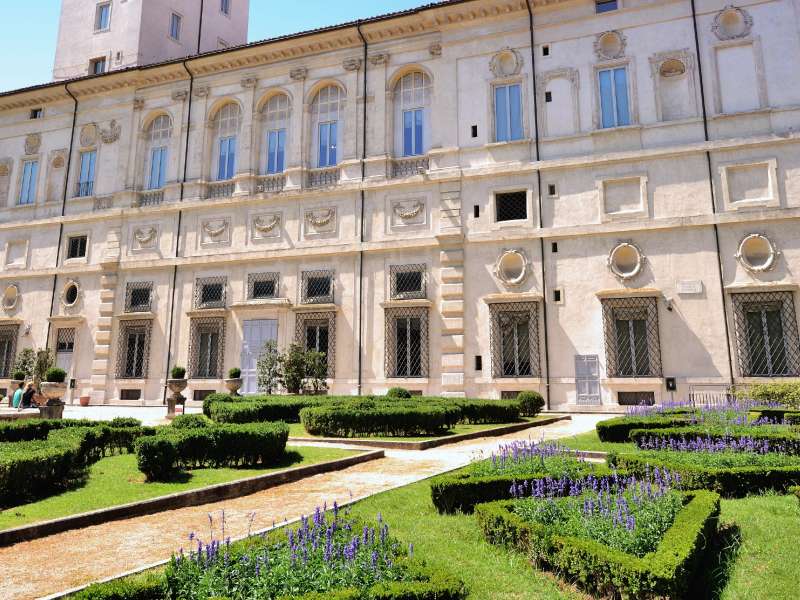
Galleria Borghese is one of the finest art museums in the world and, for many visitors, the single most memorable hour in Rome. It holds four Bernini marble sculptures that most art historians consider the greatest Baroque works ever made, the largest private Caravaggio collection in the world, and paintings by Raphael, Titian, and Canova in a building whose decorated ceilings and mosaic floors are themselves worth the visit. This guide covers what to see, how long you need, what to wear, whether it is worth it, and how to get a ticket.
What Is Galleria Borghese?
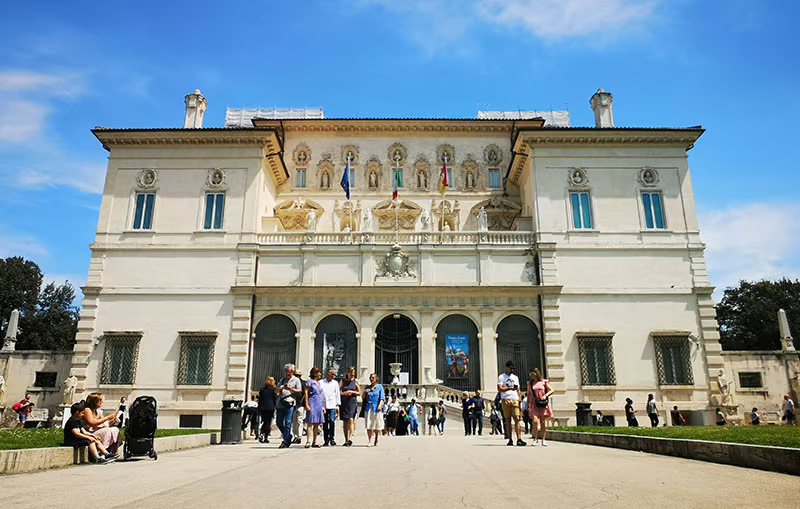
Galleria Borghese is an art museum inside Villa Borghese park on the Pincian Hill, a short walk from the Spanish Steps. Cardinal Scipione Borghese built the villa in 1613 specifically to house and display his extraordinary private art collection. He was an obsessive collector and one of Bernini’s earliest and most important patrons. The building was designed from the start as a showcase: the architecture, the painted ceilings, the inlaid marble floors, and the art inside it were conceived as a single unified experience.
The gallery became a public museum in the early 20th century when the Italian state purchased the collection. Today it operates across 20 rooms on two floors, with a strict maximum of 360 visitors per two-hour session. That limit is the single most important fact about the gallery: it means you will never fight for space in front of a sculpture, never queue three people deep to see a painting, and never feel the crushing crowd fatigue that defines the Vatican Museums or the Uffizi on a busy day.
What Is the Difference Between Villa Borghese and Galleria Borghese?
They share a name and a location but are completely different things. Villa Borghese is the 80-hectare public park on the Pincian Hill: free to enter, no ticket, no reservation, open from morning until dusk every day. Galleria Borghese is the ticketed art museum inside the park, housed in the original 17th century villa building. You can walk around the park for free at any time. Entering the gallery requires a pre-booked timed entry ticket. Many visitors arrive at the park expecting the museum to work the same way and discover too late that it does not.
Explore the park in our Villa Borghese Rome guide
What Not to Miss in Galleria Borghese
Visiting early in the morning or during the last admission slot in the afternoon will give you a more relaxed experience. The gallery operates on timed-entry tickets only, with limited visitors allowed per session. Each session lasts two hours, so plan accordingly.
The Bernini Sculptures
The four Bernini sculptures on the ground floor are the reason most people visit. All four were completed between 1619 and 1625, all before Bernini turned 27. Seeing them together in the same building, in the rooms they were made for, is an experience that even visitors with no art background consistently describe as shocking.
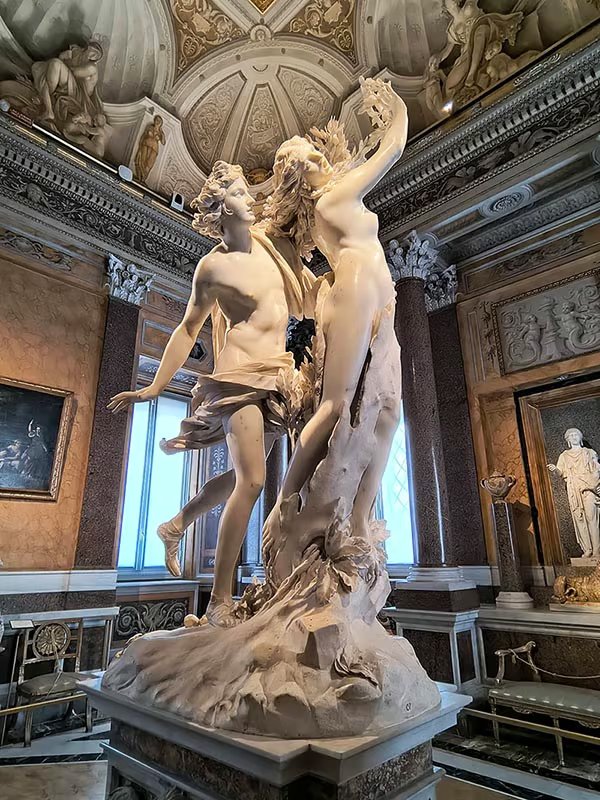
- Apollo and Daphne (Room 3, 1622-1625): A girl turning into a laurel tree mid-stride, bark spreading up her skin, fingers becoming branches, all carved from a single block of marble. The technique is so precise that the stone reads as translucent at the tips of the leaves and fingers. This is the most important single work in the gallery.
- The Rape of Proserpina (Room 4, 1621-1622): Pluto’s fingers press into Proserpina’s thigh. The marble visibly indents. The physical conviction of the grip, the tears on her face, and the three-headed dog Cerberus at Pluto’s feet make this the most emotionally intense of the four sculptures.
- David (Room 2, 1623-1624): Unlike Michelangelo’s calm pre-battle David, Bernini’s is mid-throw, face twisted in effort, body coiled in the instant before release. Bernini reportedly studied his own face in a mirror to capture the expression. The energy of the piece makes it impossible to stand in front of passively.
- Aeneas, Anchises and Ascanius (Room 1, 1618-1619): The earliest of the four, showing Aeneas carrying his elderly father from burning Troy while his young son walks beside him. The contrast between young, middle-aged, and elderly flesh rendered in the same stone block is extraordinary.
The Caravaggio Paintings
Room 8 on the ground floor holds six Caravaggio paintings, the largest collection of his work held by any single institution in the world. The room alone is worth the ticket.
- David with the Head of Goliath (circa 1610): The severed head is a self-portrait of Caravaggio himself, painted while he was in exile under a death sentence. The psychological weight of the image goes far beyond a biblical story.
- Boy with a Basket of Fruit (circa 1593-1594): One of his earliest works, painted when Caravaggio was around 21. The fruit in the basket is rendered with a botanical precision that art historians still study.
- Young Sick Bacchus (circa 1593): A self-portrait as the god of wine, visibly unwell, with greyish skin and wilting leaves. Thought to have been painted during Caravaggio’s recovery from illness.
- Madonna and Child with St. Anne (1605-1606): Commissioned for St Peter’s Basilica and removed almost immediately for showing the Virgin and Child with bare feet. Cardinal Scipione Borghese acquired it within days.
- St Jerome Writing (circa 1605-1606)
- John the Baptist (1610): One of his last known works, painted in the final year of his life.
Canova, Raphael, and Titian
Canova – Pauline Bonaparte as Venus Victrix (1805-1808): Commissioned by Napoleon’s sister Pauline Borghese after her marriage into the family. She reclines on a marble chaise, nude from the waist up, holding the golden apple of Venus. The marble surface is so finely polished that it appears warm to the touch. When asked how she could pose for such a work, Pauline reportedly replied that the studio was well heated.
Raphael – two major works: Deposition from the Cross (1507), one of the most emotionally complex altarpieces of the High Renaissance, painted when Raphael was 24; and Lady with a Unicorn (circa 1505), a small, quietly beautiful portrait in the tradition of Leonardo’s female portraits.
Titian – Sacred and Profane Love (circa 1514) and Danae (1545-1546). Sacred and Profane Love is one of the most debated paintings in Western art: two women, one clothed and one nude, on either side of a fountain. The exact meaning has been argued over for 500 years.
What Famous Pieces Are in the Borghese Galleria?
The complete headline count: 4 Bernini sculptures, 6 Caravaggio paintings, 2 Raphaels, 2 Titians, and the Canova reclining Venus. Most major museums would consider any one of these their headline work. The Borghese holds all of them in 20 rooms.
How Long Do You Need at Galleria Borghese?
Is 2 Hours Enough?
Two hours is the enforced maximum per timed entry slot and, for most visitors, genuinely sufficient. When your two hours end, staff will ask you to leave. There are no extensions and no re-entry on the same ticket. This is not a flexible guideline. It is the operating model of the gallery.
Two hours is enough if you arrive knowing what you want to prioritize. The most efficient route: ground floor first (Bernini sculptures, Caravaggio room, Canova), then upper floor (Raphael, Titian, the remaining paintings). A rental audio guide (€5 on-site) significantly improves the experience without slowing you down. A guided tour is the most efficient use of the two hours and provides context that transforms the sculptures from impressive to genuinely extraordinary.
Allow 10 to 15 minutes before your slot begins for the security check and bag deposit. This time does not count toward your two hours but catching it late creates unnecessary stress.
Is Galleria Borghese a Must-See?
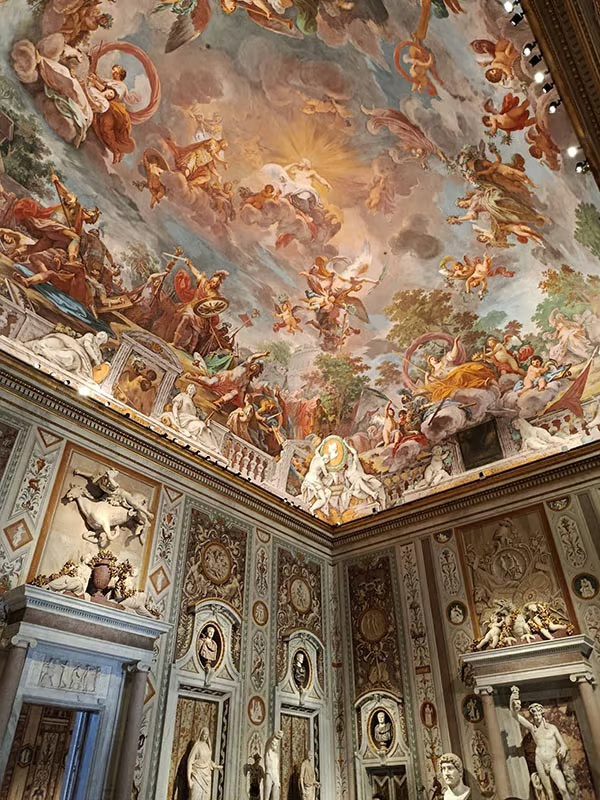
Yes, with very few caveats. The Bernini sculptures require no art knowledge to respond to viscerally. The physical drama of Apollo and Daphne and The Rape of Proserpina is immediate and overwhelming regardless of your background. The 360-person maximum means you experience these works in a way that is genuinely impossible at the Vatican or the Uffizi. The building itself, with its original decorated ceilings, painted fresco vaults, and inlaid Roman mosaic floors, is not a white-wall gallery. It is a baroque palace and every room you walk through is part of the experience.
What to Wear to Galleria Borghese
Does Galleria Borghese Have a Dress Code?
No. Unlike the Vatican Museums, the Sistine Chapel, and most of Rome’s major churches, Galleria Borghese has no dress code. Shorts, sleeveless tops, and casual clothes are all permitted. You do not need to cover your shoulders or knees. Wear whatever you would normally wear sightseeing in Rome.
The one practical recommendation: wear comfortable shoes. The entire two-hour visit is spent standing and walking on marble and stone floors. Flip flops and high heels both become unpleasant well before the two hours are up. If you are visiting in summer, bring a light layer: the gallery is air-conditioned and noticeably cool compared to the heat outside.
What Are the Rules for the Borghese Gallery?
The bag rules are strict and enforced consistently:
- No bags larger than 40×40 cm inside the gallery. This includes most backpacks, tote bags, and shopping bags. All oversized bags must be left in the free cloakroom in the basement.
- Small bags permitted inside: fanny packs and purses no larger than 21×15 cm only. Bags that exceed this are turned away at the door.
- Umbrellas must be left in the cloakroom regardless of size.
- No food or drink inside the gallery, including sealed bottles.
- No chewing gum.
- No flash photography. Non-flash photography with phones and cameras is permitted in most rooms. Check for individual room signs as some works have specific restrictions.
- No video recording without prior written permission from the gallery.
- No tripods or selfie sticks.
- No strollers inside. Baby carriers are permitted.
The cloakroom queue slows entry noticeably on busy mornings. If your bag needs checking, arrive at least 15 minutes before your timed entry slot to allow for this.
What Not to Wear in Rome as a Tourist?
At Galleria Borghese specifically, there are no clothing restrictions at all. This is one of the few major Rome sites where you have complete freedom. The Vatican, St Peter’s Basilica, Santa Maria Maggiore, and most significant churches require shoulders and knees covered. The Borghese does not. If you are combining the gallery with a church visit on the same day, a light scarf solves the problem without changing your outfit.
Is Galleria Borghese Worth It?
Yes. The most concise answer: Galleria Borghese is the only place in the world where you can stand in front of Apollo and Daphne, the greatest marble sculpture of the 17th century, with twenty other people around you rather than two hundred. That experience of space and silence in front of an extraordinary work of art is what makes it different from every other major museum in Rome.
For visitors who are not art enthusiasts: the Bernini sculptures work without any art knowledge because they are physically overwhelming first and art historical second. For visitors who are art enthusiasts: this is, by consensus, the finest quality-per-room collection in Italy and one of the five or six finest small museums in the world.
Book a Galleria Borghese guided tour with priority entrance here – a guided tour transforms the two hours into a completely different experience
What Are the Big 3 Art Experiences in Italy?
This is a genuinely useful question that most travel guides answer vaguely. The three experiences that consistently define serious art travel in Italy are:
| Experience | Why it makes the list | Crowd level |
|---|---|---|
| Galleria Borghese, Rome | Bernini, Caravaggio, 360-person maximum | Low: intimate by design |
| Uffizi Gallery, Florence | Botticelli, Leonardo, Michelangelo, Raphael | High: can be overwhelming |
| Vatican Museums / Sistine Chapel | Scale, breadth, Michelangelo ceiling | Very high: the busiest in Italy |
The Borghese is the smallest and most intimate of the three. The Uffizi is the most comprehensive for Renaissance painting. The Vatican is unmissable for the Sistine Chapel alone. All three are genuinely exceptional. If you can only choose one in Rome, the Borghese and the Vatican compete for first place depending entirely on what you value most: intimacy and sculpture, or scale and the Sistine ceiling.
Tickets and How to Book
How Much Are Galleria Borghese Tickets?
| Visitor type | Entry price | Booking fee | Total |
|---|---|---|---|
| Adult full price | €18 | €2 | €20 |
| EU citizens aged 18-25 | €2 | €2 | €4 |
| Under 18 | Free | €2 | €2 |
The €2 booking fee is mandatory for every ticket type including free admissions. It is non-refundable.
Do You Need to Book in Advance?
Yes, always. Walk-in tickets are never available at the door under any circumstances. The gallery operates on strictly timed entry: every visitor must have a pre-booked reservation. During peak season (March to October) popular slots sell out two to four weeks ahead. Summer weekends sell out further in advance.
If the official site shows no availability for your dates, third-party platforms (GetYourGuide, Tiqets) hold separate allocations and often have availability when the official site does not. Guided tours operate from a separate quota and are usually the last option to sell out.
Book your Galleria Borghese guided tour with priority entrance here
Getting There
From the Spanish Steps (Metro Line A, Spagna)
This is the most scenic and most popular approach. Exit Spagna station, climb the 135 steps of the Spanish Steps to Trinità dei Monti church at the top, turn left, and follow the path that curves gently upward into Villa Borghese park. From the top of the steps to the gallery entrance is approximately 15 minutes on foot. The walk through the park is entirely pleasant and flat once you are inside the park boundary.
From the City Centre
- Metro Line A, Flaminio: Exit at Piazzale Flaminio (Piazza del Popolo) and enter the park from the northern gate. The walk to the gallery through the park takes 15 to 20 minutes.
- Metro Line A, Spagna: As above via the Spanish Steps. 15 minutes from the top of the steps.
- Bus: Lines 52, 53, and 116 serve the Pincio entrance of the park.
- From Trevi Fountain on foot: Approximately 25 minutes walking northwest through the city to the park entrance, then 15 minutes through the park.
- Taxi or rideshare: The gallery address is Piazzale Scipione Borghese 5. Confirm this exact address with your driver as “Villa Borghese” often routes to the park perimeter rather than the museum entrance.
Dive into the Borghese Gallery‘s masterpieces on this intimate 2-hour guided tour with priority entrance, skipping lines in a small group of up to 15. Your expert guide shares stories behind Bernini’s sculptures like “The Rape of Proserpina” and “Apollo and Daphne,” plus Caravaggio and Raphael paintings, amid stunning frescoes and gold details: a trusted way to experience Rome’s art with depth and ease.
Book this guided tour to unlock a truly immersive and hassle-free art adventure. Or directly via widget
FAQ: Galleria Borghese Rome
Exactly two hours. This is the enforced maximum per timed entry slot. Two hours is enough to see every room properly if you arrive with a plan. Allow an additional 15 minutes before your slot for the security check and bag deposit.
Yes. There is no dress code at Galleria Borghese. Shorts, sleeveless tops, and casual clothing are all permitted. This is unlike the Vatican, the Sistine Chapel, and most churches in Rome, which require covered shoulders and knees.
Yes, non-flash photography is permitted in most rooms. Flash photography is strictly prohibited throughout the gallery. Tripods and selfie sticks are not allowed. Video recording requires prior written permission from the gallery. Check individual room signs as some specific works may have additional restrictions.