
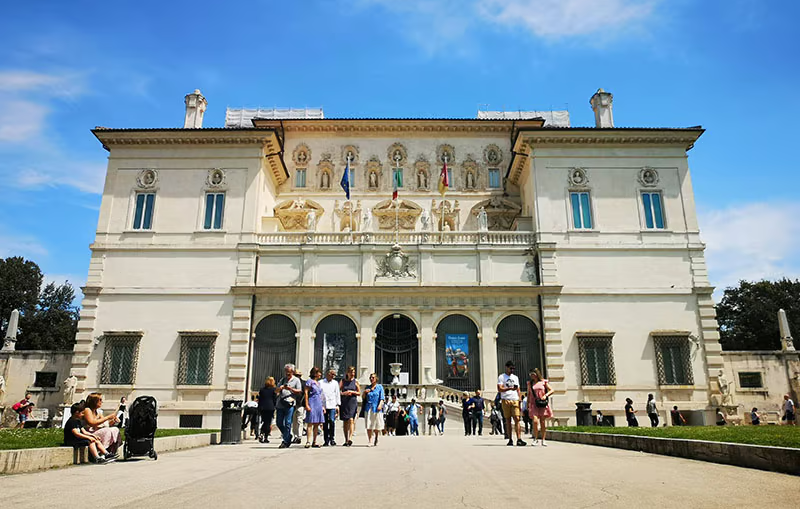
Yes. Galleria Borghese is worth it, and for most visitors it ends up being the single most memorable museum experience in Rome. The combination of Bernini’s marble sculptures, the world’s largest private Caravaggio collection, and a building that is itself a work of art, all experienced by a maximum of 360 people at one time, makes it unlike any other museum in the city. The honest negatives exist too, and this guide covers both sides so you can decide with full information.
What Is Special About Galleria Borghese?
Why Is It Better Than Other Rome Museums?
The Vatican Museums hold one of the largest art collections in the world. Galleria Borghese holds one of the finest. The difference is the experience. At the Vatican you move through enormous crowds across dozens of rooms for hours. At the Borghese, a maximum of 360 visitors are admitted at one time across 20 rooms on two floors. You are never fighting for space in front of a sculpture. You can stand directly in front of Bernini’s Apollo and Daphne and stay there as long as you want.
The building itself is a masterpiece. Cardinal Scipione Borghese, the obsessive collector who assembled the collection in the early 17th century, built the Villa Borghese specifically to display art. The painted ceilings, the decorative marble floors (several original Roman mosaics), and the frescoed walls are integral to the experience, not just a backdrop.
What Are the Famous Sculptures in the Borghese Gallery?
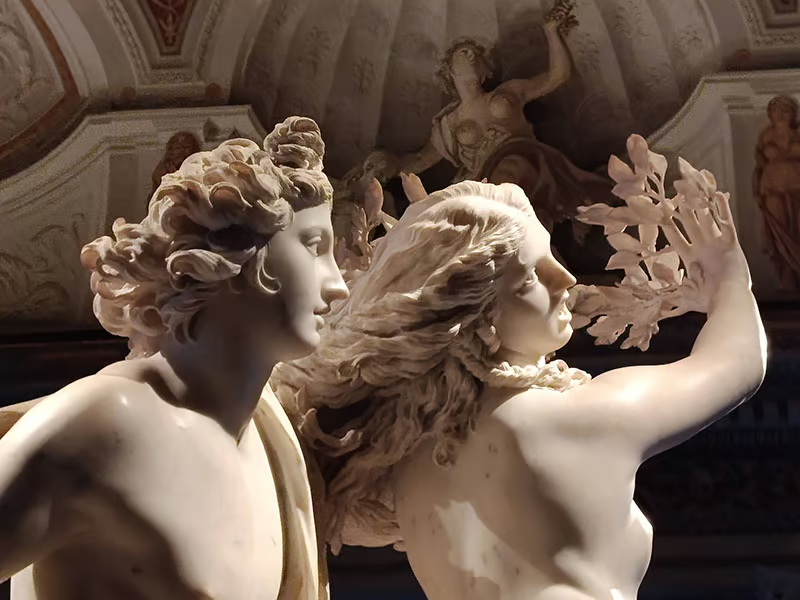
The four Bernini sculptures on the ground floor are the reason most people visit and the reason most people leave shaken. Bernini completed all four between 1619 and 1625, all before the age of 27.
- Apollo and Daphne (Room 3): A girl turning into a laurel tree mid-stride, her fingers becoming branches, bark spreading up her legs, all carved from a single block of marble. The technique is so impossibly fine that the marble reads as translucent skin, hair, and leaves simultaneously. This is the single most important work in the gallery.
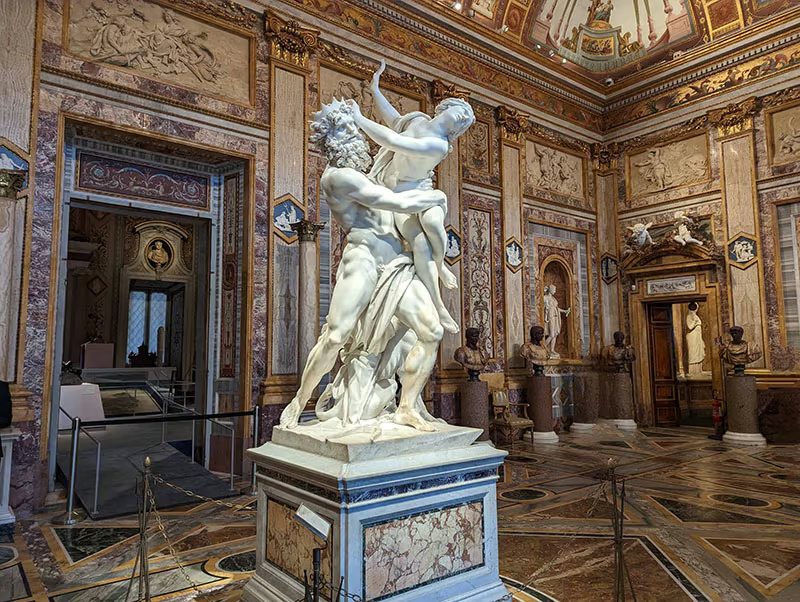
- The Rape of Proserpina (Room 4): Pluto’s fingers press into Proserpina’s thigh. The marble indents. His grip is physically convincing in a way that should be impossible in stone.
- David (Room 2): Unlike Michelangelo’s David, who stands composed before the fight, Bernini’s David is mid-throw, face twisted in effort, body coiled. Bernini reportedly used a mirror to study his own expression while working on the face.
- Aeneas and Anchises (Room 1): Bernini’s earliest work in the gallery, showing Aeneas carrying his elderly father from burning Troy. The contrast between young and aged flesh in the same stone block is extraordinary.
What Not to Miss Beyond Bernini?
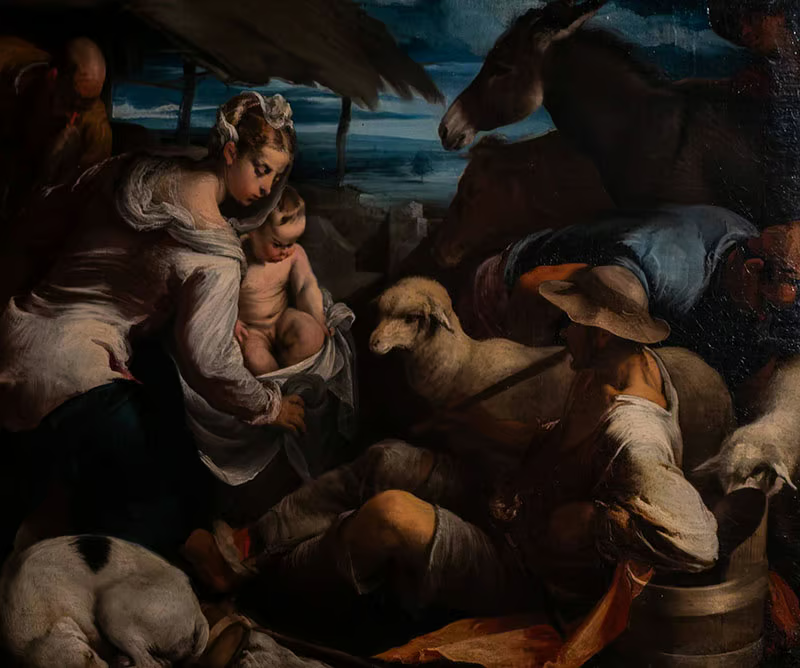
On the ground floor, Room 8 contains six Caravaggio paintings, the largest collection of his work held by any single institution in the world. The most striking is David with the Head of Goliath, in which the severed head is a self-portrait of Caravaggio himself. On the upper floor, Raphael’s Deposition (1507) and Canova’s reclining Pauline Bonaparte as Venus Victrix both deserve unhurried time.
What Is the Difference Between Villa Borghese and Galleria Borghese?
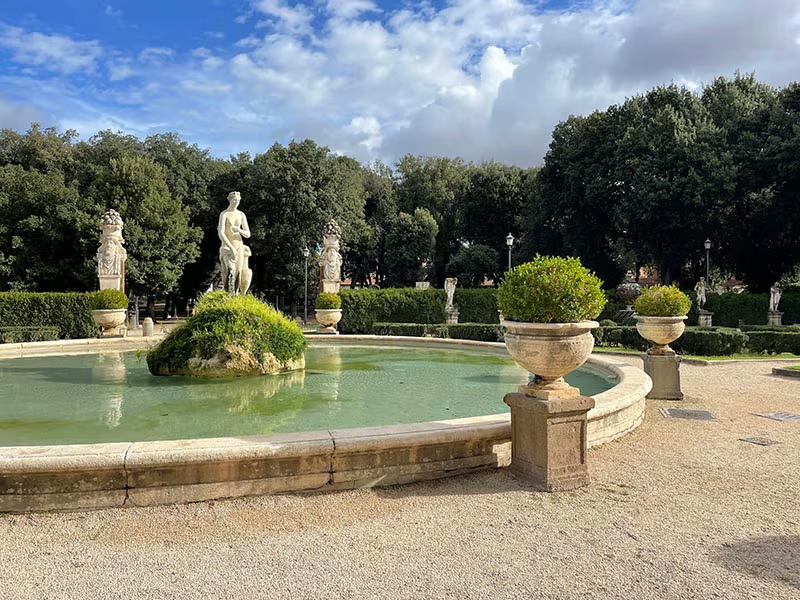
They are two completely different things that share a name and a location. Villa Borghese is the large public park surrounding the gallery: free to enter, open all day, popular with joggers, families, and anyone who wants green space near the city center. Galleria Borghese is the ticketed museum inside the park, housed in the original 17th century villa. You can walk through the park for free at any time, but entering the gallery requires an advance ticket. Many first-time visitors arrive at the park, enjoy the views, and never realize the museum requires a separate booking.
Does the Galleria Borghese Sell Out?
Yes, reliably and significantly ahead of your visit. The 360-person maximum per two-hour slot means the gallery has limited daily capacity. Between March and October, popular time slots sell out two to four weeks in advance. Summer weekends can sell out even further ahead.
Is the Galleria Borghese Free to Enter?
No. The standard adult ticket costs €18 plus a pre-sale booking fee. EU citizens aged 18 to 24 pay a reduced rate of €2 plus the booking fee. Children under 18 enter free but still require a reservation.
The first Sunday of every month offers free entry for all visitors, but a reservation is still mandatory, and those slots fill within days of release (sometimes within hours in peak season).
Book your Galleria Borghese skip-the-line ticket here
Do Borghese Gallery Tickets Sell Out?
Yes. Book at minimum two weeks ahead for visits between March and October, and four to six weeks ahead for summer weekends. The official booking site is galleriaborghese.beniculturali.it, though many visitors find third-party booking platforms easier to navigate.
Last-minute cancellations do occasionally release slots, but relying on this is a significant risk. Do not turn up without a ticket expecting to get in.
Priority entrance
Galleria Borghese Guided Tour
with Priority Entrance
- ✓ Priority entrance to the gallery, timed entry included
- ✓ Small-group guided visit, usually up to 15 guests
- ✓ Bernini, Caravaggio, Raphael, and Canova highlights
- ✓ 2-hour visit, perfect for the gallery’s timed-entry format
- ✓ Better context than self-guided entry for first-time visitors
From
€65 / adult
Prices vary by date and availability
Access
Priority entry
Timed entry, small group, and expert guide included
How Long Do You Need in Galleria Borghese?
Is 2 Hours Enough for Galleria Borghese?
Two hours is both the enforced maximum and, for most visitors, genuinely sufficient. The gallery operates on strictly timed two-hour entry slots. When your slot ends, staff ask you to leave. There is no extension and no re-entry.
Two hours is enough if you use the time well. The gallery has 20 rooms across two floors. If you arrive knowing what you want to prioritize (Bernini on the ground floor first, Caravaggio in Room 8, then the upper floor paintings), two hours allows you to see everything significant without rushing.
An audio guide rented on-site for €5 improves the experience considerably. A guided tour uses the two hours more efficiently than any self-guided approach and provides context that transforms the Bernini sculptures from impressive to genuinely extraordinary.
Allow an extra 10 to 15 minutes before your slot for the security check and bag deposit on arrival, neither of which count toward your two hours.
Book a Borghese Gallery guided tour with skip-the-line access here
Practical Visitor Information
Tuesday to Sunday, 9:00 AM to 7:00 PM. Closed Mondays.
Entry slots: 9-11 AM, 11 AM-1 PM, 1-3 PM, 3-5 PM, 5-7 PM.
MUST PREBOOK IN ADVANCE!
No dress code. Unlike Rome’s churches, there are no clothing restrictions at Galleria Borghese. Comfortable shoes are recommended as you stand for the full two hours.
Piazzale Scipione Borghese 5. Inside the Villa Borghese park
Navigate me
Getting there: Metro Line A to Flaminio or Spagna, then walk into the park (10 to 15 minutes). Bus lines 88, 95, 490, and 495 cross the park.
FAQ: Is Galleria Borghese Worth It?
Yes, particularly for Bernini’s sculptures. Apollo and Daphne alone justifies the visit for most people, including those who do not consider themselves art enthusiasts. The physical drama of the sculptures requires no art knowledge to respond to.
No. Walk-in tickets are never available on-site. The gallery operates on strictly pre-booked timed entry only. There are no same-day tickets sold at the door under any circumstances. Always book in advance.
Yes, always. Advance booking is mandatory, not optional. Even on days when the gallery is not sold out, you cannot enter without a pre-booked reservation. Book through the official website or a trusted third-party platform.
Cancellations occasionally release slots shortly before a visit date, but this is unreliable and rare in peak season. Do not plan your trip around the hope of a last-minute slot appearing.
There is no dress code. Smart casual is fine. Wear comfortable shoes since the entire visit is spent standing and walking on marble and stone floors.
The Vatican Museums hold the largest collection. Galleria Borghese is widely considered the finest quality per room of any museum in Rome, with some art historians calling it the finest small museum in the world. The contrast between size and quality is what makes it special.
Often yes. Children respond strongly to the physical drama of the Bernini sculptures, particularly Apollo and Daphne and The Rape of Proserpina, without needing any art history background. The two-hour time limit also helps keep the experience focused rather than exhausting.