
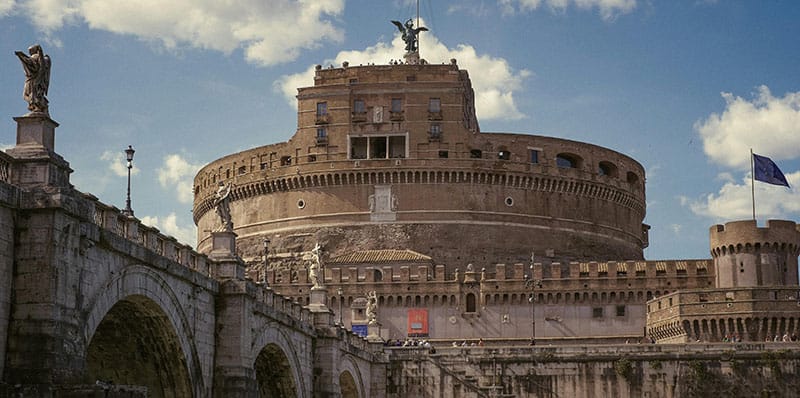
Visiting Castel Sant’Angelo in Rome means stepping inside one of the most layered and dramatic buildings in Europe. This extraordinary fortress has served as an imperial tomb, a medieval prison, a papal refuge, and a military stronghold across nearly 2,000 years of history. Whether you are a first-time visitor or a history lover, Castel Sant’Angelo rewards every minute you spend inside.
This guide covers the full picture: what the castle is, what to see on every floor, how tickets work, when to go, and how to make the most of your visit.
Is Castel Sant’Angelo Worth Visiting?
Yes, without question. Castel Sant’Angelo is one of the most underrated attractions in Rome. Most visitors rush straight to the Colosseum or the Vatican Museums and miss this gem entirely.
Inside, you get Roman imperial history, medieval fortress architecture, papal apartments decorated with Renaissance frescoes, dark prison cells, and a panoramic terrace with one of the finest views in the entire city. No other single building in Rome compresses so much history into one visit. Add the approach along the Ponte Sant’Angelo bridge, lined with Bernini-era angel sculptures, and the experience becomes genuinely unforgettable.
A Quick History: From Emperor Hadrian to Papal Fortress
Understanding the history makes exploring Castel Sant’Angelo far more meaningful. The building started as the Mausoleum of Hadrian in 139 CE, built by Emperor Hadrian to house his remains and those of his successors.
Over centuries, Rome changed around it. The structure transformed from an imperial tomb into a military fortification, then into a papal fortress, and eventually into a prison. The name “Castel Sant’Angelo” dates to around 590 CE. According to tradition, Pope Gregory I saw a vision of the Archangel Michael above the battlements, signaling the end of a devastating plague.
The Passetto di Borgo: The Pope’s Secret Escape Route
One of the most fascinating features of Castel Sant’Angelo is the Passetto di Borgo. This elevated covered corridor connects the castle directly to the Vatican. Popes used it as a secret escape route during times of danger.
Pope Alexander VI fled along the Passetto in 1494 when French troops entered Rome. Pope Clement VII used it again during the catastrophic Sack of Rome in 1527, escaping as imperial troops ransacked the city below. Walking through this corridor today feels genuinely spine-tingling.
What Is Inside Castel Sant’Angelo? A Floor-by-Floor Guide
Castel Sant’Angelo splits into five main levels, connected by a remarkable spiral ramp that Romans built as part of the original mausoleum construction. Here is what to expect on each floor.
The Spiral Ramp and Lower Levels
Start at the base and walk up the ancient spiral ramp. This ramp winds through the core of the building, carrying you from the entrance up toward the original burial chambers.
The Chamber of Ashes sits deep within the lower structure. This is where the urns containing the ashes of Roman emperors were kept, including the remains of Emperor Hadrian himself and later emperors up to Caracalla in 217 CE.
The Courtyard of the Angel and Prison Cells
Further up, you reach the Courtyard of the Angel. A marble angel statue stands at its center. Around this level, the castle’s grim prison history becomes visible.
Dark, cramped prison cells line the walls. The castle held some of Rome’s most famous prisoners over the centuries, including artists, politicians, and enemies of the papacy. Climbing higher, the atmosphere shifts completely.
The Papal Apartments and Renaissance Frescoes
The upper floors reveal a different world entirely. Popes converted the fortress into a luxurious private residence during the Renaissance period. The Sala Paolina bursts with colorful frescoes commissioned by Pope Paul III in the 1540s.
Next, the Hall of Apollo displays beautifully painted ceilings and papal décor. The contrast between the dark prison levels below and these richly decorated rooms above captures the full contradictory character of the building.
Military Memorabilia and the Museo Nazionale di Castel Sant’Angelo
Several rooms house the Museo Nazionale di Castel Sant’Angelo’s extensive collection. Medieval firearms, cannonballs, suits of armor, and military memorabilia fill the display cases.
History enthusiasts can spend a surprising amount of time here. The collection spans centuries of military history and gives real context to the castle’s role as a defensive stronghold.
What Can You See from the Top of Castel Sant’Angelo?
Yes, you can go to the top of Castel Sant’Angelo, and the Terrace of the Angel is the highlight of the entire visit. A bronze statue of the Archangel Michael by Peter Anton von Verschaffelt crowns the very top, sword raised above Rome.
The terrace delivers a full 360-degree Rome skyline panorama. St. Peter’s Basilica and its dome dominate the view to the west. The Tiber River curves gracefully below. On a clear day, you see across Rome in every direction from a vantage point that very few visitors ever reach.
Looking down toward the Ponte Sant’Angelo bridge approach, the row of angel statues along the bridge creates a spectacular foreground for photographs. Sunset from this terrace ranks among the most beautiful moments Rome offers any visitor.
Castel Sant’Angelo Opening Hours and Ticket Prices
The site opens daily from 9 AM to 7:30 PM. Arrive early on weekdays to beat crowds and enjoy a quieter visit.
Check for free entry on the first Sunday of the month.
Mornings offer the freshest light for photos from the terrace. Avoid peak summer afternoons when heat builds up.
Do I Need to Book Castel Sant’Angelo Tickets in Advance?
Online advance booking is available and strongly recommended, especially between April and October. During peak season, walk-up queues at the entrance can stretch significantly. Booking skip-the-line tickets online saves you that waiting time and secures your chosen entry slot.
Guided Tours: The Best Way to Visit Castel Sant’Angelo
A guided tour of Castel Sant’Angelo unlocks layers of history that most self-guided visitors simply miss. Expert guides explain the Passetto di Borgo, the prison history, the papal apartments, and the symbolism of the Archangel Michael vision. They also navigate the floors efficiently, making sure you hit every highlight without confusion.
Several outstanding tour options exist:
- Guided group tours with fast-track entry: A guide leads a small group through the full castle, combining skip-the-line access with expert commentary.
- Passetto di Borgo specialist tours: Some specialist tours focus on the secret escape corridor itself, offering access and context that standard entry does not cover.
- Private tours: Perfect for families, couples, or travelers who want a fully customized experience at their own pace.
Book a guided Castel Sant’Angelo tour with fast-track entry here for the most complete and stress-free way to experience this extraordinary building.
Castel Sant’Angelo guided tours with Passetto di Borgo access here if you want to walk the papal escape route with an expert guide.
What to See and Do: Walk the outer park for free views, then head inside to explore levels from the urn room to the rooftop cafe. Relax at Cafe Ristorante Le Terrazze for coffee with a Vatican vista.
Nearby Attractions: Stroll to St. Peter’s Basilica via the Passetto or wander to Piazza Navona for gelato. The location near the Tiber makes it easy to combine with Vatican tours.
Best Time to Visit Castel Sant’Angelo
Time of Day
Arrive at opening time (9:00 AM) for the shortest queues and the coolest temperatures inside. The castle faces strong direct sun in the afternoon, and the upper terrace gets extremely hot in summer.
Late afternoon, around 5:00 PM, offers another excellent option. The light softens beautifully, the crowds thin out, and sunset from the terrace becomes an unforgettable moment.
Time of Year
Spring (April to June) and autumn (September to October) offer the most comfortable visiting conditions. Summer (July to August) brings intense heat and peak tourist crowds. Winter visits are quieter and more atmospheric, though some rooms may be cooler inside.
The free first Sunday of the month draws large crowds early in the morning. Arrive right at 9:00 AM if you plan to use the free entry option.
Practical Tips for Visiting Castel Sant’Angelo
Go through these before your visit:
- Wear comfortable shoes. The spiral ramp and cobblestone courtyards require flat, grip-soled footwear.
- Allow a security check. Bag checks happen at the entrance. Give yourself extra time, especially during busy periods.
- Combine with Vatican sights. Castel Sant’Angelo sits roughly 500 meters from St. Peter’s Square. A full Vatican day pairs the two perfectly.
- Bring water. The terrace level has no shade and gets very hot in summer.
How Far Is Castel Sant’Angelo from the Vatican?
Castel Sant’Angelo sits roughly 500 meters from St. Peter’s Square. Most visitors walk the distance in under 10 minutes along the Lungotevere riverside road. The walk along the Ponte Sant’Angelo bridge, with its row of angel statues, forms one of the most scenic short walks in all of Rome. Combine both stops in a single morning for a deeply rewarding Vatican district day.
Is Castel Sant’Angelo Suitable for Kids?
Yes, children generally love it. The combination of dark prison cells, a secret escape tunnel, military weapons, and a rooftop fortress captures young imaginations immediately. Stick to the elevator or spiral ramp route for younger children, as some staircases are steep. Teenagers and older kids find the history genuinely fascinating, especially the prison and Passetto stories.
How Long Should I Spend at Castel Sant’Angelo?
Plan for 1.5 to 2 hours for a thorough self-guided visit. A guided tour typically runs 1.5 to 2 hours as well, but covers far more ground with meaningful context at each stop.
Add 20 to 30 minutes for the Ponte Sant’Angelo bridge approach before you enter. The bridge walk sets the mood perfectly and gives you the classic exterior photograph from the best angle.
FAQ
Absolutely yes. It offers Roman imperial history, medieval and Renaissance architecture, papal apartments, prison cells, a secret escape corridor, and panoramic views of Rome from one terrace. Few attractions in the city pack this much into a single visit.
The castle holds the ancient spiral ramp, the Chamber of Ashes, the Courtyard of the Angel, dark prison cells, the Sala Paolina with Renaissance frescoes, the Hall of Apollo, military memorabilia collections, and the panoramic Terrace of the Angel at the top.
A self-guided visit takes 1.5 to 2 hours. A guided tour runs a similar length but delivers far richer context. Allow extra time for the Ponte Sant’Angelo bridge approach before you enter.
Advance booking is strongly recommended from spring to autumn. Skip-the-line tickets save significant waiting time during busy periods. On the first Sunday of the month, entry is free with no booking required. Book your skip-the-line tickets here
Roughly 500 meters, or about a 10-minute walk from St. Peter’s Square. The Ponte Sant’Angelo bridge approach makes the walk a highlight in itself.
Yes. The Terrace of the Angel at the top is fully accessible to all visitors. It delivers a stunning 360-degree Rome skyline view and ranks as one of the best panoramic viewpoints in the city.