
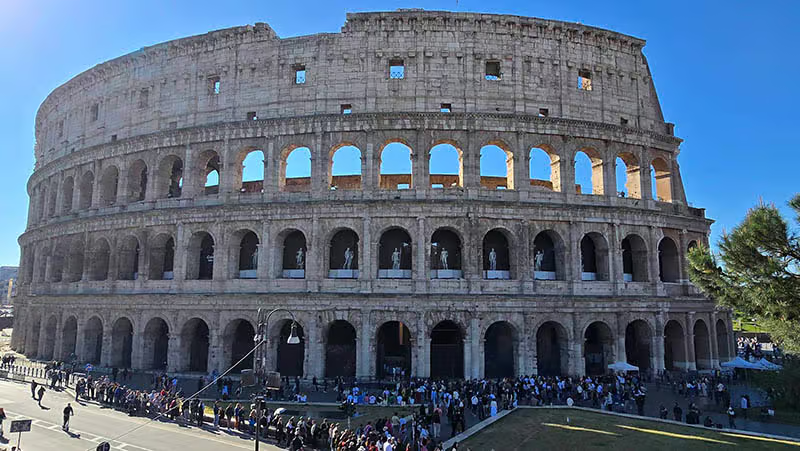
This guide covers everything you need to plan a visit to the Colosseum: whether you need a guide, how long to allow, what not to miss, what to wear, and how to get there. It does not reproduce the full ticket breakdown, which lives in the dedicated Colosseum Roman Forum Palatine Hill ticket guide. The exterior of the Colosseum is free to see from the street at any hour. The interior requires a timed entry ticket booked in advance. If you are planning the full Colosseum, Roman Forum, and Palatine Hill day, allow 5 to 6 hours.
Do You Need a Guide for the Colosseum in Rome?
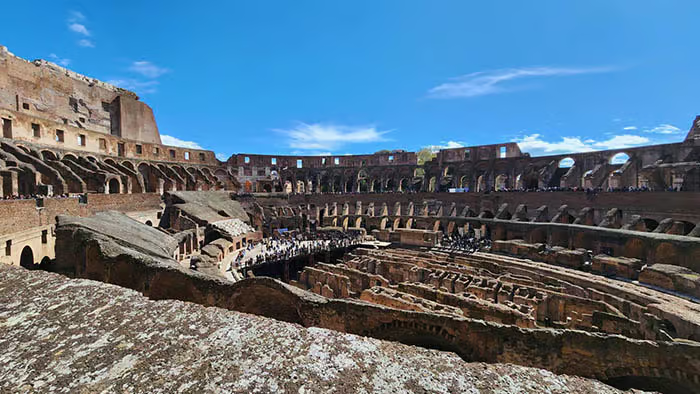
The honest answer depends entirely on which part of the Colosseum you want to see. For the standard levels, a self-guided visit works fine, especially with an audio guide. For the underground hypogeum, a guided tour is not optional: it is the only way in, and it sells out weeks ahead in peak season.
Can you go inside without a guide?
Yes, for levels 1 and 2. You can buy a standard ticket, walk in at your timed entry slot, and explore the two main levels independently. An audio guide, available on-site or via the official app, is the smart middle ground: it adds significant context without the cost of a full guided tour. The experience on the standard levels is perfectly valid self-guided. The underground is a different matter entirely.
Is a guided tour worth it?
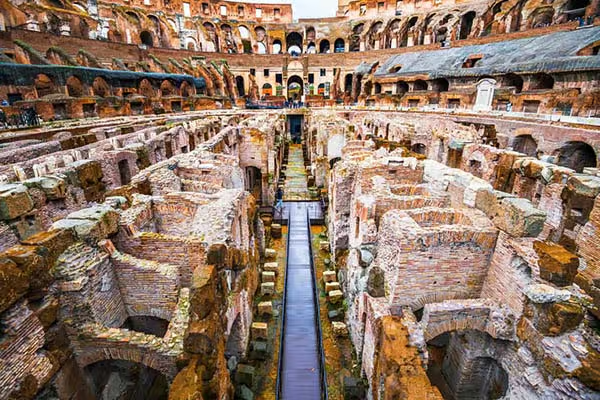
For first-time visitors, yes. A guide provides the layer of interpretation that turns a large ruined oval into something you actually understand. For the underground hypogeum specifically, a guide is non-negotiable: access is restricted, numbers are capped, and the experience, including the trapdoors, animal cages, and the Roman lift system that brought gladiators up to arena level, is genuinely unlike anything on the standard ticket. If your budget allows only one upgrade, the underground is it.
Which tour is best for the Colosseum?
| Option | What it includes | Price range |
|---|---|---|
| Standard self-guided | Levels 1 and 2, audio guide on-site | €18-22 |
| Arena floor guided | Levels 1-2 plus the arena floor, guided | from €33 |
| Underground guided | Levels 1-2, arena floor, and the hypogeum | Premium tier, books out weeks ahead |
Why are Colosseum tickets so hard to get?
The Colosseum operates on a timed entry system with a hard cap on daily visitors. Underground and arena floor tickets represent a small fraction of total daily capacity, which means they sell out disproportionately fast. Between April and October, standard tickets can sell out several days ahead. Underground tours can sell out two to four weeks ahead. If your travel dates are fixed, book as soon as your plans are confirmed, not in the week before you travel.
If tickets on the official website are sold out, check availability through legitimate verified resellers:
Is 3 Hours Enough for the Colosseum?
Three hours is enough for the Colosseum alone, including the arena floor, but not enough for the full Colosseum, Roman Forum, and Palatine Hill combination. Here is the realistic breakdown:
| Area | Time needed |
|---|---|
| Colosseum levels 1 and 2 | 1.5 to 2 hours |
| Add arena floor | Add 30 to 45 minutes |
| Add underground hypogeum | Add 60 minutes |
| Roman Forum | 60 to 90 minutes |
| Palatine Hill | 45 to 60 minutes |
| Full day total | 5 to 6 hours |
Is morning or afternoon better?
Both have advantages depending on your priorities. Mornings on weekdays tend to have fewer organised tour groups arriving simultaneously, which means better movement through the space. Afternoons from 3 PM onward see crowds thin noticeably, and the light on the western facade from 4 PM onward is exceptional for photography. The one window to avoid in summer is 10 AM to 2 PM, when group tour volume and heat peak simultaneously.
Is 4 PM a good time to visit?
Yes, particularly on weekdays. It is one of the least crowded entry windows and the light quality is strong. One practical warning: the Roman Forum closes earlier than the Colosseum on some dates. Check the Forum closing time for your specific visit date before booking a 4 PM Colosseum slot, because the ticket covers both sites and you may not have enough time to do both.
Is the Colosseum strict on entry times?
Yes. Timed entry slots are fixed and enforced. Every visitor, including those with skip-the-line tickets and guided tours, passes through a mandatory security screening at the entrance. Arrive at least 20 to 30 minutes before your booked slot to allow for queuing at security. Arriving at your exact slot time is not sufficient.
What Not to Miss Inside the Colosseum
Most visitors follow the obvious path through levels 1 and 2 and leave having seen the structure but missed the five things that make it genuinely extraordinary. Here is what to look for specifically.
The 5 highlights
- The arena floor – Walking out onto the wooden reconstruction of the arena floor through the Gladiator’s Gate gives you the single most visceral sense of what the space was used for. Standing at arena level looking up at 50,000 spectator seats is unlike any view from the upper levels.
- The underground hypogeum – The network of tunnels, trapdoors, animal cages, and Roman-era lift machinery beneath the arena floor. Access is guided only. This is the most technically impressive part of the entire structure and the area most visitors never see.
- The Gate of Death (Porta Libitinensis) – On the west wall. This was the gate through which the dead and dying were carried out after bouts. It is easy to walk past without knowing what you are looking at.
- The vomitoria and numbered arches – The 80 numbered arched entrances that allowed 50,000 spectators to fill and evacuate the building in minutes. The numbering system is still partially visible on the arches and is one of the most underrated pieces of Roman engineering in the entire building.
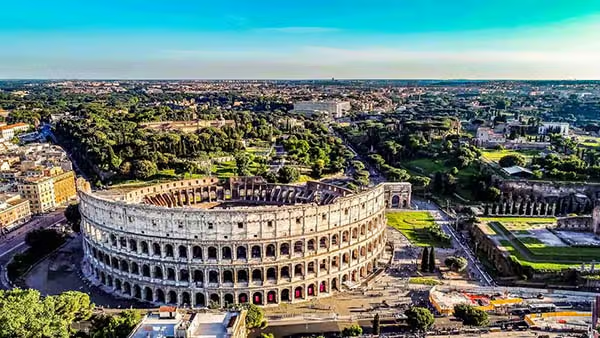
- Level 2 view over the Roman Forum – From the upper level on the south side, the view across the Forum valley toward the Palatine Hill gives context to the entire ancient centre that no ground-level photograph captures.
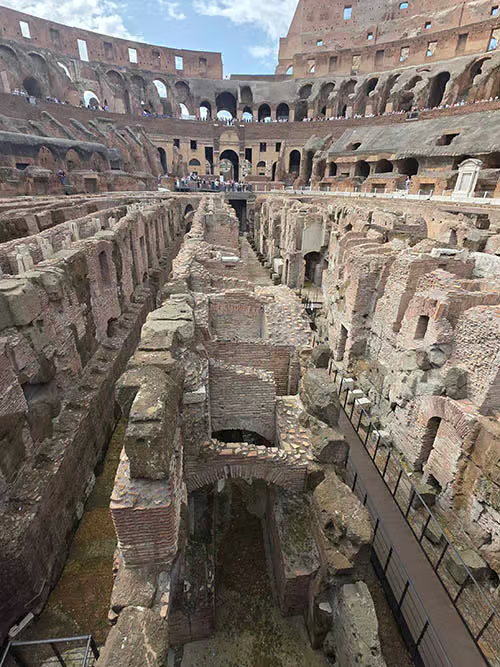
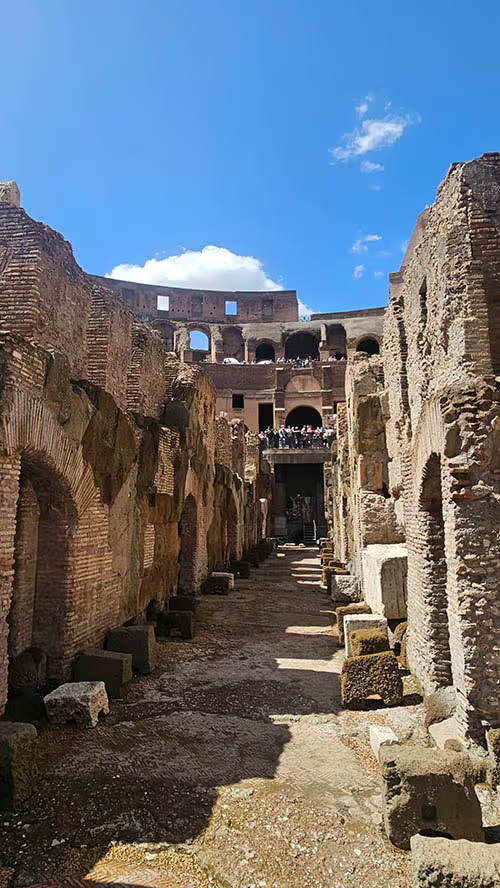
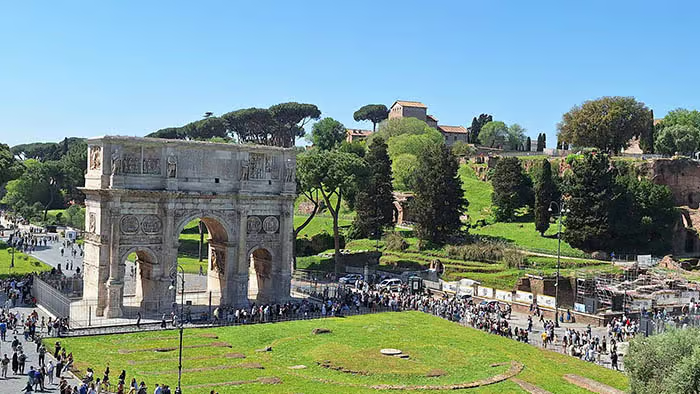
Bonus: The Arch of Constantine immediately outside the Colosseum is free to see with no ticket. It is one of the best-preserved triumphal arches in Rome and most visitors walk past it heading for the entrance.
Why is the Colosseum a New 7 Wonder?
The Colosseum was voted one of the New Seven Wonders of the World in 2007 by popular vote. No building of comparable scale had existed before it. It held between 50,000 and 80,000 spectators and could be filled and evacuated safely through its 80 vomitoria in under 15 minutes. The velarium, a retractable canvas canopy system operated by sailors from the Roman fleet at Misenum, provided shade for the upper tiers. The hypogeum beneath the arena floor used a counterweight lift system to raise animals and gladiators directly up through trapdoors to arena level. These engineering solutions were not surpassed at scale for over a thousand years.
What not to do at the Colosseum
- Do not buy tickets from street sellers outside the entrance. Scalped and counterfeit tickets exist and there is no recourse if yours does not scan
- Do not arrive at your exact entry time. Security screening applies to everyone and the queues are real
- Do not attempt to re-enter after leaving. There is a strict no re-entry policy
- Do not wear heels or unsupported sandals. The internal surfaces include uneven stone and cobblestones throughout
- Do not skip the Roman Forum and Palatine Hill. They are included on the same ticket and the Forum in particular is essential context for understanding the Colosseum’s place in ancient Rome
- Do not skip the underground if you can still get a ticket. It sells out faster than any other area and cannot be added on the day
Gladiators and the games: quick facts
An estimated 400,000 people died in the Colosseum over four centuries of games, including gladiators, prisoners, and condemned criminals. Not every gladiatorial bout ended in death: surrender was common and crowd mercy was granted regularly, particularly for fighters who had performed well. The “thumbs up, thumbs down” gesture is a modern invention. Roman sources describe a “turn the thumb” signal whose exact meaning historians still debate. Ancient accounts also describe naumachia, staged sea battles, taking place in the Colosseum, though most scholars now believe large-scale water flooding was structurally unlikely after the hypogeum floor was built. The full story of why the Colosseum was built, who built it, and what it replaced is in our why the Colosseum was built guide
What to Wear and What to Bring
There is no dress code at the Colosseum. Unlike the Vatican, no rules apply to shoulders, knees, or head coverings. The practical constraints come from the building itself, not from any policy.
Bags, water bottles and security
Bags and backpacks are permitted. Water bottles are permitted and recommended. Large luggage and oversized bags are not allowed. Every visitor passes through a security screening on entry, the same process applies regardless of ticket type, so factor queue time into your arrival plan. There is no clear bag requirement.
Colosseum vs Vatican dress code
| Colosseum | Vatican (St Peter’s + Museums) | |
|---|---|---|
| Shoulders | No rule | Must be covered |
| Knees | No rule | Must be covered |
| Hats | No rule | Remove inside basilica |
| Bags | Allowed | Allowed, security screening |
| Large luggage | Not allowed | Not allowed |
For full Vatican entry rules, see our Vatican and Sistine Chapel guide.
Practical packing list
- Comfortable flat shoes (non-negotiable on the uneven internal surfaces)
- Refillable water bottle (Rome’s street fountains, the nasoni, provide free drinkable tap water throughout the area)
- Sunscreen (the upper levels have no shade)
- Light layers (the underground is noticeably cooler than the exterior)
- Phone or camera (tripods are not permitted inside)
- Ticket QR code downloaded offline before you arrive
- Portable charger
- Small bag or daypack
Are there toilets and is water available inside?
Toilets are available on level 1 and near the entrance. Expect queues during peak hours. Facilities are basic. On the second floor water is sold inside the vending machines: bring a refillable bottle and use the nasoni fountains/green free water dispensers in the area before you enter.
Tickets and Prices: Quick Overview
The standard Colosseum ticket costs €18 to €22 and covers levels 1 and 2. Arena floor access starts from around €33 on a guided basis. Underground tours are priced at a premium tier and sell out the fastest of any ticket type. These are entry-level price anchors only. For the full breakdown of every ticket type, what each includes, booking options, and visit order recommendations, see our Colosseum Roman Forum Palatine Hill ticket guide.
Getting to the Colosseum
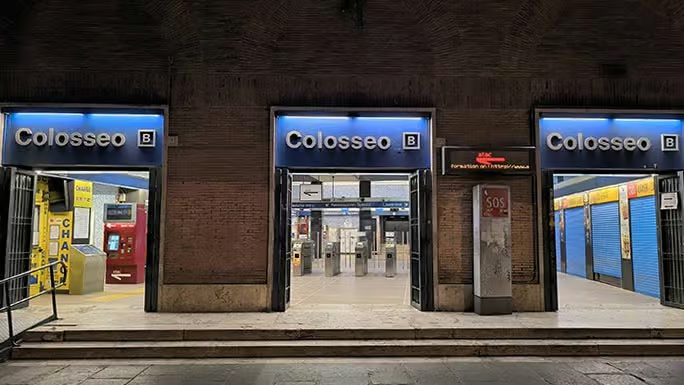
The Colosseum is now served by two metro lines. Metro Line B (the long-standing connection) and Metro Line C both stop at Colosseo/Fori Imperiali, after Line C opened its new station there on 16 December 2025. Both exits drop you directly in front of the building. From Termini, Line B takes around 3 minutes. The station is worth a look in itself: ancient artefacts uncovered during construction are displayed inside.
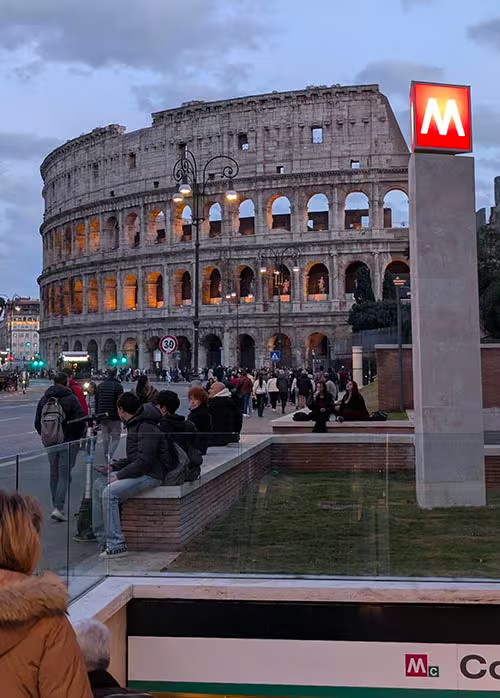
Several bus lines stop nearby along Via dei Fori Imperiali. If you are coming from the Vatican, no direct metro connection exists between the two sites: bus or taxi takes 30 to 40 minutes depending on traffic. Do not be dropped at the Forum entrance if your ticket starts at the Colosseum, the entry points are separate.
FAQ: Colosseum Rome Guide
Not for the standard levels, where a self-guided visit with an audio guide works well. For the underground hypogeum, a guide is mandatory: it is the only access option and it sells out weeks ahead in peak season.
Three hours covers the Colosseum comfortably including the arena floor. For the full day combining the Colosseum, Roman Forum, and Palatine Hill, allow 5 to 6 hours.
The arena floor, the underground hypogeum (guided only), the Gate of Death on the west wall, the numbered vomitoria arches, and the level 2 view over the Roman Forum. The Arch of Constantine outside is free and takes 10 minutes.
Yes. Bags and backpacks are permitted. Large luggage is not. Water bottles are allowed and recommended. All visitors pass through a security screening on entry.
No. There is no dress code at the Colosseum. Comfortable shoes are the only non-negotiable practical requirement given the uneven internal surfaces.
Mornings on weekdays have fewer tour groups. Afternoons from 3 PM onward are less crowded with better light for photography. Avoid 10 AM to 2 PM in summer.
Yes. The exterior is fully visible from the street at any hour with no ticket required. The Arch of Constantine immediately outside is also free to view.
The arena floor is the reconstructed wooden surface where gladiators fought: you walk out onto it and look up at the seating tiers. The underground hypogeum is the tunnel network beneath it, where animals and fighters were held before bouts. Both require specific tickets beyond the standard entry. The underground is guided only.