
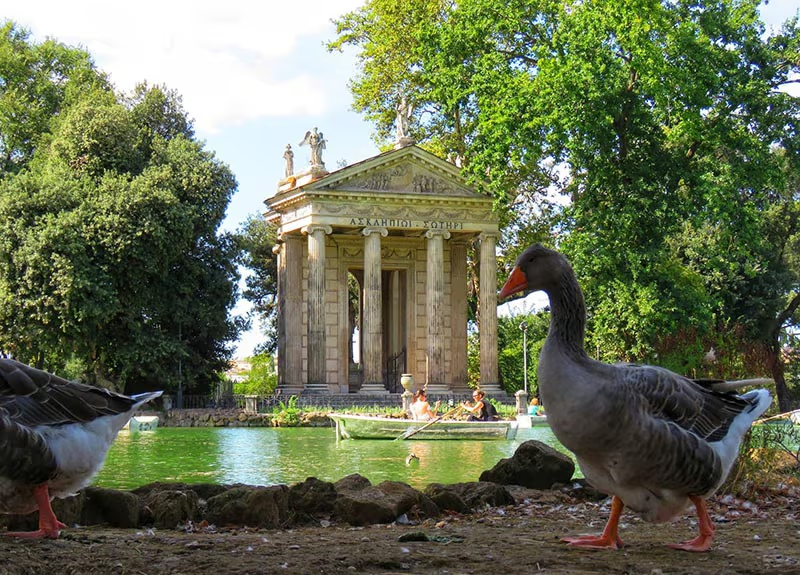
After all the advance booking, timed entry, and sold-out calendars of Galleria Borghese, here is the best news you will read today: the park surrounding it is completely free, requires no reservation, and you can walk in any time you like. Villa Borghese is 80 hectares of gardens, fountains, a lake, hilltop terraces, and shaded paths sitting on the Pincian Hill above the Spanish Steps. It is the most visited park in Rome, and one of the most relaxed hours you can spend in the city.
Is Villa Borghese Free to Enter?
Yes, completely. The park itself has no entry fee, no ticket desk, and no reservation system. Six entrances are scattered around the perimeter and all of them are open during park hours with no barrier of any kind. You simply walk in.
Do You Have to Pay to Get Into Villa Borghese?
No. The Borghese Gardens are a public park and have been since 1903, when the Italian state purchased the estate from the Borghese family and opened it to the public. Walking, running, cycling, picnicking, sitting on the grass, visiting the fountains, climbing to the Pincio terrace, and spending the afternoon by the lake are all free.
The paid elements inside the park are separate attractions with their own ticketing:
| Attraction | Entry | Notes |
|---|---|---|
| Galleria Borghese | From €18 plus €2 booking fee | Pre-booking mandatory, no walk-ins – Read more here |
| Bioparco di Roma zoo | €19 adults, €14 children | Under 1 metre tall: free |
| Lake rowboat rental | €5 per person, €3, per children under 1.1 meter | 20-minute session, pay on the spot |
| Bike and golf cart rental | Varies by hour | Available at multiple park kiosks |
Everything else in the park is free.
Can You Walk Around the Borghese Gardens for Free?
Yes. The walking paths, gardens, lawns, sculptures, fountains, the Pincio terrace, and Piazza di Siena are all public space with no charge at any time. The park is one of the few genuinely free and genuinely rewarding places in central Rome, and it is large enough that even on busy weekends you can find a quiet corner without difficulty.
Is Villa Borghese Worth Visiting?
Is Villa Borghese Worth It?
Yes, especially as a complement to a busy Rome itinerary. Most visitors to Rome spend their days moving between paid sites with queues, crowds, and timed entry. Villa Borghese is the opposite of all of that. It is an 80-hectare exhale in the middle of one of the world’s most intense tourist cities. The park is genuinely beautiful, the Pincio terrace view is one of the best free viewpoints in Rome, and the lake with its small island temple is one of those Rome moments that visitors remember long after they have forgotten which museums they visited.
What Is Villa Borghese Known For?
Villa Borghese is famous for three things: the Galleria Borghese museum inside it (one of the world’s great small art museums), the Terrazza del Pincio panoramic viewpoint, and the Laghetto, the small artificial lake with a neoclassical temple on its island. Beyond those, the park is simply where Romans go to slow down: to run in the morning, push a stroller in the afternoon, rent a rowboat on a Sunday, or sit under a pine tree with no agenda.
The park was originally a private vineyard that Cardinal Scipione Borghese transformed into elaborate gardens from 1606 onward. His obsession with art and landscape shaped both the gardens and the collection that eventually became Galleria Borghese. Discover if the gallery inside is worth pre-booking
What Is Villa Borghese Famous For?
What Not to Miss in Villa Borghese?
These are the highlights worth going out of your way to find:
Terrazza del Pincio
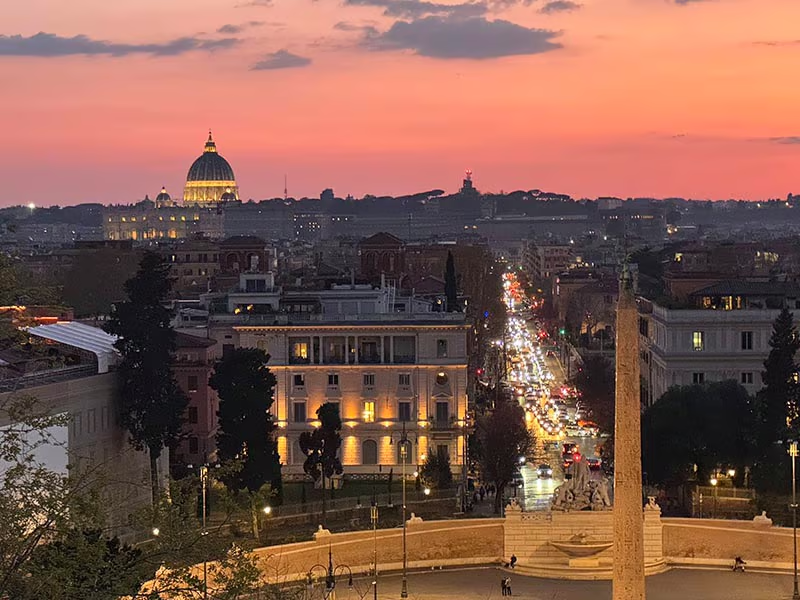
The Pincio terrace is the single best free viewpoint in Villa Borghese and one of the finest in all of Rome. From the balustrade you look southwest over the entire city: the dome of St Peter’s on the left, the Vittoriano white marble monument in the center, the Colosseum just visible on the right on a clear day, and the entire layered roofscape of historic Rome spread below you. Arrive 30 to 45 minutes before sunset. The terrace faces directly west and the light on the city at that moment is one of Rome’s genuinely unmissable experiences.
The Laghetto and Temple of Asclepius
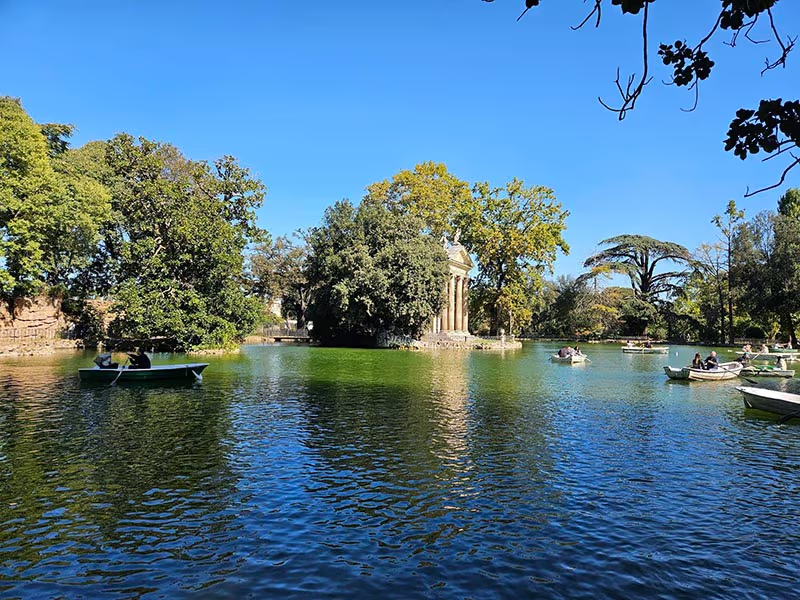
The artificial lake in the northwest section of the park was created in the late 18th century. A small neoclassical temple dedicated to Asclepius sits on a tiny island in the center, reflected in the water below. Rowboats can be rented for €3 per person for a 20-minute session, paid on the spot at the lake. No advance booking is needed. The lake is open daily from 9:30 AM until dusk, weather permitting. This is one of the most photogenic spots in the park and a favorite with families and couples alike.
Piazza di Siena
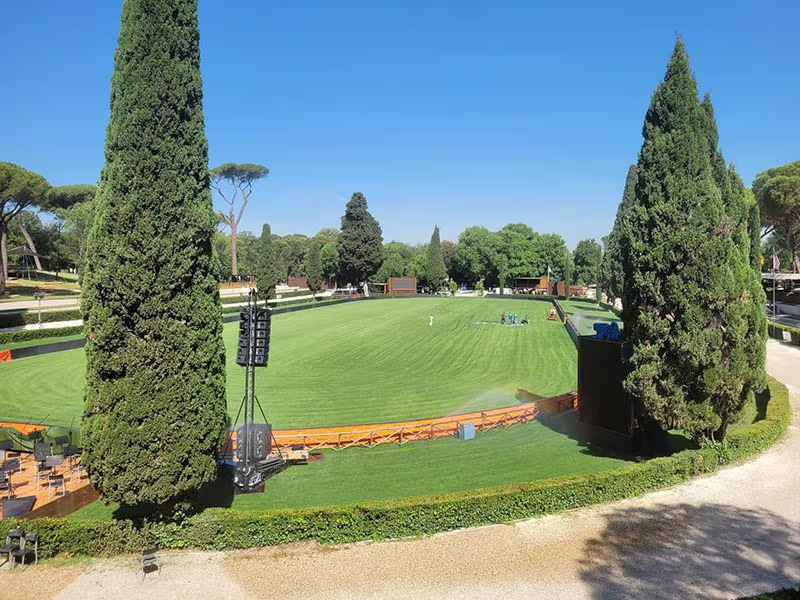
A large oval amphitheatre of grass and umbrella pines hidden in the center of the park. Piazza di Siena has hosted equestrian events since the 18th century and still holds the annual CSIO Rome international horse show each May. Outside of event periods it is simply a beautiful open space to walk through and sit in. The surrounding pine forest gives it a completely different character from the rest of the park.
The Water Clock
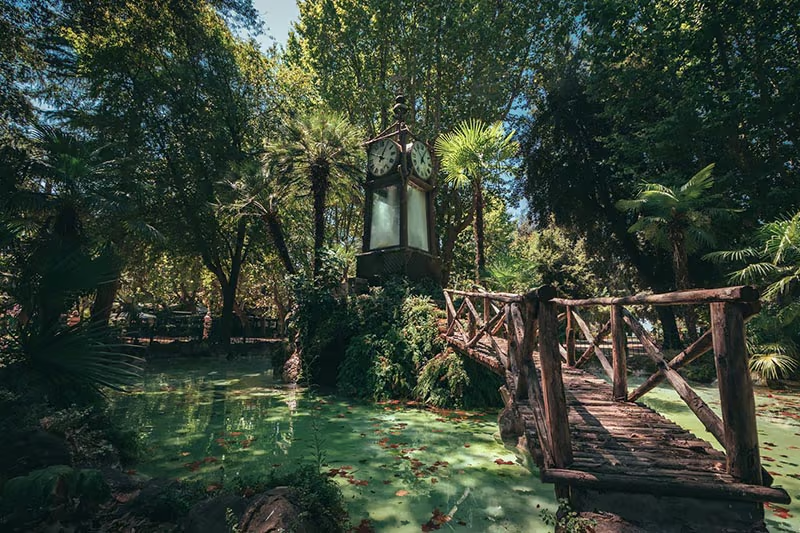
A curious 19th century invention by a Dominican priest: a small ornamental clock on the slope between the Pincio and the lake that runs entirely on water pressure. It still works. It is easy to miss and genuinely charming when you find it.
Sculptures and fountains throughout the park
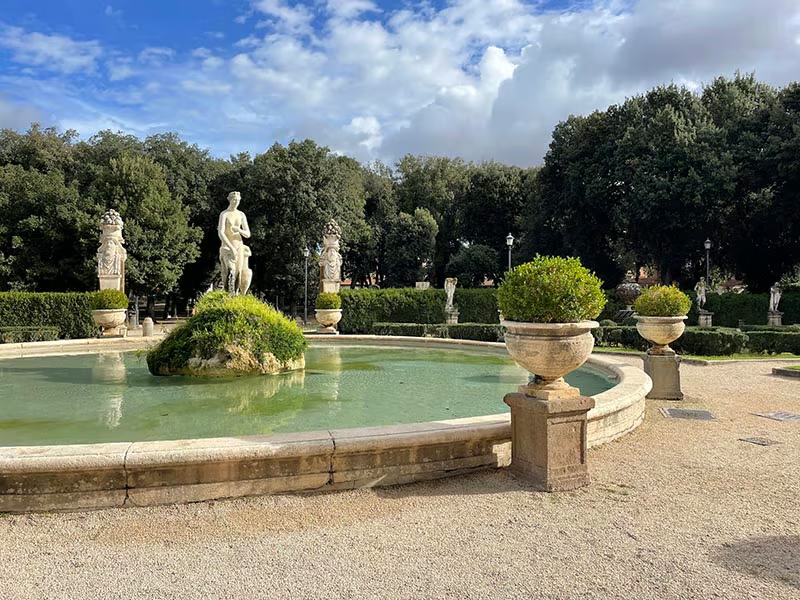
The park is scattered with antique and neoclassical sculptures, decorative fountains, and architectural follies placed throughout the grounds by the Borghese family and later additions. Walking between them with no particular destination is one of the most pleasant ways to spend an hour in Rome.
What Paintings Are Famous in Villa Borghese?
The famous paintings are inside Galleria Borghese, not the park itself. The gallery holds the world’s largest private collection of Caravaggio paintings, Raphael’s Deposition (1507), and Canova’s reclining Pauline Bonaparte as Venus Victrix, alongside the four Bernini marble sculptures that make the gallery extraordinary. The park and gardens outside contain sculptures and fountains but no paintings. If you want the gallery, pre-booking is mandatory weeks in advance.
Book your Galleria Borghese guided tour with priority entrance here
Can You Walk Around Villa Borghese?
Yes, freely and at any pace. The park has well-maintained paths throughout and is almost entirely car-free. Most visitors enter from one of six access points and wander informally. The three most popular entrance routes are:
- From the Spanish Steps (Metro Line A, Spagna): At the top of the steps, turn left in front of Trinità dei Monti church and follow the gentle sloping path upward. You are inside the park within five minutes. This is the most scenic entrance.
- From Piazza del Popolo (Metro Line A, Flaminio): Enter the park via the ramp that curves up from the piazza to the Pincio terrace. The terrace view greets you immediately at the top.
- From Piazzale Flaminio: The main northern entrance, close to the Bioparco zoo gate and the Galleria Borghese.
Bus lines 52, 53, and 116 stop at the Pincio entrance. From the Trevi Fountain the walk takes approximately 25 minutes through the centro storico and up the hill.
What to Do in Villa Borghese With Kids
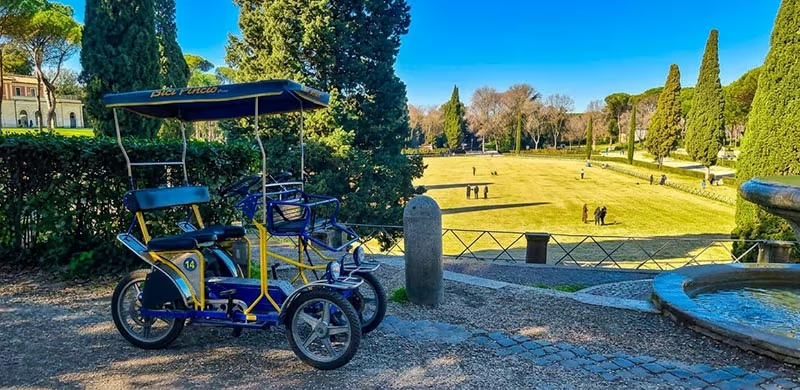
Villa Borghese is one of the best places in Rome for children, largely because of how much it offers without requiring museum stamina or standing in queues.
- Rowboat rental on the lake: Children love the lake. The 20-minute rowboat session is inexpensive and requires no advance planning.
- Bioparco di Roma: Rome’s zoo occupies the northeastern section of the park. It holds over 1,000 animals across more than 200 species. Tickets cost €19 for adults and €14 for children over 1 metre tall. Children under 1 metre enter free. The zoo is open daily from 9:30 AM.
- Bike and scooter rental: Several rental kiosks throughout the park offer children’s bikes, tandem bikes, and four-wheel pedal carts by the hour. No advance booking required.
- Open lawns: The large grassy areas throughout the park are ideal for children who simply need to run after a day of tourist sites. Picnics are completely fine anywhere on the grass.
Practical Information
- April to October: 8:30 AM to 7:30 PM
- November to March: 8:30 AM to 5:00 PM
The park closes at sunset. The Pincio terrace is accessible during all park hours.
Lake rowboat rental: Daily from 9:30 AM until dusk (weather dependent). €5 per adult per 20 minutes, €3 per child under 1.1 meter. Pay on the spot.
Bioparco di Roma: Daily from 9:30 AM. Closing time varies seasonally (5:00 PM in winter, 6:00 PM in summer, 7:00 PM on weekends in peak season).
Cafes: Several cafes and kiosks are scattered through the park. Prices are higher than neighborhood cafes but reasonable by central Rome tourist standards. There is no café inside Galleria Borghese itself.
FAQ: Villa Borghese Park Rome
Yes. The entire park, including all paths, gardens, terraces, lawns, and public spaces, is free at all times during opening hours. The only paid elements are the Galleria Borghese museum, the Bioparco zoo, and the lake rowboat rental.
The park closes at sunset. In summer (April to October) that means approximately 7:30 PM. In winter (November to March) the park closes around 5:00 PM. Hours can vary slightly by season.
Yes, several. Cafe kiosks and small restaurants are located near the lake, near the Pincio terrace, and near the Bioparco entrance.
One to two hours covers the Pincio terrace, a walk to the lake, and a stroll through the main paths at a relaxed pace. Half a day is comfortable if you add the Bioparco zoo or a long picnic. A full day is possible if you combine the park with a Galleria Borghese visit.
Yes, and this is the recommended approach for most visitors. Spend the morning in the gallery (two hours maximum per timed entry slot), then spend the afternoon in the park: Pincio terrace at golden hour, a rowboat session on the lake, and a slow walk back down to the Spanish Steps. The gallery and the park complement each other perfectly. See our step-by-step booking guide for Galleria Borghese tickets before you plan your day
Yes, without any hesitation. It is free, beautiful, and one of the most genuinely relaxing places in a city that can be exhausting. Even visitors who are not interested in the gallery find the park alone worth the short walk up from the Spanish Steps.