
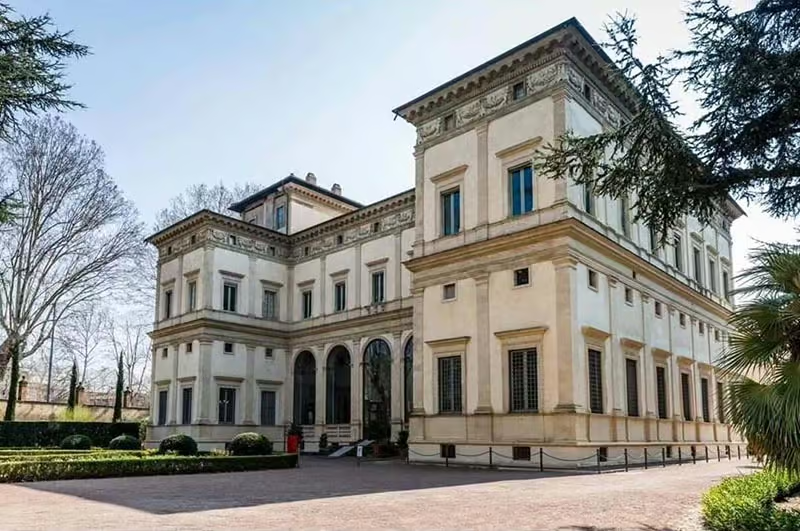
Visiting Villa Farnesina in Rome puts you face to face with some of Raphael’s finest frescoes, completely free from the crowds of the Vatican Museums. This intimate Renaissance villa hides in the Trastevere neighborhood, just minutes from St. Peter’s Square, yet most visitors to Rome walk straight past it. If you love Renaissance art and want a genuinely quiet, beautiful experience, Villa Farnesina deserves a place on your Rome itinerary.
This guide covers the full history, every key room inside, ticket prices, opening hours, and the best ways to visit.
Is Villa Farnesina Worth Visiting?
Yes, absolutely and without hesitation. Villa Farnesina offers something rare in Rome: world-class Renaissance art in a small, peaceful setting.
Most visitors focus entirely on the Vatican Museums and the Colosseum. As a result, Villa Farnesina stays wonderfully uncrowded. You can stand directly in front of Raphael frescoes with no jostling, no tour groups blocking your view, and no noise. For discerning art lovers in Rome, this quiet art experience ranks as one of the most rewarding mornings the city offers.
The villa also pairs perfectly with a Trastevere neighborhood walk. Combine both and you have a full half-day that feels genuinely off the beaten path.
A Brief History of Villa Farnesina
Agostino Chigi, a spectacularly wealthy Sienese banker and financier to the papacy, commissioned this Renaissance suburban villa in Rome around 1506. Architect Baldassarre Peruzzi designed it between 1506 and 1511. The result was one of the most elegant private residences of the Italian Renaissance.
Chigi used the villa to entertain Rome’s most powerful figures, including popes, cardinals, and ambassadors. Raphael himself was a close friend of Chigi and painted several rooms here personally. The building carries the name “Farnesina” because Cardinal Alessandro Farnese purchased it in 1577, decades after Chigi’s death. Today, the Accademia Nazionale dei Lincei manages the villa and its collections.
Where Is Villa Farnesina in Rome?
Villa Farnesina sits at Via della Lungara 230, in the Trastevere district on the western bank of the Tiber River. The Ponte Sisto bridge offers a scenic pedestrian crossing from the center of Rome. From St. Peter’s Square, the walk takes roughly 15 minutes along the riverside. From the Trastevere neighborhood itself, you reach the entrance in under five minutes.
What Can You See Inside Villa Farnesina?
The villa holds five principal rooms, each with frescoes of extraordinary quality. Here is what to expect room by room.
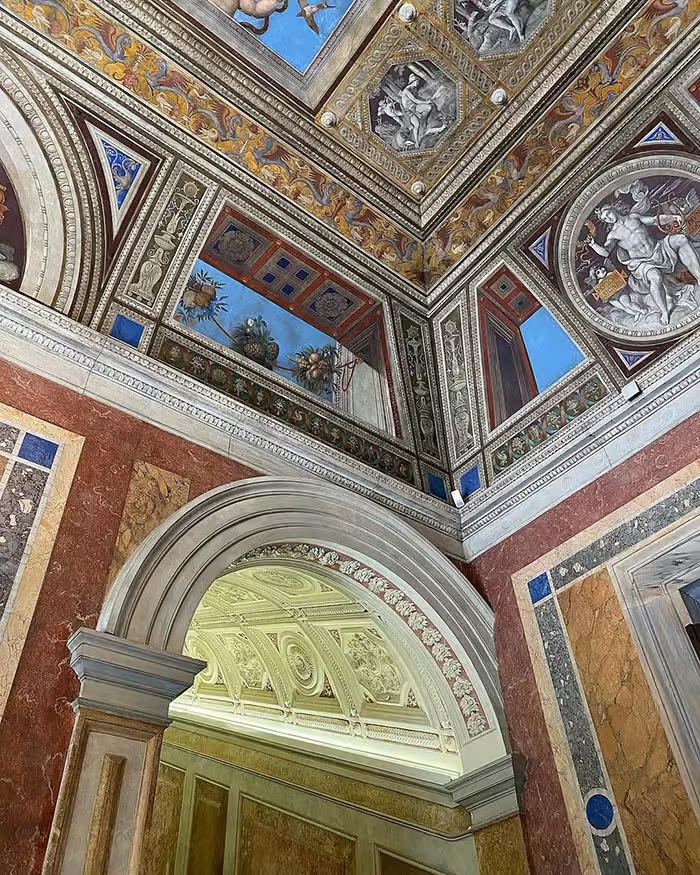
The Loggia of Cupid and Psyche
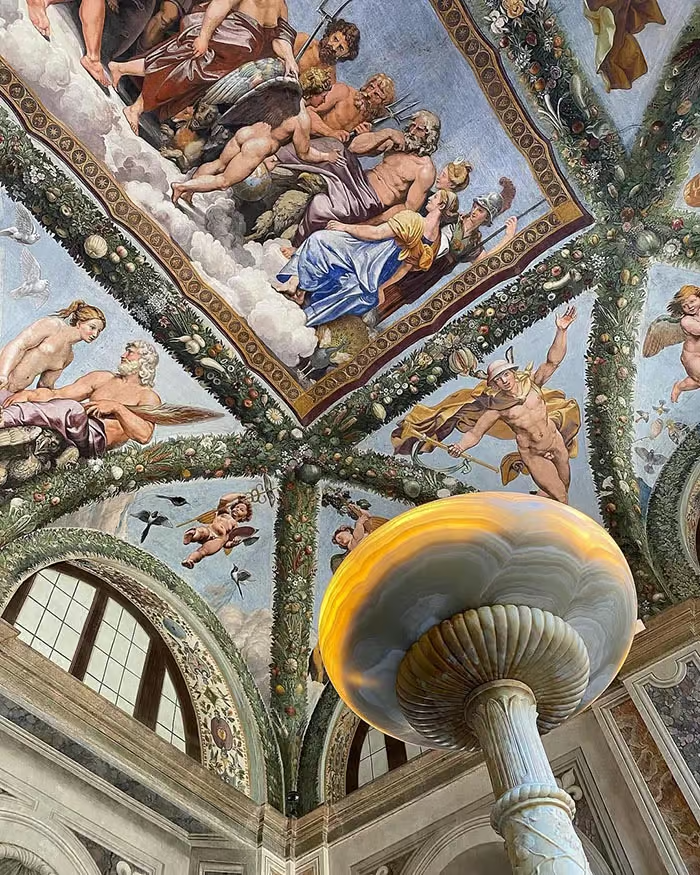
This ground-floor loggia greets you first, and it stops visitors in their tracks. Raphael designed the full fresco cycle in 1518, illustrating the mythological story of Cupid and Psyche from Ovid’s Metamorphoses. Giulio Romano and other members of Raphael’s workshop executed most of the painting, following Raphael’s detailed designs.
The ceiling unfolds like a giant tapestry of garlands, fruit, and dramatic mythological scenes. Gods and goddesses fill the painted sky above. The sense of abundance and joy makes this one of the most festive rooms in all of Renaissance Rome.
The Loggia of Galatea
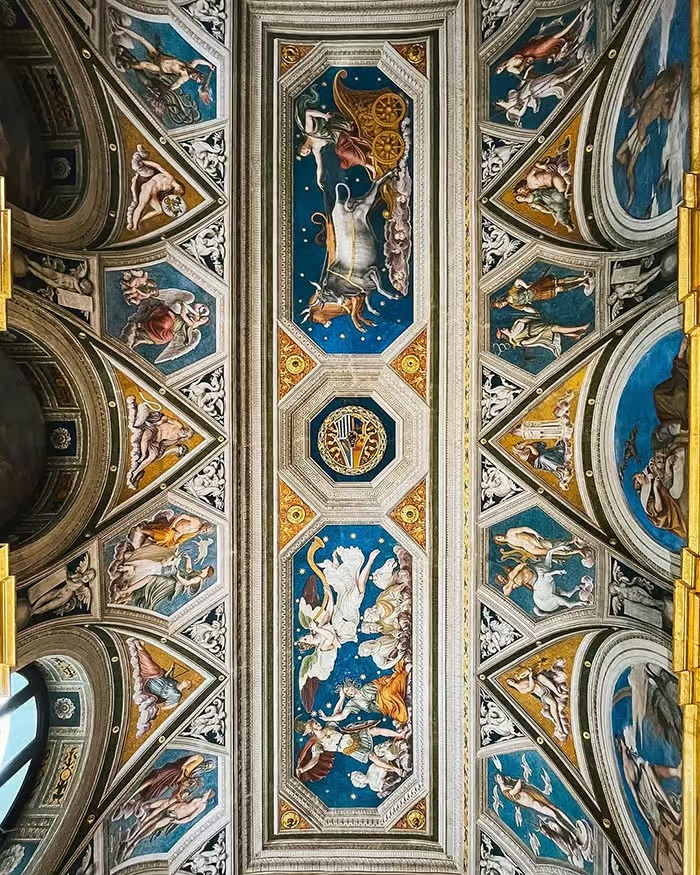
Next, the Loggia of Galatea contains Raphael’s Triumph of Galatea, painted around 1512. This fresco shows the sea nymph Galatea riding a shell-chariot across foaming waves, surrounded by sea creatures and swooping Cupids.
Beside it, Sebastiano del Piombo contributed a powerful fresco of the Cyclops Polyphemus, making this room a fascinating comparison of two distinct artistic styles side by side. Look up at the astrological ceiling above: it depicts a horoscope calculated for Agostino Chigi’s birth date, a unique and personal detail that reflects Renaissance beliefs about the stars.
The Sala delle Prospettive
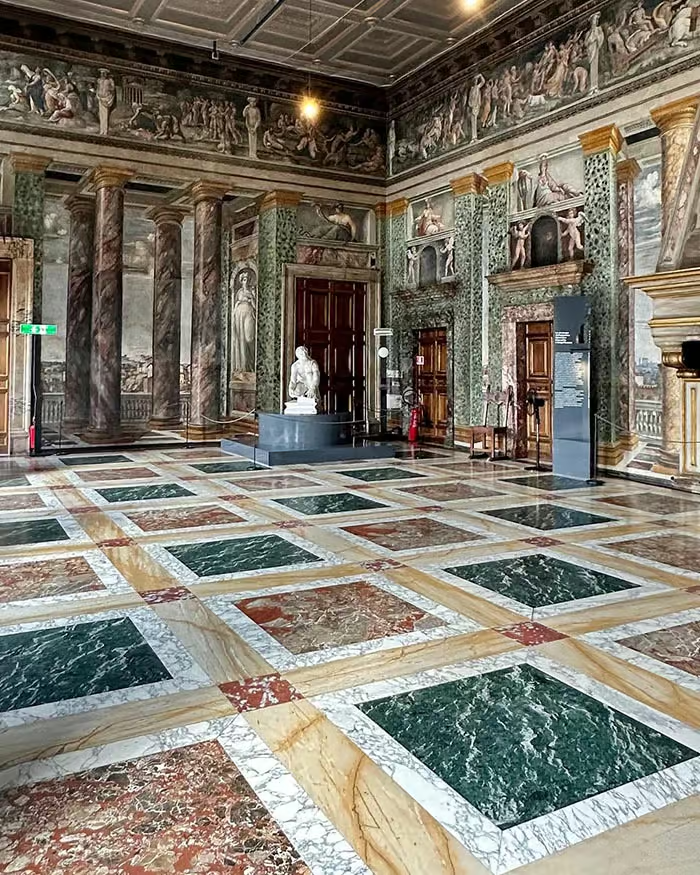
Upstairs, the Sala delle Prospettive (Hall of Perspectives) showcases one of the greatest trompe l’oeil achievements of the entire Renaissance period. Baldassarre Peruzzi painted illusionary columns and archways across every wall, creating the impression of an open colonnade with Rome’s skyline visible through the painted arches.
Standing in the center of this room feels genuinely disorienting in the best possible way. The painted Tiber River, the hills of Rome, and the rolling countryside beyond trick the eye with remarkable precision. Few rooms in any museum in Italy produce this effect so completely.
The Room of Alexander the Great
The upper floor also holds the bedroom of Agostino Chigi, decorated by the Sienese painter Giovanni Antonio Bazzi, known as Il Sodoma. His frescoes depict the Wedding of Alexander the Great and Roxane with graceful, lyrical figures that differ noticeably from Raphael’s style.
The room has a softer, more romantic mood than the dramatic ground-floor loggias. It rewards visitors who take time to look carefully rather than rushing through.
The Gardens
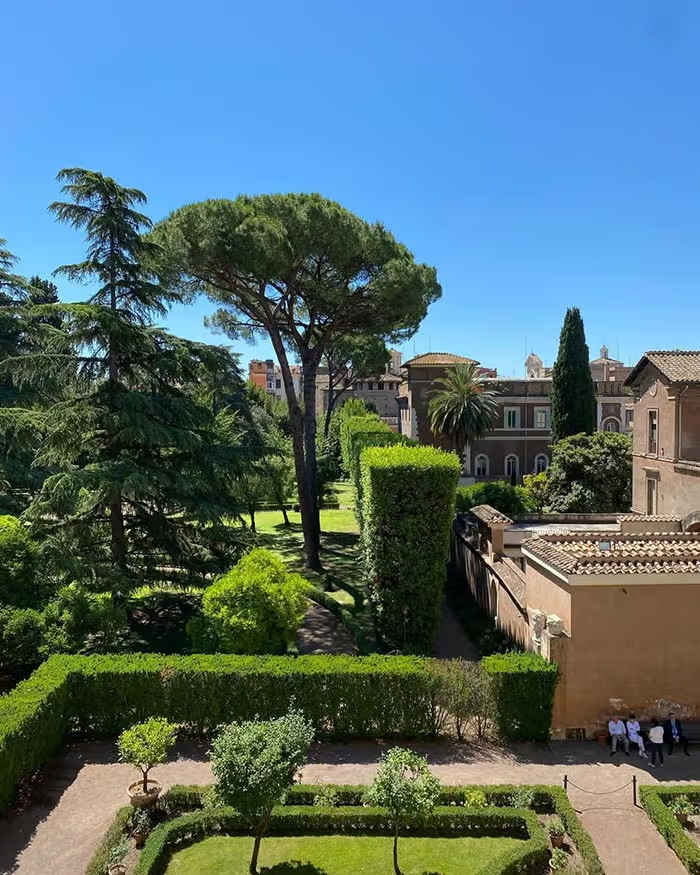
The original Renaissance gardens surrounding the villa survive in partially restored form. Agostino Chigi originally designed them to run directly down to the Tiber River. Today, they offer a quiet outdoor space for a few minutes of calm before or after your visit inside.
Raphael Frescoes Outside the Vatican: Why This Matters
Most visitors experience Raphael’s work only inside the Vatican Museums, specifically in the Raphael Rooms. Villa Farnesina offers something genuinely different: Raphael art in a private, domestic setting rather than a vast museum complex.
The Triumph of Galatea in particular shows a freer, more playful side of Raphael’s genius. He painted it for a patron who was also a personal friend, and that relaxed relationship shows in the energy and spontaneity of the work. For anyone who has stood in the crowded Raphael Rooms and wished for a quieter moment with his art, Villa Farnesina provides exactly that alternative to the Sistine Chapel and Raphael Rooms experience.
Villa Farnesina Ticket Prices and Opening Hours
Ticket Prices
The standard adult ticket costs 12 euros. EU citizens and citizens of non-EU countries aged 18 to 25 pay 9 euros with valid ID. Children and young people under 18 enter completely free of charge.
One important and often overlooked detail: if you visited the Vatican Museums within the previous seven days, you qualify for a discounted entry ticket at Villa Farnesina. Keep your Vatican Museums ticket and present it at the Villa Farnesina ticket office.
- Open: Monday through Saturday, 9:00 AM to 2:00 PM (last entry 1:00 PM)
- Closed: Sundays and major holidays
Every last Sunday of the month (if not a holiday), enjoy free entry from 9:00 a.m. to 2:00 p.m., last entry at 12:30 p.m.
– Villa Farnesina + Biblioteca Corsiniana
€ 15
– Villa Farnesina only.
€12
– Free ticket valid for
Children up to 10 years of age, accompanied by their parents
Visitors with disabilities and their accompanying person.
Accredited journalists with a valid press card.
Authorized tour guides with a valid identification card.
Guided Tours: The Best Way to Visit Villa Farnesina
A guided tour transforms Villa Farnesina from a beautiful but puzzling collection of frescoes into a fully understood masterwork. Expert guides explain the Cupid and Psyche mythology, the astrological ceiling reading, the meaning behind Peruzzi’s trompe l’oeil, and the personal story of Agostino Chigi and his relationship with Raphael.
Without a guide, many visitors walk through quickly without realizing what they are looking at. With a guide, the same 90 minutes becomes a deep and memorable encounter with Italian Renaissance history.
Book a guided Villa Farnesina tour here for the richest possible experience of this extraordinary villa.
Nearby Attractions
Botanical Gardens of Rome (Orto Botanico) sits adjacent to the villa. Palazzo Corsini and Galleria Nazionale d’Arte Antica stand across the street. Trastevere’s charming streets, restaurants, and Santa Maria in Trastevere basilica are nearby. Janiculum Hill viewpoint is a 10-minute walk away.
Practical Tips
- Photography is allowed without flash in most areas.
- No large bags are permitted inside.
- Keep your Vatican Museums ticket. Present it within seven days for a discounted entry fee.
- Dress modestly as a sign of respect.
- The villa works well for families with children interested in art and mythology.
- Allow time for the gardens. The exterior grounds deserve at least 10 minutes after your indoor visit.
- Check the second Sunday schedule. If your dates align, the extended Sunday opening with live music is the most atmospheric way to visit.
FAQ: Visiting Villa Farnesina Rome
Yes, without any reservation. It offers Raphael frescoes, Renaissance architecture, and trompe l’oeil masterpieces in a completely uncrowded setting. For art lovers, it ranks among the finest quiet experiences in all of Rome.
Most visitors spend 1 to 1.5 hours inside the villa itself. Add 20 to 30 minutes for the gardens and exterior. A guided tour typically runs 1.5 hours and covers every room with full context.
Raphael’s “Triumph of Galatea” and “Cupid and Psyche” frescoes are highlights. Peruzzi’s “Sala delle Prospettive” trompe-l’oeil room is also remarkable.
No. Standard adult tickets cost 12 euros. EU students aged 18 to 25 pay 9 euros. Children under 18 enter free. If you hold a Vatican Museums ticket from the previous seven days, you receive a discounted entry rate.
Monday to Saturday: 9:00 AM to 2:00 PM, last entry 1:15 PM. Second Sunday of every month: 9:00 AM to 5:00 PM with live music and guided tour. The villa closes on regular Sundays and all public holidays.
Advance booking is recommended, especially in spring and summer. The villa stays far quieter than the Vatican, but Saturdays and group visit days fill quickly.
Yes. Present a valid Vatican Museums ticket purchased within the previous seven days to qualify for reduced entry. EU citizens aged 18 to 25 also pay a reduced rate of 9 euros with valid ID.
Via della Lungara 230, Trastevere. A 15-minute walk from St. Peter’s Square, or five minutes from the heart of the Trastevere neighborhood via the Ponte Sisto pedestrian bridge.
Conclusion
A visit to Villa Farnesina in Rome rewards anyone who steps off the main tourist trail and follows the Tiber south into Trastevere. Raphael frescoes in an intimate 16th-century villa, trompe l’oeil rooms that deceive the eye, and a neighborhood that invites slow exploration after your visit: this is Rome at its most genuinely special. Book your tickets in advance, consider a guided tour for the deepest experience, and arrive early to enjoy the frescoes in almost complete solitude.
Book your guided Villa Farnesina tour here and discover one of Rome’s most beautiful hidden gems today.