
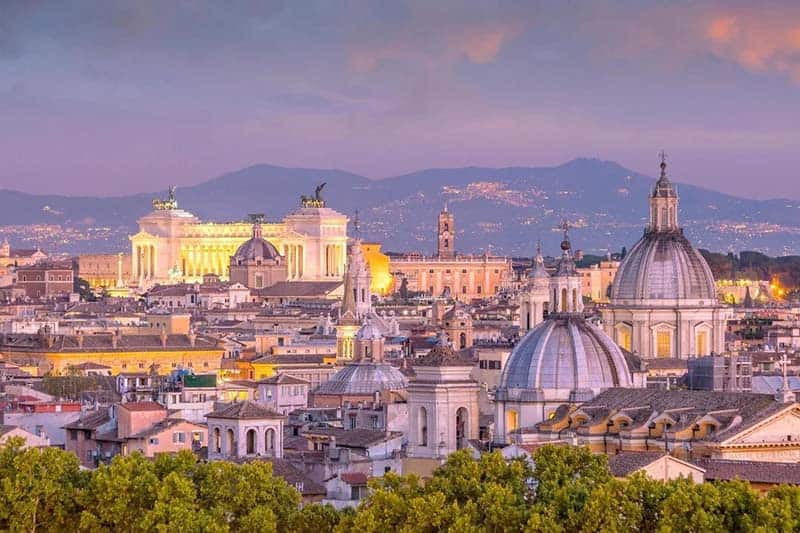
Janiculum Hill (in Italian Gianicolo) in Rome offers breathtaking panoramic vistas over the Eternal City, blending peaceful green spaces with monuments honoring Italian unification heroes. Though not among Rome’s famous Seven Hills, this elevated spot west of the Tiber River stands as the second-tallest point in the city and draws travelers seeking spectacular views from St. Peter’s Basilica to the Colosseum. You climb its pathways and discover a quieter side of Rome where history and nature converge.
History of Janiculum Hill
Ancient Romans named Janiculum Hill after Janus, the god of beginnings and transitions, believing it housed temples dedicated to this deity who watched over the city. Rome’s fourth king, Ancus Marcius, recognized its strategic importance and fortified it with defensive walls while building the Pons Sublicius bridge to connect it across the Tiber.
The hill served as a critical military lookout throughout Roman history, including during the 508 BC battle against Lars Porsena. In 1849, Giuseppe Garibaldi and his forces fought French troops here while defending the revolutionary Roman Republic, holding out for weeks despite being outnumbered. This pivotal battle for Italian independence inspired numerous monuments across the hilltop commemorating Garibaldi and his fallen soldiers.
Landmarks and Highlights
View of Janiculum Hill from the northeast, featuring San Pietro in Montorio, Academia de España, Acqua Paola fountain, and the American Academy in Rome
Janiculum Hill Rome showcases fascinating attractions that blend history, architecture, and stunning city views.
The equestrian Monument to Garibaldi (1895) by Emilio Gallori dominates the crest, with 84 busts honoring Italian independence heroes lining the paths. Daily at noon, a cannon fires toward the Tiber as a time signal, a tradition dating to 1847 that resumed in 1959 after a 20-year pause.
The baroque Fontana dell’Acqua Paola, a monumental 17th-century marble fountain celebrating a reopened Roman aqueduct, dazzles visitors with its grandeur. Nearby, the Church of San Pietro in Montorio houses Bramante’s Tempietto, marking the believed site of St. Peter’s crucifixion.
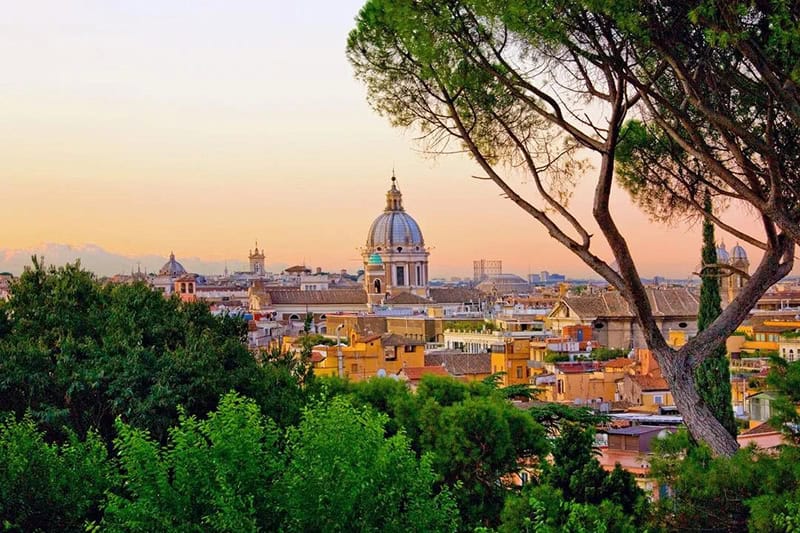
The Manfredi Lighthouse, a 1911 gift from Italian immigrants in Argentina, adds unique charm to the landscape. From the terrace, you see Rome’s domes and bell towers spread below, including the Pantheon, Piazza Venezia, and Villa Borghese.
Tips for Visiting Janiculum Hill
Travelers maximize their Janiculum Hill experience with these practical suggestions for a memorable outing.
The hill is free and open 24 hours daily, making it accessible anytime for views or romantic evening strolls.
Wear comfortable shoes for the uphill walk and cobblestone paths. Bring water and snacks since fewer vendors operate here than at tourist-heavy sites. Wheelchair accessible entrance and parking available.
What to See and Do: Admire panoramic views from the terrace, explore the Garibaldi Monument, visit the Tempietto and San Pietro in Montorio church, and enjoy the Fontana dell’Acqua Paola. Watch puppet shows or pony rides often available for children.
Nearby Attractions: Combine with Trastevere’s charming streets, Villa Farnesina (577m away), or the Basilica di Santa Maria in Trastevere. The location makes it perfect for sunset before dinner in Trastevere.
FAQ: Common Questions About Janiculum Hill Rome
Named after the god Janus, it served as a strategic military point from ancient times and hosted Garibaldi’s 1849 battle defending the Roman Republic against French forces.
It lies west of the Tiber River, outside the boundaries of ancient Rome, though it’s the second-tallest hill in the contemporary city.
At noon each day, a cannon fires toward the Tiber as a time signal, a tradition from 1847 that resumed in 1959 after interruption.
The Garibaldi Monument, Fontana dell’Acqua Paola fountain, Tempietto del Bramante, panoramic terrace views, and the Manfredi Lighthouse.
Yes, the hill is free and open 24 hours daily, with wheelchair accessible facilities.
Walk uphill from Trastevere or take buses 115, 870, 710, 984, or 116T. The climb takes about 15-20 minutes from Trastevere.
Sunset for golden light and romantic atmosphere, or arrive before noon to witness the daily cannon fire tradition.