
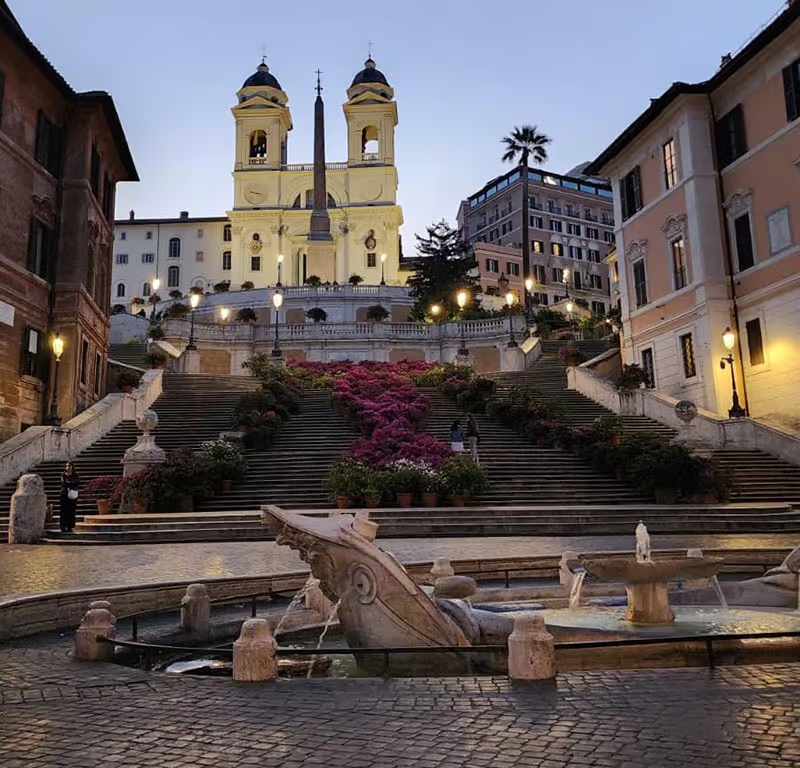
Visiting the Spanish Steps in Rome is one of the most iconic experiences the city offers. These 135 baroque steps rise dramatically from Piazza di Spagna to the Trinità dei Monti church at the top, framing one of the most photographed views in Europe. Entry is completely free, the site never closes, and the surrounding neighborhood fills with some of Rome’s best streets, fountains, and hidden gems.
However, a few important rules apply here that catch many tourists off guard. This guide covers everything you need to know before you arrive: the history, the rules, what to see nearby, the best time to visit, and the smartest free tour options for budget travelers.
Why Are the Spanish Steps Called the Spanish Steps?
The name surprises many visitors, because the French actually built the steps. The staircase takes its name from the Palazzo di Spagna at the foot of the steps, which housed the Spanish Embassy to the Holy See.
French diplomat Étienne Gueffier funded the construction with a bequest of 20,000 scudi. Architect Francesco de Sanctis designed the stairway between 1723 and 1725, with Alessandro Specchi also contributing to the project. The official Italian name is the Scalinata di Trinità dei Monti, linking Piazza di Spagna at the base to the Trinità dei Monti church at the summit.
A Brief History of the Spanish Steps
The steps took nearly a century of diplomatic negotiations to build. France and Spain both wanted influence over the project, which delayed its construction for decades. The final design connected the French-patronized Trinità dei Monti church above to the Spanish diplomatic quarter below, making the staircase a literal meeting point of competing European powers.
Over the centuries, the steps became a gathering place for artists, poets, and travelers. The English Romantic poet John Keats lived in the house directly beside the steps and died there in 1821. Audrey Hepburn made the steps globally famous in the 1953 film Roman Holiday, cementing their status as one of the world’s most romantic landmarks. In 2016, the luxury brand Bulgari funded a full restoration of the travertine stone at a cost of 1.5 million euros.
Is It Worth Visiting the Spanish Steps in Rome?
Absolutely yes. A visit to the Spanish Steps in Rome costs nothing, takes no advance planning, and fits into almost any Rome itinerary. The steps themselves are a masterpiece of baroque urban design. The view from the top over Rome’s rooftops justifies the climb on its own.
Beyond the staircase, the surrounding area packs in several excellent sights. The Fontana della Barcaccia sits directly at the foot, the Trinità dei Monti church crowns the top, the Keats-Shelley House offers a small paid museum on the right side, and Via Condotti stretches westward with Gucci, Prada, Valentino, and Rome’s finest luxury boutiques. Even if you only spend 30 minutes at the steps themselves, the entire piazza di Spagna area rewards a full hour of easy exploration.
What to See at and Near the Spanish Steps
Fontana della Barcaccia
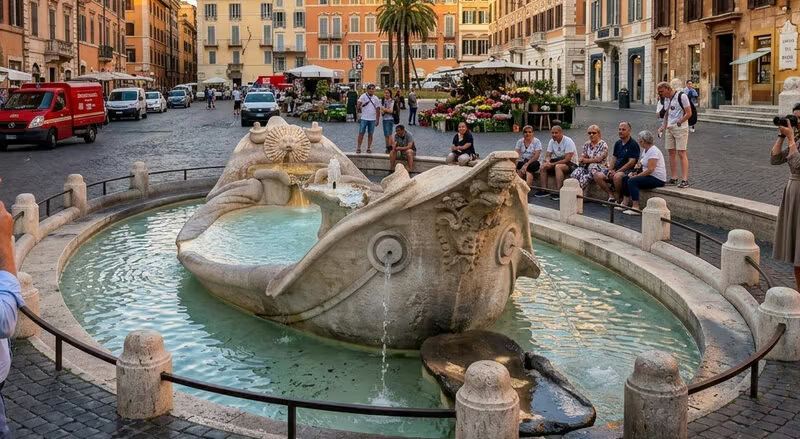
At the foot of the steps, the Fontana della Barcaccia is a beautiful baroque fountain shaped like a sinking boat. Pietro Bernini and his more famous son, Gian Lorenzo Bernini, sculpted it in the early 17th century. The fountain draws water from the Aqua Virgo aqueduct, originally built in the 1st century BCE and still functioning today.
The fountain sits partially below street level because the aqueduct’s water pressure was too low to power a standard tall fountain. Bernini cleverly turned this limitation into a poetic design.
Trinità dei Monti Church
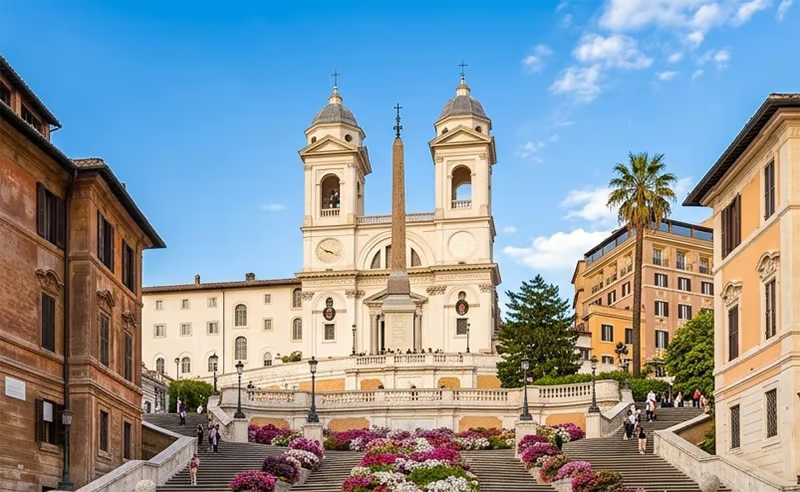
At the very top of the steps, the Trinità dei Monti church offers free entry and a genuinely rewarding interior. The twin towers frame the top of the staircase and create one of Rome’s most recognizable skyline silhouettes. Go inside briefly to appreciate the quiet space after the crowds below.
The terrace immediately outside the church also delivers excellent views over Rome’s rooftops toward the historic center.
Keats-Shelley Memorial House
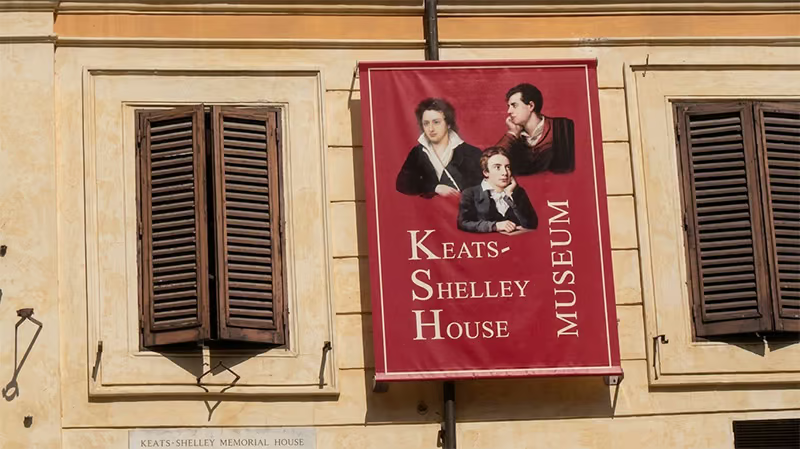
On the right side of the steps at the base, the Keats-Shelley House is a small paid museum dedicated to the Romantic poets who lived and worked in Rome. John Keats died in this building in 1821 at just 25 years old. The museum holds manuscripts, letters, and personal objects connected to Keats, Shelley, and Byron.
Entry costs a few euros and suits visitors with an interest in literary history. It is easy to combine with a Spanish Steps visit since it takes under 30 minutes.
Via Condotti and Luxury Shopping
Via Condotti runs westward from Piazza di Spagna directly toward the Tiber River. This short street holds some of Rome’s finest luxury boutiques: Gucci, Prada, Valentino, Bulgari, and others line both sides. Even if shopping is not your priority, a short walk along Via Condotti gives a sense of how the neighborhood has historically attracted Rome’s wealthiest residents and visitors.
Via Margutta and Via del Babuino
Two quieter streets branch off from Piazza di Spagna toward the north. Via Margutta, famously the street where Audrey Hepburn’s character lived in Roman Holiday, holds art galleries and charming residential buildings. Via del Babuino connects southward toward Piazza del Popolo and is lined with antique dealers and independent shops.
Pincian Hill and Villa Borghese Gardens
From the top of the steps, a short walk north leads to the Pincian Hill terrace. This elevated platform offers one of the best panoramic views over Piazza del Popolo and the whole northern stretch of Rome. From there, the Villa Borghese gardens extend eastward, offering a green and peaceful escape. The Borghese Gallery sits within the park grounds.
Can You Sit on the Spanish Steps?
No. Sitting on the Spanish Steps has been banned since August 2019. Rome’s city council introduced the rule to protect the site after Bulgari’s restoration and growing concerns about tourist damage to the landmark.
The rule surprises many visitors who remember a time when sitting on the steps felt like a Roman tradition. Today, high-visibility officials patrol the area continuously. They blow whistles at anyone who sits down and can issue fines immediately.
How Much Is the Fine for Sitting on the Spanish Steps?
The fine for sitting on the Spanish Steps starts at 250 euros. If you stain or cause any damage to the travertine stone, the fine rises to 400 euros.
Can You Eat or Drink on the Spanish Steps?
No. Eating and drinking on the steps and in Piazza di Spagna are also prohibited under the same 2019 rules. The fine for eating or causing damage applies at the higher rate of up to 400 euros.
Can You Ride a Bike or Scooter on the Spanish Steps?
No. Using any kind of wheeled transport on or around the steps is strictly forbidden. The 2019 rules specifically ban dragging wheeled suitcases down historic staircases and using any vehicle on protected areas. Rome’s municipal police enforce all these rules actively, especially during peak tourist season.
Why Can’t You Sit on the Spanish Steps?
The ban protects one of Rome’s most fragile historic monuments. The steps are part of the UNESCO World Heritage listing for Rome’s historic center. Decades of millions of visitors sitting, eating, and drinking on the travertine stone caused visible wear and damage. The 2019 crackdown followed Bulgari’s expensive restoration and growing public pressure to protect the site. The rules also reflect a broader push by Rome’s authorities to manage tourist behavior across multiple central landmarks, including the Trevi Fountain.
Real Cases: Tourists Fined at the Spanish Steps
Since the rule came into force, Rome’s municipal police have issued fines to tourists who either did not know the rule or chose to ignore it.
When the ban launched in August 2019, police deployed officers in yellow vests at the steps and immediately began removing seated visitors. Whistles replaced verbal warnings as the primary enforcement tool. International news coverage of the ban spread quickly, with outlets in the United States, Australia, and the UK reporting on the new restrictions.
By 2024, the rule had become firmly established and widely known. Multiple travel publications still report regular enforcement activity, with fines continuing to be issued to visitors who sit. The combination of uniformed patrols, frequent inspections, and the high fine amounts has made the Spanish Steps one of the most actively monitored tourist sites in Rome.
The key lesson is simple: do not sit, do not eat, and do not bring food onto the steps. Authorities enforce the rules with genuine consistency, not just occasional spot checks.
What Is the Best Time to Visit the Spanish Steps?
Travelers maximize their Spanish Steps experience with these essential insights.
Best Times to Visit
Early morning (before 9 AM) or late evening offers peaceful moments with fewer crowds. Avoid midday when tour groups converge.
Important Rules
Sitting on the steps has been prohibited since 2019 to preserve the monument. Fines of up to €400 apply for violations. Eating and drinking on the steps are also banned. These rules protect the historic travertine from damage.
Spring brings beautiful azalea displays decorating the steps.
What Is Near the Spanish Steps in Rome?
The Spanish Steps sit at the center of one of Rome’s richest walking areas. Here are the nearest highlights with approximate walking times:
- Trevi Fountain: 8 minutes on foot heading east
- Pantheon: 15 minutes walking south through narrow historic streets
- Piazza del Popolo: 10 minutes walking north along Via del Babuino
- Piazza Navona: 20 minutes walking southwest
- Borghese Gallery: 15 minutes walking east through Villa Borghese gardens
- Castel Sant’Angelo: 25 minutes walking west
A single morning combining the Spanish Steps, Trevi Fountain, and Pantheon forms one of Rome’s most popular and satisfying walking routes.
Free Walking Tours That Include the Spanish Steps
The Spanish Steps do not require any ticket, so there is no direct affiliate option here. However, a free walking tour that includes the steps is one of the best budget options in Rome. Expert licensed guides cover the Spanish Steps alongside the Trevi Fountain, Pantheon, Piazza Navona, and other highlights in a single route.
Free walking tours operate on a tip-based model. You pay nothing upfront and simply tip your guide at the end based on what you felt the tour was worth. This makes them an excellent choice for budget travelers who still want quality historical context and an organized route.
Book your free walking tour of Rome including the Spanish Steps here – these tours depart daily
Browse Rome free walking tours here for tip-based tours with licensed local guides who cover many stops like Trevi Fountain, and Piazza Navona in one circuit.
Important tip: Even on free tours, booking your spot in advance is essential. Tour operators limit group sizes, and popular morning and afternoon slots fill up quickly, especially in spring and summer.
FAQ: Visiting the Spanish Steps Rome
Yes, completely free. The steps never close and no ticket is required. Only the Keats-Shelley House beside the steps charges entry. The Trinità dei Monti church at the top is also free.
No. The Spanish Steps are a public outdoor monument. Walk up, take photographs, and explore freely. No booking or ticket applies.
Most visitors spend 20 to 40 minutes at the steps and Piazza di Spagna. Add another 30 minutes if you enter the church or Keats-Shelley House. A free walking tour that includes the steps runs about 2.5 to 3 hours and covers the full surrounding area.
The Spanish Steps have 135 steps in total. They rise from Piazza di Spagna at the base to Piazza della Trinità dei Monti at the top.
No. Sitting has been banned since 2019. The fine starts at 250 euros and rises to 400 euros for any damage caused. Police patrol the area actively and enforce the rule continuously.
The Fontana della Barcaccia (Fountain of the Old Boat). The Bernini family created it in 1627. It commemorates a Tiber River flood.
No. Eating, drinking, and picnicking on the steps are all prohibited under the same 2019 ordinance. Fines of up to 400 euros apply.
Take Metro Line A to the Spagna stop. The exit brings you directly into Piazza di Spagna at the foot of the steps. The walk from the Trevi Fountain takes about 8 minutes. From the Pantheon, allow around 15 minutes on foot.
Francesco de Sanctis won the 1717 design competition. He worked with Alessandro Specchi to complete the project.
Early morning between 7:00 AM and 8:00 AM offers the quietest and most beautiful experience. Avoid weekend afternoons and midday during summer months when crowds peak.
Conclusion
Seeing the Spanish Steps in Rome requires no ticket, no booking, and no special preparation beyond one golden rule: do not sit down. These 135 baroque steps connect two of Rome’s most beautiful spaces and place you at the heart of a neighborhood packed with fountains, churches, luxury streets, and literary history. Arrive early, walk up to the Trinità dei Monti church, enjoy the rooftop view, and then join a free walking tour to connect the steps with the Trevi Fountain, Pantheon, and Piazza Navona in one seamless morning. Few experiences in Rome deliver this much for zero cost.