
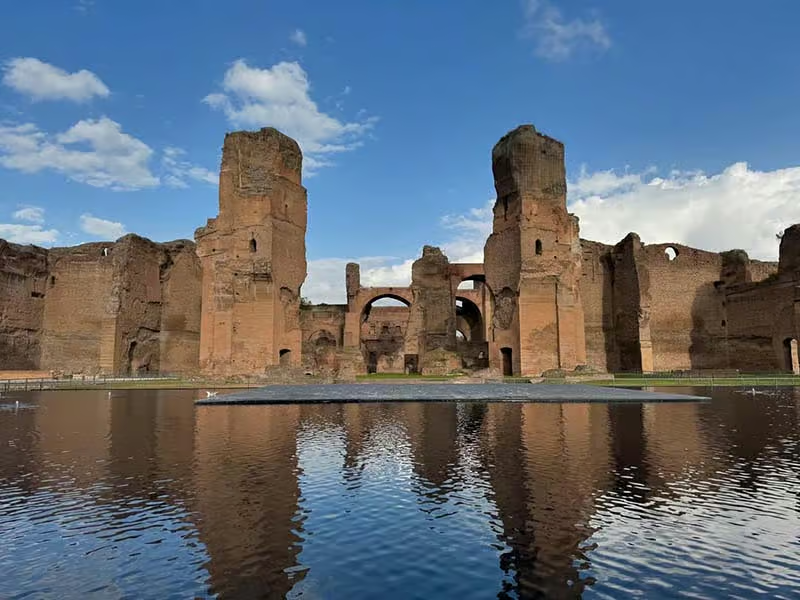
Visiting the Baths of Caracalla in Rome means stepping inside one of the most staggering feats of ancient engineering ever built. These ruins rise up to 30 meters in places, stretch across 11 hectares, and once welcomed up to 8,000 bathers in a single day. The site is open, accessible, and far quieter than the Colosseum, yet just as extraordinary. If you want to experience ancient Rome at its most dramatic and uncrowded, the Baths of Caracalla deserve a firm place on your itinerary.
Can You Visit the Baths of Caracalla?
Yes, absolutely. The Terme di Caracalla is a fully open archaeological site that welcomes visitors year-round. You can explore the vast main bathing halls, walk across the ancient floor mosaics, and descend into the underground tunnels and Mithraeum with the right ticket or tour. The site forms part of the UNESCO World Heritage listing for Rome’s historic center, designated in 1980.
Is It Worth Visiting the Baths of Caracalla?
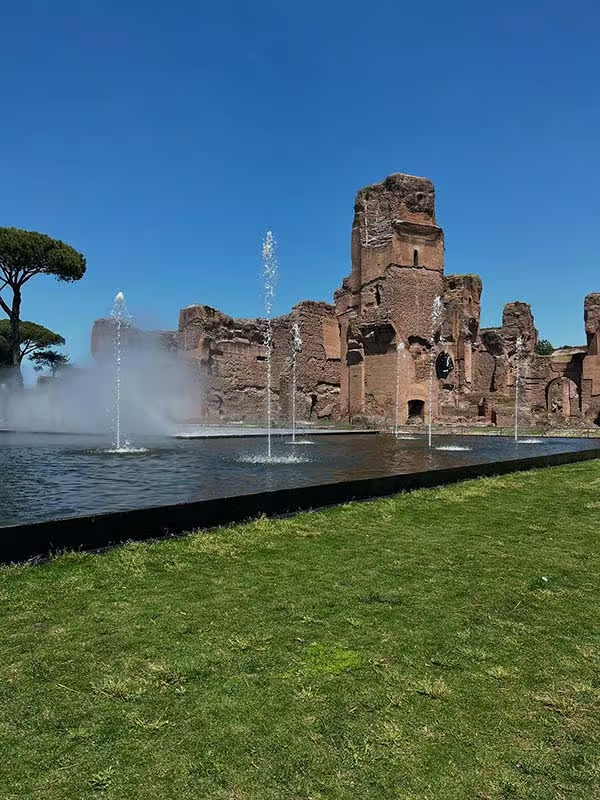
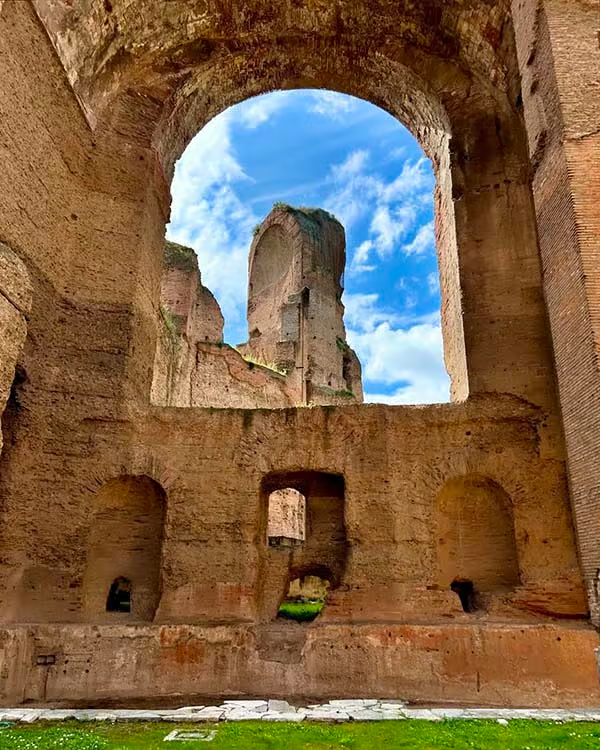
Without question, yes. The Baths of Caracalla rank among the most underrated ancient sites in all of Rome. Most visitors skip them entirely in favor of the Colosseum. That leaves the ruins gloriously uncrowded and genuinely atmospheric.
The scale here impresses even visitors who have already seen the Colosseum. Towering arches, vast roofless halls, intact floor mosaics, and two kilometers of underground tunnels beneath your feet make this one of the richest archaeological experiences the city offers. For anyone with even a passing interest in ancient Roman history, the Baths of Caracalla are absolutely worth visiting.
A Brief History: From Imperial Luxury to Ruins
Emperor Septimius Severus first commissioned the baths complex. His son, Emperor Caracalla, pushed construction forward between 211 and 217 CE. The official ancient name was the Thermae Antoninianae, named after the Antonine dynasty.
At their peak, these were the second largest baths in Rome, capable of serving 1,600 bathers at once according to some estimates, and up to 8,000 visitors per day according to others. The complex held cold pools, warm rooms, hot baths, outdoor swimming pools, gardens, gymnasiums, libraries, and lecture halls. For Romans, visiting the baths was not just about hygiene. It was a full social and cultural event.
The site functioned for over 300 years. Ostrogoth King Vitiges destroyed the aqueducts supplying the baths in 537 CE, ending their operation permanently. Earthquakes and centuries of stone robbing slowly dismantled the upper structures. What remains today still communicates the extraordinary ambition of the original building.
What Is Inside the Baths of Caracalla?
Exploring the Terme di Caracalla takes you through the full sequence of the ancient Roman bathing circuit. Here is what to expect at each stage.
The Natatio: Outdoor Swimming Pool
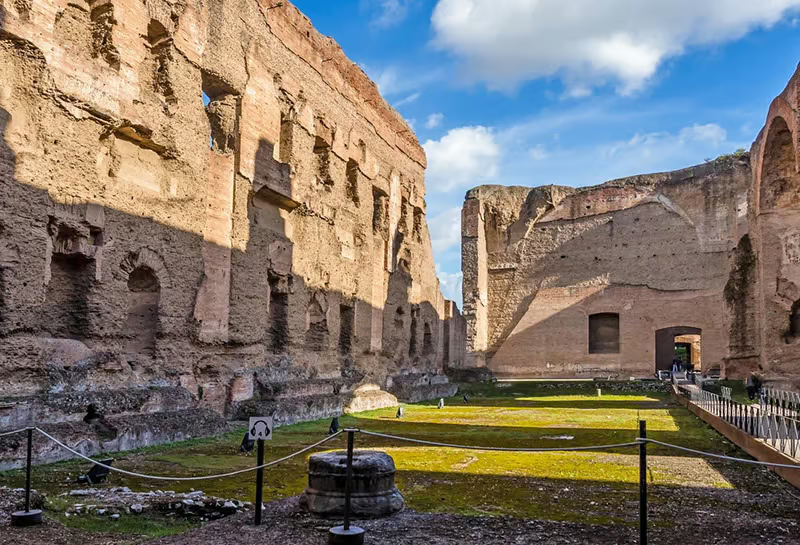
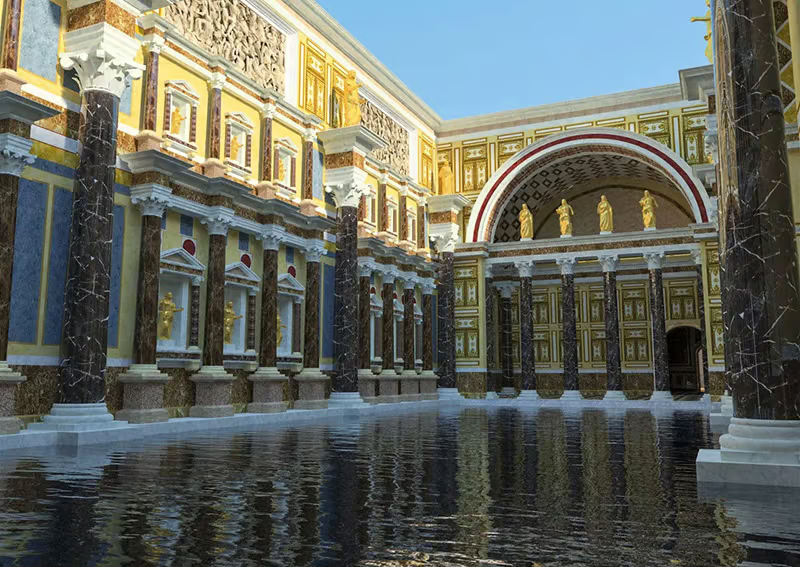
You enter through the northwest wall, where the original main entrance stood. Ahead, the Natatio (outdoor swimming pool) greets you first. This Olympic-sized pool measured roughly 50 by 22 meters. Its northern wall rose above 20 meters, structured by three enormous grey granite columns with ornamental statue niches at multiple levels.
The pool had no roof. Romans installed bronze mirrors overhead to direct sunlight into the water. Standing here gives an immediate sense of the scale of the whole complex.
The Frigidarium: Cold Bath and Towering Arches
Beyond the Natatio, the Frigidarium offered cold plunge baths inside a towering vaulted hall. The arches here once supported a roofline over 30 meters high. Only fragments survive, but they still communicate the staggering ambition of the original construction.
The Tepidarium and Caldarium: Warm and Hot Baths
The Tepidarium served as a warm transition room between the cold and hot sections of the baths. Bathers moved through it gradually to allow their bodies to adjust. Next, the Caldarium housed the hot baths in a large circular domed room.
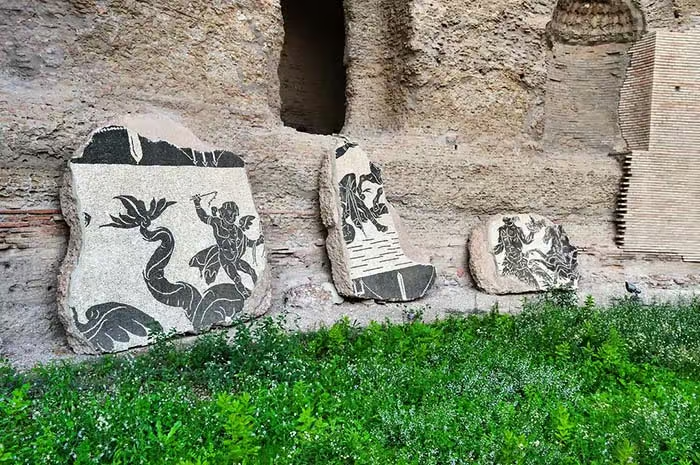
The hypocaust underfloor heating system powered the Caldarium. Slaves working in the underground furnace rooms below forced hot air through channels beneath the floor tiles. The entire floor functioned as a giant radiator. Sections of the original floor mosaic survive and show Roman athletes, wrestlers, and boxers in detailed, vivid tilework.
Gardens, Gymnasiums, and Library Halls
The bathing halls sat at the center of a much larger precinct. Manicured gardens surrounded the main building, filled with fountains, walking paths, and plants. Along the outer walls, large semicircular exedrae held additional rooms: gymnasiums for exercise, lecture halls, and monumental nymphaea (decorative fountain grottos).
The complex also held two libraries, one in Greek and one in Latin. Romans spent entire afternoons here, moving between swimming, exercise, study, and socializing.
The Underground: The Most Fascinating Part
Below the main complex, approximately two kilometers of tunnels run beneath the entire site. This underground world housed the furnaces, timber stores, cisterns, water systems, and a working mill. Hundreds of slaves operated this hidden engine room, keeping the hot water flowing and the heating system running above.
The underground is included in standard entry tickets. Descending into it transforms your understanding of how the baths functioned.
What Is the Mithraeum at the Baths of Caracalla?
The Mithraeum is the single most fascinating discovery in the entire underground. Archaeologists uncovered it in 1912, and it holds the title of the largest documented Mithras worship space in Rome.
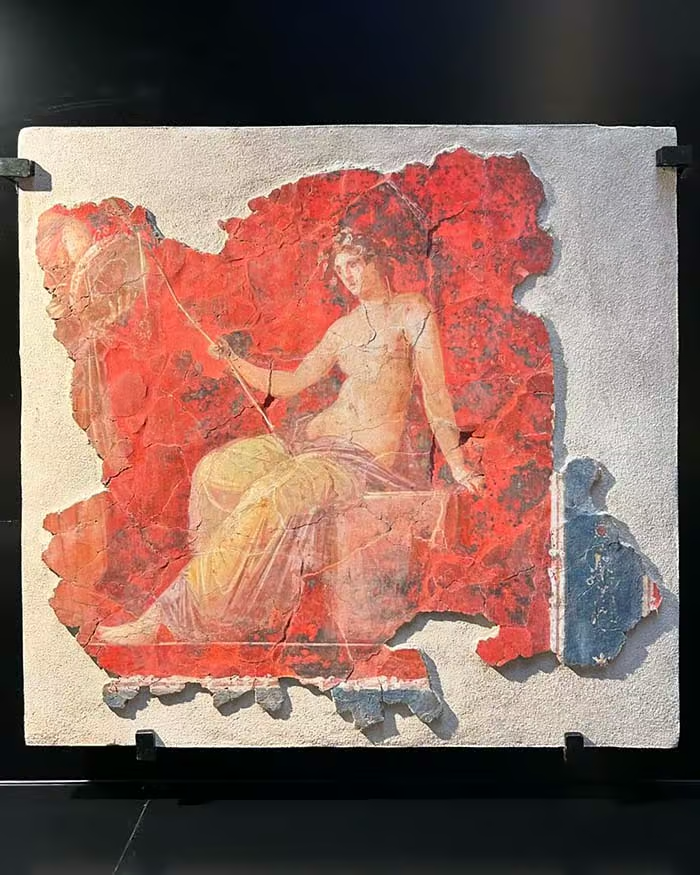
Mithraism was a mystery religion centered on the Persian god Mithras, a solar deity of eastern origin. The cult attracted working-class Romans, soldiers, and craftsmen during the 2nd and 3rd centuries CE. Initiates met in dark underground chambers to conduct secret rituals. The Mithraeum at Caracalla consists of five interconnected rooms with cross-vaulted ceilings and two lateral balconies. A striking fresco of Mithras survives on the wall, making this one of the most evocative religious spaces in all of ancient Rome.
Can You Visit the Baths of Caracalla Underground?
Yes. Standard entry tickets include access to the underground level and the Mithraeum. However, the underground is most fully understood with a guided tour. Guides explain the heating system, the slave-operated furnace rooms, and the Mithraeum symbolism in ways that context boards alone cannot convey.
Special evening guided tours run during certain periods, including autumn months, offering a uniquely atmospheric night-time descent into the tunnels with scenic lighting effects.
Book a guided underground tour of the Baths of Caracalla with Mithraeum access here for the most complete and memorable visit possible.
Baths of Caracalla Tickets: Prices and What Is Included
– Tuesday to Sunday: 9:00 AM to one hour before sunset
– Mondays: 9:00 AM to 2:00 PM
– Closed January 1 and December 25
Wear comfortable walking shoes for uneven surfaces. Bring water and sun protection, especially in summer. Limited shade is available.
Closures include Sundays (except last of month), January 1 and 6, February 11, March 19, April 21, May 1, June 29, August 15 and 16, November 1, December 8, 25, and 26.
On the first Sunday of each month during October through March, free entry applies for all visitors.
Photography is allowed. Audio guides enhance understanding of the layout.
Navigate me
Do You Need to Book Baths of Caracalla Tickets in Advance?
Online pre-booking is strongly recommended, especially from April through October. Walk-up queues can build quickly during peak periods. Booking online also confirms your time slot, which makes planning the rest of your Rome day much easier.
Book your Baths of Caracalla skip-the-line tickets here and walk straight to the entrance without queuing.
For the underground Mithraeum and guided tour experience, book even earlier. Guided tour slots fill up faster than standard entry during peak season.
Reserve your Baths of Caracalla guided underground tour here for a fully guided visit that covers the main complex and the Mithraeum in one session.
What Is the Best Time to Visit the Baths of Caracalla?
Arrive at opening time (9:00 AM) for the most peaceful experience. Early morning gives you the vast ruins almost entirely to yourself. Midday brings the most visitors and the strongest summer heat, which can feel intense in the open roofless halls.
Late afternoon, around 4:00 PM to 5:00 PM on a summer evening, offers beautiful golden light on the ancient brickwork and significantly thinner crowds. Spring (April to June) and autumn (September to October) deliver the most comfortable temperatures for exploring the outdoor sections of the site.
Guided Tours: The Best Way to Visit the Baths of Caracalla
A self-guided visit gives you the freedom to explore at your own pace. However, a guided tour unlocks layers of history that most independent visitors simply miss.
Expert guides explain the full sequence of the Roman bathing ritual, the engineering behind the hypocaust system, the social role of the baths in Roman daily life, and the meaning of the Mithraeum carvings and frescoes. Without guidance, many visitors walk through the underground without fully understanding what they are seeing.
Tour options include:
- Standard guided group tours: Cover the main complex and underground level with skip-the-line access
- Underground and Mithraeum specialist tours: Focused specifically on the subterranean world beneath the baths
- Combined Appian Way and Baths of Caracalla tours: Pair both ancient sites in a single half-day excursion
- Evening guided tours (seasonal): Offer night-time access to the underground with atmospheric lighting
Browse Baths of Caracalla guided tours with fast-track entry here and choose the format that suits your group and schedule.
Tip: Always confirm that underground and Mithraeum access is specifically included in your chosen tour. Not all guided tours cover the full site.
What to See
Explore the massive caldarium ruins with impressive dome remnants. Walk through the frigidarium and tepidarium spaces. View the Olympic-sized natatio pool area. Discover underground tunnels and hypocaust heating systems. Admire mosaic fragments and architectural details.
Nearby Attractions
Circus Maximus sits nearby for additional Roman history. Walk to Aventine Hill for panoramic views. Visit the Appian Way for ancient road exploration.
How to Get to the Baths of Caracalla
By Metro
The simplest and fastest route uses Metro Line B. Take the metro to the Circo Massimo stop. From there, the Baths of Caracalla entrance sits roughly a five-minute walk to the south. The route is flat, straightforward, and well-signed.
By Bus and Tram
Several bus lines stop near the site on Viale delle Terme di Caracalla. Tram line 3 also connects the area to the historic center and Trastevere. Check current Rome public transport maps for the most up-to-date stops.
On Foot from the Aventine and Circus Maximus
If you are already visiting the Circus Maximus or the Aventine Hill, the Baths of Caracalla extend the walk naturally. From the Circus Maximus, the ruins are visible within minutes on foot. Combining both sites makes for a satisfying ancient Rome half-day.
The official address is Viale delle Terme di Caracalla 52, Rome.
FAQ: Visiting the Baths of Caracalla Rome
A self-guided visit takes 1 to 1.5 hours for the main complex. Add 30 minutes if you explore the underground thoroughly. A guided tour typically runs 1.5 to 2 hours and covers every section with full historical context.
No. Standard adult entry costs 10 euros, which includes the 2-euro online reservation fee. EU citizens aged 18 to 25 pay 4 euros. Children under 18 enter free. On the first Sunday of the month from October through March, free entry applies to all visitors.
Advance booking is strongly recommended from spring to autumn. Online booking secures your time slot and avoids walk-up queues during busy periods. Book your Baths of Caracalla tickets here before you travel.
Yes. The underground tunnels and the Mithraeum are included in the standard entry ticket. A guided underground tour provides the richest experience and is especially recommended for the Mithraeum, which benefits greatly from expert explanation.
Yes. The site is fully open to visitors Tuesday through Sunday. The ruins, floor mosaics, underground tunnels, and Mithraeum are all accessible with a standard ticket.
Yes, for most children it works very well. The open outdoor setting, the vast scale, and the underground tunnel descent all capture young imaginations. Older children and teenagers find the Mithraeum particularly fascinating. Stick to comfortable footwear and bring water in summer.
Conclusion
Exploring the Baths of Caracalla in Rome delivers one of the most powerful encounters with ancient history the city offers, all without the overwhelming crowds of the Colosseum or the Forum. From the towering frigidarium arches and intricate floor mosaics to the two kilometers of underground tunnels and the extraordinary Mithraeum below, the Terme di Caracalla rewards every visitor who makes the trip. Book your tickets in advance, consider a guided underground tour for the deepest experience, and pair the visit with the Circus Maximus or the Appian Way for a truly unforgettable ancient Rome day.