
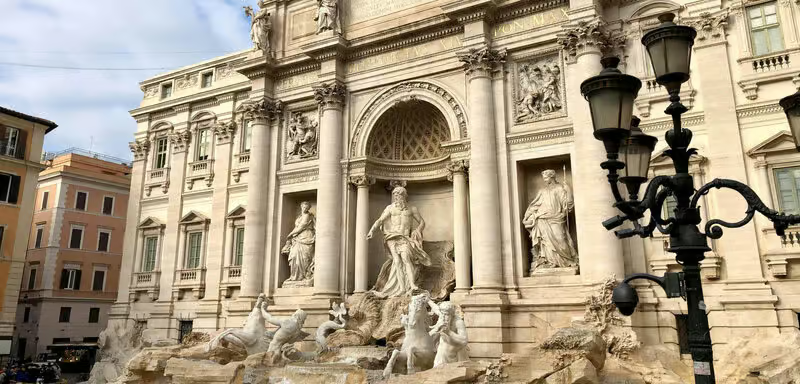
Most people stand at the Trevi Fountain, take their photograph, toss a coin, and move on. Very few stop to ask what they are actually looking at. The sculptures, the symbols, the vase, the inscription, and even the location itself all carry deliberate meaning. Once you know the story behind each element, the fountain transforms from a beautiful baroque backdrop into one of the most richly layered monuments in the world.
This guide unpacks every symbol, figure, and hidden detail of the Fontana di Trevi, from the central statue that almost everyone misidentifies to the personal revenge hidden in plain sight on the right-hand side.
What Does the Word Trevi Mean?
The Junction of Three Ancient Roads
The name Trevi comes from the Latin trivium, meaning the meeting point of three roads. Three ancient Roman streets converged at the piazza where the fountain now stands. The name has nothing to do with the Italian words for three (tre) or travel, despite what many tourist guides suggest.
This crossroads location was not chosen by accident. Terminal display fountains in ancient and Renaissance Rome, known in Italian as mostre, traditionally marked the endpoint of an aqueduct. They announced the arrival of water into the city in the most dramatic architectural language available.
If you are planning your trip, see my full visiting the Trevi Fountain Rome guide.
Why the Fountain Was Built at This Exact Spot
The Trevi Fountain marks the terminal point of the Aqua Virgo, one of ancient Rome’s most important aqueducts. Marcus Agrippa built the Aqua Virgo in 19 BCE to supply the public baths he constructed near the Pantheon. The aqueduct ran for roughly 20 kilometers, drawing water from springs in the hills east of Rome.
The name Acqua Vergine, meaning virgin water, comes from a legend attached to the aqueduct’s discovery. According to Roman tradition, a young girl led thirsty soldiers to the spring that became the water source. That same legend appears carved in stone on the right-hand bas-relief panel of the fountain you see today, connecting the 1762 monument directly to a story almost 2,000 years older.
What Does the Trevi Fountain Signify?
The fountain is not purely decorative. Every figure, every gesture, and every detail carries a specific meaning. Together, they tell a story about water as a gift: abundant, healing, vital, and ultimately controlled by divine and papal power.
What God Is Actually on the Trevi Fountain?
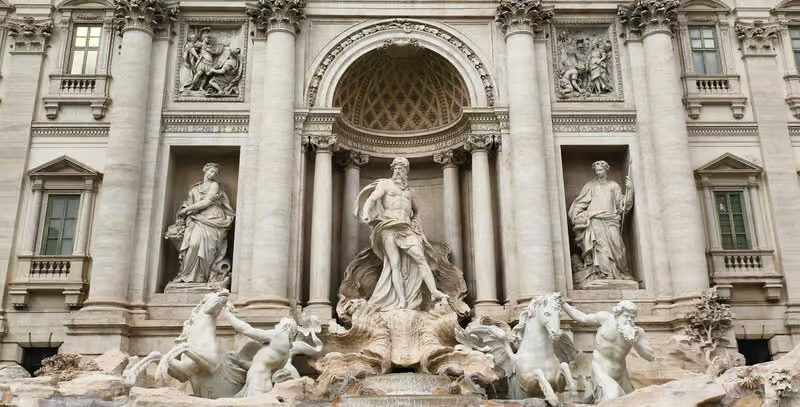
Here is the detail most visitors get wrong. The commanding figure at the center of the fountain is not Neptune, the Roman god of the sea. He is Oceanus, the ancient Greek Titan who represented all the world’s oceans and rivers combined.
Sculptor Pietro Bracci completed the Oceanus figure in 1762. Oceanus predates the Olympian gods, belonging to the older generation of Titan deities. His presence on the fountain reflects a grander ambition than Neptune would suggest: Oceanus represents water itself at a universal, primal level, not merely the sea.
Oceanus stands in a shell-shaped chariot pulled through the waves. His raised sceptre signals his absolute authority over every body of water on Earth. The baroque theatricality of his pose, combined with the scale of the Palazzo Poli facade rising behind him, creates a dramatic staging effect that makes Oceanus appear to emerge directly from the rock face. That theatrical staging is entirely deliberate.
The Two Sea Horses and What They Represent
Two sea horses pull Oceanus forward. Look closely at them: they are not the same. One horse is agitated and wild, fighting against its Triton handler. The other is calm and docile, moving smoothly through the water.
This contrast is not accidental. The wild horse represents the rough sea in storm: unpredictable, dangerous, and ungovernable. The calm horse represents the tranquil sea: life-giving, navigable, and generous. Together, they express the dual nature of water as both a threatening force and an essential resource. The fountain never lets you forget that water can destroy as easily as it nourishes.
Technically, these creatures are hippocampi, from the Greek hippos (horse) and kampos (sea monster): half horse, half fish. Their fish tails curl beneath the water’s surface. Most visitors never notice the tails at all.
The Two Tritons and Their Symbolism
A Triton stands on each side of Oceanus, guiding the sea horses and blowing conch shells. In Greek and Roman mythology, Tritons were half-man, half-fish servants of the sea. Their conch shells functioned as trumpets: raising the seas in storms or calming them at a god’s command.
One Triton struggles with his wild sea horse, signaling nature at its most turbulent. The other Triton blows his conch shell smoothly, representing the calmed and controlled sea. The visual balance between the two sides of the fountain mirrors the balance between those two states of water.
The Allegorical Figures in the Side Niches
Most visitors focus entirely on Oceanus and miss two important figures standing in the niches on either side of him.
On the left stands Abundance of Fruits, holding a horn of plenty overflowing with wheat ears and seasonal produce. She represents the fertility of crops and the agricultural wealth that water makes possible. On the right stands Salubrity of Waters, representing health and healing. She holds a cup from which a snake drinks, referencing the ancient symbol of medicine and the healing properties of clean water.
Both figures were sculpted by Filippo Valle. Together, they frame Oceanus with a clear message: water brings both physical health and agricultural abundance. The fountain does not simply celebrate water as beautiful. It celebrates water as the foundation of human life.
The Bas-Relief Panels: Agrippa and the Virgin Girl
At eye level, two bas-relief panels carved in stone tell the backstory of the aqueduct that feeds the fountain.
The left panel shows Marcus Agrippa approving the plans for the Aqua Virgo aqueduct, connecting the 1762 monument directly to its ancient Roman origins. The right panel depicts the young girl who showed Roman soldiers the spring that became the Aqua Virgo’s source, illustrating the legend that gave the aqueduct its name. These two panels embed a 2,000-year timeline into the decorative stonework. Most visitors walk past them without a second glance.
What Is the Symbol at the Top of the Trevi Fountain?
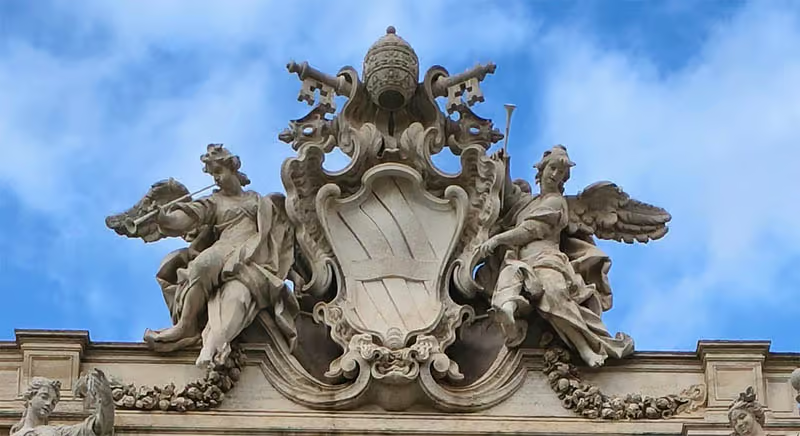
Raise your eyes to the very top of the fountain and you will find a set of symbols that most visitors never examine at all. They explain who built the fountain and why.
Who Commissioned the Trevi Fountain and Why Does It Matter?
Pope Clement XII commissioned the fountain in 1730, following a competition that architect Nicola Salvi eventually won. Construction began in 1732. Neither Clement XII nor Salvi lived to see the fountain completed. Clement XII died in 1740, Nicola Salvi died in 1751, and the fountain was finally inaugurated in 1762 under Pope Clement XIII.
The golden inscription “PERFECIT BENEDICTUS XIV PONT. MAX” means Benedict XIV, Pontiff Maximus, perfected it.
Understanding who paid for the fountain explains everything at the top. The monument was not just civic infrastructure. It was a statement of papal power: a gift of water to the city of Rome from the Church.
The Papal Tiara, the Crossed Keys, and the Coat of Arms Explained
At the very highest point of the fountain sits the Papal Tiara, the triple-crowned ceremonial headpiece of the pope. Beneath it, two crossed keys represent the Keys of Saint Peter, the biblical symbol of the Church’s authority to open and close the gates of Heaven. Together, the tiara and the crossed keys form the central element of the papal coat of arms of Pope Clement XII, the man who commissioned the entire project.
The message is deliberate and unambiguous. The supreme authority over the water flowing through Rome belongs to the papacy. Water descends from above in the same symbolic direction as divine and papal power.
Two winged angel figures by sculptor Paolo Benaglia flank the coat of arms, blowing long trumpets. These figures represent Fame, announcing the pope’s gift of water to the city.
The Four Statues at the Very Top
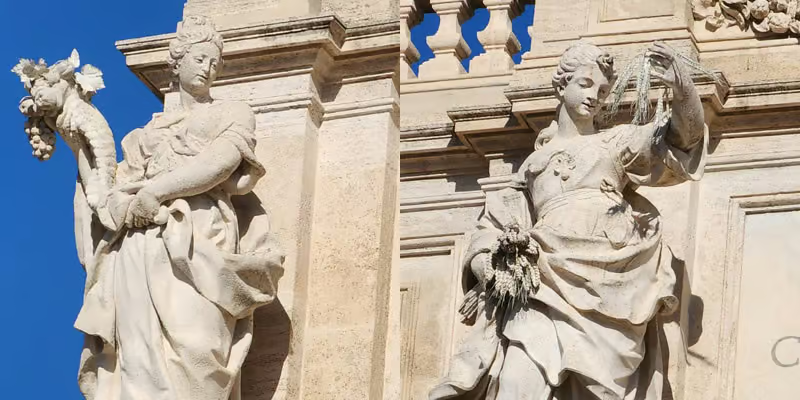
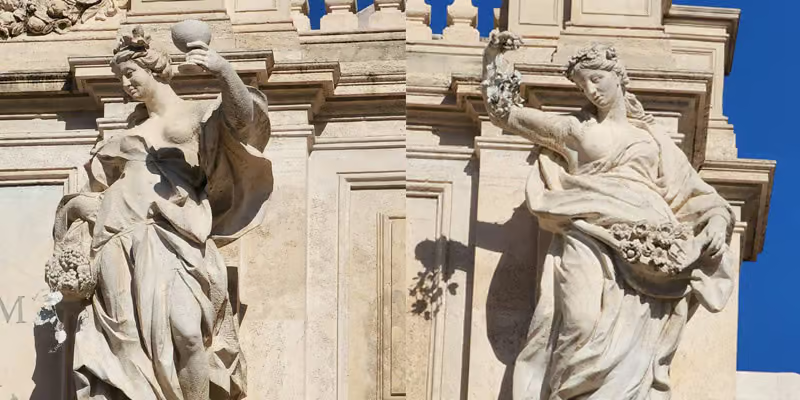
Four large allegorical statues stand across the top of the fountain’s attic (the uppermost architectural band). They represent the four seasons: Abundance of Fruits for spring, Fertility of Field for summer, Wealth of Autumn for autumn, and Lush Gardens representing nature’s enduring cycle. The seasons reinforce the same theme running through the entire fountain: water sustains every part of human and natural life, across every time of year.
The Latin Inscription Translated
Between the coat of arms and the main sculptural group, a Latin inscription runs across the fountain in large carved letters. Translated into English, it reads:
“Clement XII, Supreme Pontiff, adorned the Aqua Virgo, praised for its abundance and healthfulness, with magnificent decoration, in the year of the Lord 1735.”
The date 1735 marks the completion of the early construction phase rather than the full fountain. The inscription ties the completed baroque monument permanently to the ancient aqueduct beneath it, and to the papal authority above it.
What Is That Strange Vase on the Right Side?
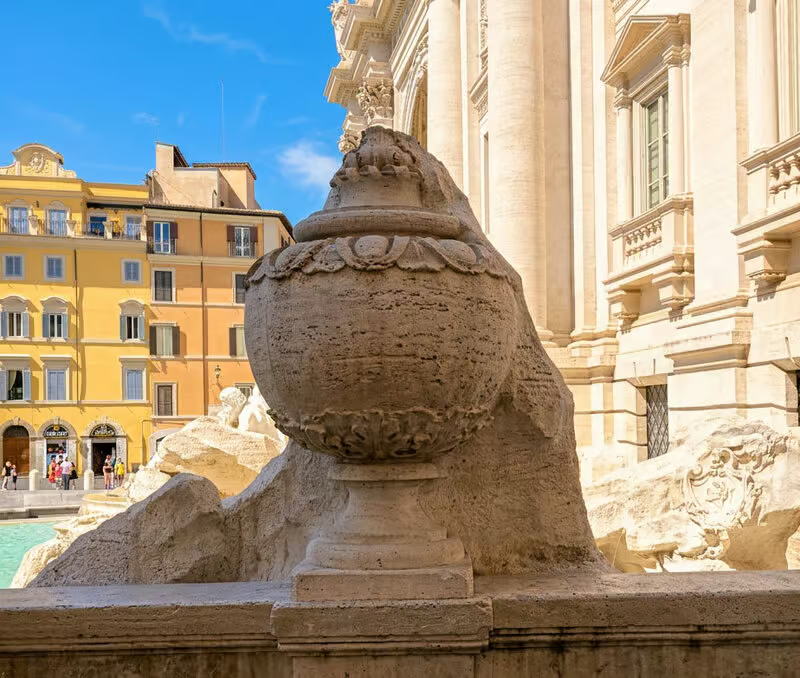
Walk to the right-hand side of the fountain. Look for a large stone vase, slightly awkward in its placement, resembling a playing card more than a classical sculpture. Most visitors assume it is a random decorative element. It is not.
The Story of the Barber and the Hidden Revenge
During the construction of the fountain in the 1730s, a barber operated a shop immediately beside the site. He watched Nicola Salvi’s design progress day by day and reportedly criticized the work loudly and publicly, dismissing Salvi’s choices to anyone who would listen.
Salvi’s response was quiet, precise, and lasting. He deliberately positioned a large stone vase in the composition so that it blocked the barber’s view of the fountain from inside his shop. The barber could hear the famous fountain every day but could never see it from his own premises.
The vase serves no structural purpose. It fits the baroque composition awkwardly, which is precisely the point. Salvi embedded a personal act of revenge into a major public monument, and it has remained there for nearly 300 years.
What the Ace of Cups Playing Card Has to Do With It
The shape of the vase closely resembles the Asso di Coppe, or Ace of Cups, from the traditional Italian card game Scopa. This was not an accident. In Italian card game tradition, the Asso di Coppe is the most powerful card in certain hands: a quiet, underestimated piece that wins unexpectedly.
Salvi, fluent in Italian cultural references, chose a shape his Roman audience would immediately recognize. The vase was his trump card: elegant on the surface, loaded with personal meaning underneath. It is widely considered one of the most entertaining examples of hidden personal storytelling within baroque public art anywhere in Rome.
What Do Three Coins in the Trevi Fountain Mean?
The Story Behind Three Coins in the Fountain (1954)
The coin toss tradition as most people know it today traces directly to a 1954 Hollywood film called Three Coins in the Fountain, which followed three American women living in Rome seeking love and luck. The film won the Academy Award for Best Cinematography and was accompanied by a hit song performed by Frank Sinatra.
The film and song made the Trevi Fountain globally famous and popularized the coin tradition worldwide. Before 1954, throwing coins in fountains for good luck was a general European folk tradition, but it had no specific structured meaning at the Trevi. The three-coin system with its specific promises came directly from the film’s narrative.
One Coin, Two Coins, Three Coins Explained
The three coin wishes are:
- One coin: You will return to Rome
- Two coins: You will fall in love with an Italian
- Three coins: You will marry that person
These meanings are rooted in the film rather than ancient Roman tradition. However, millions of visitors each year take them seriously. Over 1 million euros in coins are collected from the fountain annually. Every coin goes to Caritas, Rome’s Catholic charitable organization, which uses the funds for social services across the city.
How to Toss a Coin Correctly
Stand with your back to the fountain. Hold the coin in your right hand. Toss it over your left shoulder into the basin behind you. This is the specific technique shown in the 1954 film and now practiced universally.
Facing the fountain and throwing forward does not count by tradition. Neither does using your left hand. The precise gesture, back turned, coin in the right hand, toss over the left shoulder, carries the symbolic meaning.
What Are the Three Wishes at the Trevi Fountain?
The Wish Lore Before the 1954 Film
Before the film, a simpler and older Roman tradition associated the Trevi Fountain with a single wish: throwing one coin guaranteed your return to Rome. This idea reflected the ancient Roman belief that fountains were sacred places inhabited by spirits, and that offerings of coins honored those spirits and secured their favor.
Roman soldiers reportedly threw coins into water sources before leaving for war, buying the goodwill of the water spirits and expressing the wish to return home safely. The Trevi Fountain, sitting at the end of Rome’s most ancient functioning aqueduct, carried an especially strong association with that tradition.
Where Do the Coins Actually Go?
The coins are collected regularly by the municipality of Rome, and the full annual yield goes directly to Caritas Roma. In practical terms, the 1 million euros collected each year funds food distribution, shelter programs, and social support services across the city. Throwing a coin into the Trevi Fountain is, therefore, both a wish and an indirect act of charity.
Scooping coins from the water is illegal under Roman law and carries a fine. Enforcement patrols the area actively, particularly during evening hours.
FAQ: Trevi Fountain Meaning and Symbolism
The Trevi Fountain combines baroque architecture, ancient Roman aqueduct history, papal symbolism, classical mythology, and living cultural tradition in a single monument. No other fountain in the world layers that many distinct meanings into one composition. Its scale (26 metres high, 49 metres wide), its dramatic setting in a small piazza, and its coin tradition make it unique.
Directly beneath the fountain lies the Vicus Caprarius archaeological site, also called the City of Water. Excavations revealed an ancient Roman domus (private residence) with intact mosaic floors, walls, and objects including ancient coins and imported amphorae. The Aqua Virgo aqueduct, the same one that feeds the fountain above, passes through the underground site. You can visit it independently or with a guided tour at Via del Lavatore 22.
Putting your feet in the water is prohibited by Rome’s municipal regulations. The fountain and its basin are a protected cultural monument. Wading in, paddling, or physically entering the water carries significant fines. Officials patrol the area regularly and enforce the rule actively, especially during summer when the temptation peaks.
Swimming is strictly illegal and punishable by a fine of up to 500 euros. The fountain is a UNESCO World Heritage site monument, not a public swimming facility. The water is recycled continuously through a closed system and is not clean in the way a pool or natural body of water would be. Several tourists have been fined heavily in recent years for entering the water.
One coin = you will return to Rome. Two coins = you will fall in love with an Italian. Three coins = you will marry that person. These specific meanings come from the 1954 film Three Coins in the Fountain and the accompanying Frank Sinatra song, rather than from ancient Roman tradition.
By the coin tradition popularized in 1954, tossing two coins signals that you will fall in love with an Italian. The second toss follows the same technique as the first: stand with your back to the fountain, hold the coin in your right hand, and toss it over your left shoulder.
Stand with your back to the fountain, hold a coin in your right hand, and toss it over your left shoulder into the basin. One coin for a return to Rome, two for love, three for marriage. Note that close-up basin access now requires a 2 euro entry ticket during daytime hours. Free access returns after 10:00 PM.
The Trevi Fountain is the primary and most famous location. However, other Rome fountains also carry coin-tossing traditions in local folklore, including several fountains in Piazza Navona and the Fontana della Barcaccia at the foot of the Spanish Steps.
Conclusion
The Trevi Fountain is not just a beautiful baroque monument. It is a layered document of Roman history, papal power, classical mythology, personal grudges, cinematic culture, and living charitable tradition. Oceanus commands the water that Marcus Agrippa brought to Rome in 19 BCE. A barber’s critic sits permanently blocked by a stone vase. Frank Sinatra sent the coin tradition global. And every euro thrown into the basin ends up feeding someone in need in Rome today.
Next time you stand at the Fontana di Trevi, take five extra minutes to look upward at the crossed keys and papal tiara, sideways at the vase, and downward at the bas-relief panels. The people who built this monument left you a story. Most visitors never read it.