
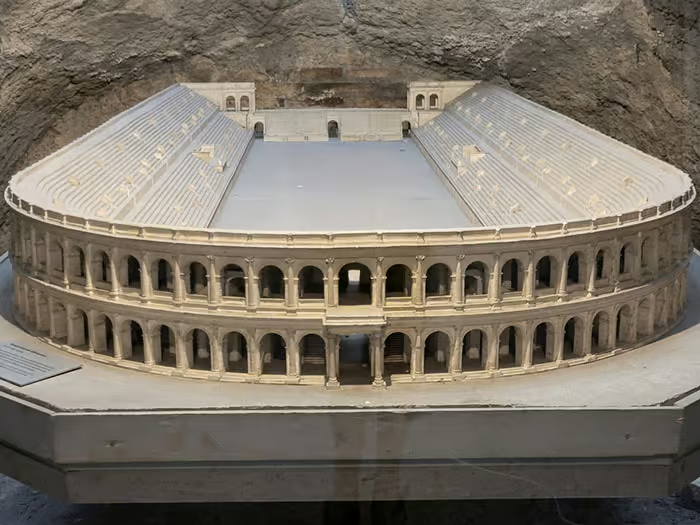
CURRENTLY CLOSED FOR RESTORATION
The Stadium of Domitian is closed for restoration works as of spring 2026. The official site confirms no reopening date, though summer 2026 is expected. Check stadiodomiziano.com before visiting. All ticket and hours information below reflects normal operations and will apply on reopening.
The Stadium of Domitian in Rome is a 2,000-year-old athletics arena lying 4.5 metres directly beneath Piazza Navona, and the oval shape of the square above you is the exact footprint of the stadium below. Built by Emperor Domitian in 86 AD for Greek-style athletic competitions, it was Rome’s first and only permanent masonry stadium and held up to 30,000 spectators. Today you can walk through the excavated ruins on a 40 to 60 minute audio guide tour for €9. For context on the square above, see our full Piazza Navona Rome guide.
What Was the Stadium of Domitian Used For?
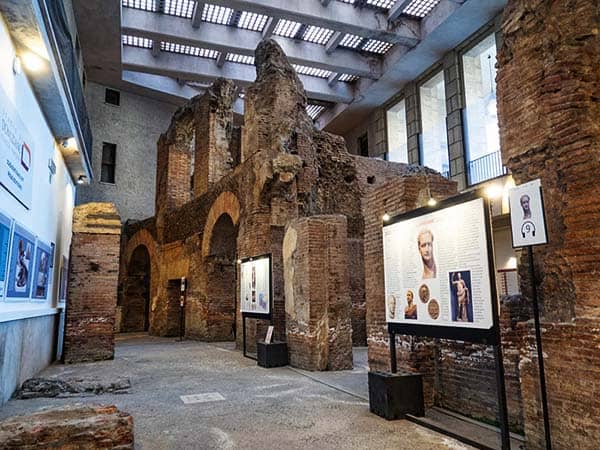
The Stadium of Domitian was built to host the Certamen Capitolinum, a Greek-style athletic competition Domitian established in 86 AD in imitation of the Olympic Games. The events were Greek in character: foot races, wrestling, javelin, boxing, and pankration, a form of total combat combining wrestling and striking. Chariot racing played no part here. That was the Circus Maximus, a completely different kind of venue on the other side of the city.
Domitian’s enthusiasm for Greek athletics was not widely shared by Romans, who considered Greek sport effete and unseemly. The stadium was admired architecturally but the games never achieved the popular hold of the gladiatorial fights in the Colosseum or the chariot races at the Circus Maximus. After Domitian’s assassination the games continued under later emperors but the stadium gradually lost its primary function. By the medieval period the seating areas had been built over and the track became a public open space: the direct ancestor of Piazza Navona as it exists today.
The connection to Saint Agnes comes from this same medieval period. The church of Sant’Agnese in Agone on the western side of Piazza Navona stands on the site where Agnes, a 13-year-old Roman martyr, was reportedly exposed in the stadium’s brothel area before her execution in 304 AD. The church and the square’s name, in agone (from which Navona derives), both preserve this history.
Stadium of Domitian vs Circus Maximus
Both were major Roman spectator venues but had almost nothing else in common.
| Stadium of Domitian | Circus Maximus | |
|---|---|---|
| Sport | Greek athletics: foot races, wrestling, boxing, javelin | Chariot racing |
| Length | 275 metres | 621 metres |
| Capacity | ~30,000 spectators | 150,000+ spectators |
| Built | 86 AD, permanent masonry | 6th century BC, expanded repeatedly |
| What is unique | Rome’s only permanent masonry athletics stadium | Largest stadium ever built in the ancient world |
| Today | Underground, beneath Piazza Navona, €9 to visit | Public park, free to enter |
| Location | Below Piazza Navona, historic centre | Aventine Hill, south of the Palatine |
The single most useful distinction: the Circus Maximus was the largest sports venue ever built in antiquity and is now a public meadow you can walk across for free. The Stadium of Domitian was the only permanent masonry athletics stadium in Rome’s history and is now sealed underground. One rewards a walk. The other rewards a ticket.
How Long Does It Take to Visit?
40 to 60 minutes is the standard visit. 40 minutes is enough to cover the full excavated area with the audio guide and spend time at the 3D video panels. If you are particularly interested in Roman history or want to read the illustrative boards in detail, allow a full hour.
The most efficient way to combine this with Piazza Navona is to arrive at the square at 9 AM when it is quiet and the market is just starting, explore the fountains and the square at ground level, then book your underground ticket for the 10 AM opening slot. You are done and back above ground by 11 AM with the full morning still ahead.
For planning context: the Pantheon takes 45 minutes to one hour, and Palazzo Altemps (two minutes from the square) typically takes one to one and a half hours. The Museo di Roma inside Palazzo Braschi sits directly on the piazza and takes around two hours, making it a natural afternoon follow-up once the underground visit is done. If you want a longer half-day, Castel Sant’Angelo is a 10-minute walk and pairs well with this neighbourhood.
How to Enter the Stadium of Domitian
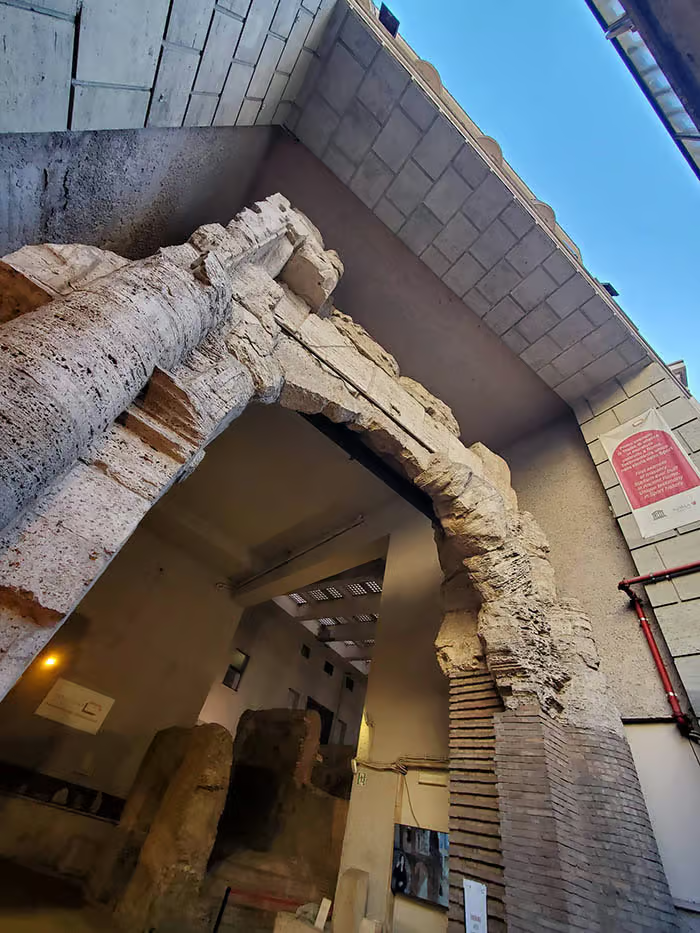
Everything you need before you go: ticket prices, opening hours, and exactly where the entrance is, because it is not on the piazza itself and first-time visitors regularly walk past it.
Tickets and Opening Hours
The site operates under the name Navona Underground. An audio guide is included in every ticket at no extra charge, available in multiple languages including English, with a dedicated children’s version.
| Ticket type | Price |
|---|---|
| Adult (full) | €9 |
| Reduced (12-17 and over 65) | €7 |
| Junior (8-11) | €5 |
| Children up to 7 | Free |
| Private guided tour | €14 per adult |
Opening hours (on reopening):
| Day | Hours | Last entry |
|---|---|---|
| Monday to Friday | 10:00 AM – 7:00 PM | 6:20 PM |
| Saturday | 10:00 AM – 8:00 PM | 7:20 PM |
| Sunday | 10:00 AM – 7:00 PM | 6:20 PM |
Last entry is 40 minutes before closing and is strictly enforced.
Where Is the Entrance?
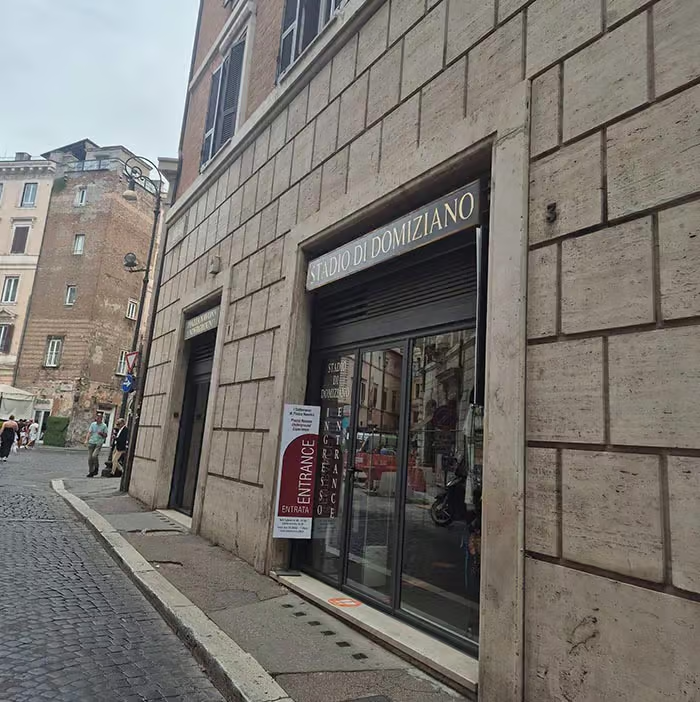
Address: Via di Tor Sanguigna 3.
This is a small street on the north side of Piazza Navona, not on the piazza itself. It is easy to miss if you are looking for a sign on the main square. To find it: walk to the north end of Piazza Navona (the Fountain of Neptune end), exit the square through the gap at the top, and turn right onto Via di Tor Sanguigna. The entrance is on the left after approximately 30 metres. Look for the Navona Underground sign above a street-level door between two buildings. There is no grand facade.
Is the Stadium of Domitian Worth It?
Yes, specifically for one reason: standing 4.5 metres underground looking at Roman brick arches and then looking up at the street above you, knowing that the oval shape of Piazza Navona is the direct physical imprint of the stadium you are standing in, is one of the most genuinely surprising moments in Rome. Most visitors assume the piazza’s oval shape is a design choice. It is not. Medieval builders filled in the stadium’s seating areas with houses and left the central track as a public throughway. That public space became Piazza Navona. The shape was not designed. It was inherited.
The practical advantages over larger sites are real. There are no two-hour queues, no crowds pressing against you, no time pressure to move quickly before the next group arrives. The audio guide is well-produced. The 3D video panels are genuinely useful for visualising what the space looked like at full capacity. The experience is closer to a museum visit than a monument visit, and it is better for it.
Who should consider skipping it: visitors in Rome for only one day who need to prioritise the Colosseum, Pantheon, or Vatican. The Stadium of Domitian rewards a second or third day in Rome when the major sites are covered and you have time for something less obvious. It is also less suited to very young children who cannot yet engage with audio content or historical context.
For everything about the square above, including the three Baroque fountains, the Giordano Bruno statue, and the best time to visit, see our Piazza Navona Rome guide.
FAQ: Stadium of Domitian Rome
No. The site is closed for restoration works as of spring 2026. No official reopening date has been confirmed. Summer 2026 is the current expectation. Check stadiodomiziano.com for the latest update before planning your visit.
€9 for adults with audio guide included. Reduced tickets are €7 for visitors aged 12-17 and over 65. Junior tickets (8-11 years) are €5. Children up to 7 enter free.
10 AM to 7 PM Monday to Friday and Sunday. 10 AM to 8 PM on Saturday. Last entry is 40 minutes before closing: 6:20 PM on standard days, 7:20 PM on Saturday.
40 to 60 minutes. 40 minutes is sufficient for the full audio guide tour. Allow up to one hour if you want time at the 3D video panels and illustrative boards.
No. They are two separate venues in different parts of Rome. The Circus Maximus hosted chariot racing and held over 150,000 spectators. The Stadium of Domitian hosted Greek-style athletics and held around 30,000. The Circus Maximus is now a free public park. The Stadium of Domitian is underground and costs €9 to visit.
Online booking is recommended as it guarantees your time slot. Walk-in tickets are available when spaces remain but the site can sell out on busy weekends in peak season.