
The Aventine Keyhole in Rome is one of the most quietly extraordinary things you can do in the entire city. You lean forward, press your eye to a small brass keyhole in a tall green wooden door, and see a perfectly framed view of St Peter’s Basilica dome aligned at the end of a long avenue of manicured hedges. The whole experience costs nothing, takes under five minutes, and involves three sovereign countries at once. Most visitors to Rome never find it at all.
What Is the Aventine Keyhole?
The Aventine Keyhole is a small keyhole set into the front gate of the Villa del Priorato di Malta, the Rome headquarters of the Sovereign Military Order of Malta. The keyhole itself is barely wide enough to fit a thumb through. What makes it extraordinary is what lies on the other side: a long, ruler-straight avenue of sculpted box hedges, planted and trimmed to create a perfect optical tunnel that frames St Peter’s Basilica dome in the exact center of the view.
Where Exactly Is It?
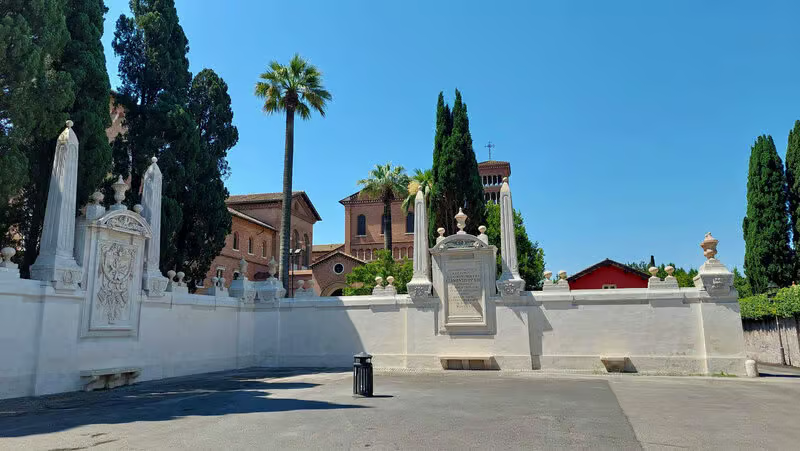
The Aventine Keyhole is at Piazza dei Cavalieri di Malta, on Aventine Hill. This is one of Rome’s original seven hills, located south of the Circus Maximus and slightly removed from the main tourist circuit. The piazza is small, paved with decorative stone, and surrounded by walls decorated with obelisks and military symbols. The tall green double doors on the left side of the square are the ones you are looking for.
The closest Metro stop is Circo Massimo on Line B. From there, the walk uphill to Piazza dei Cavalieri di Malta takes roughly 10 minutes. From the Circus Maximus, follow Via del Circo Massimo north and then climb the Aventine Hill via the steps or winding streets. Google Maps routes you directly to the piazza when you search for “Aventine Keyhole.”
What Do You Actually See Through It?
Through the keyhole, your eye travels along a perfectly symmetrical tunnel of trimmed green hedges in the Knights of Malta private garden. At the far end of that tunnel, St Peter’s Basilica dome rises in precise alignment, filling the circular frame of the keyhole exactly. On a clear day, the dome appears close enough to touch, even though it sits more than two kilometers away in a different country. The hedges, the door frame, the arch of the keyhole, and the dome all lock together into a single composed image.
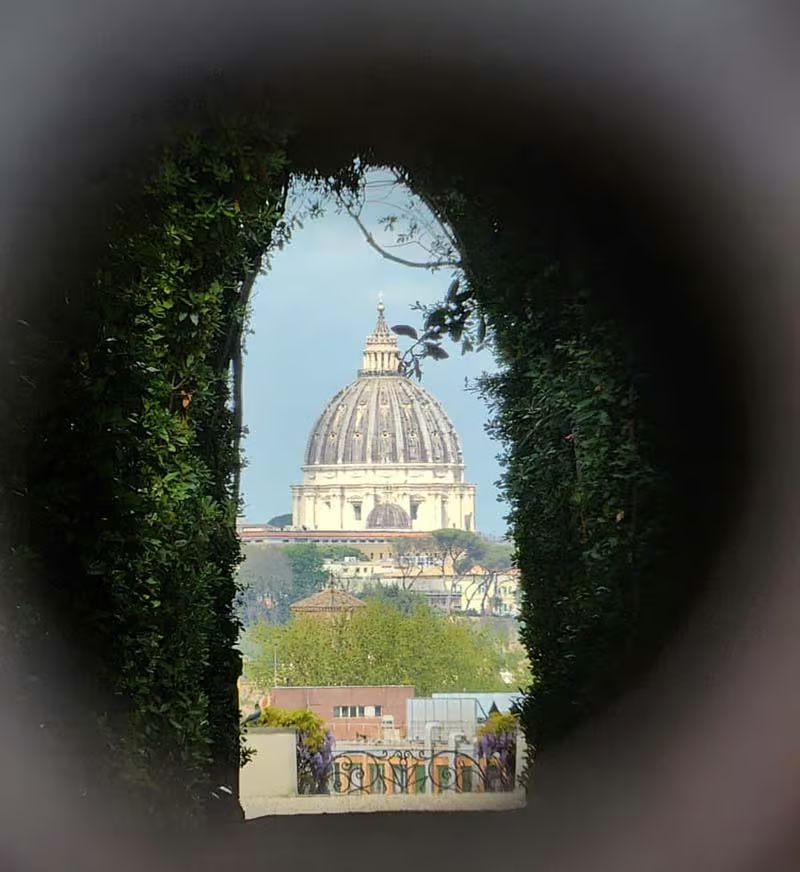
What makes this especially remarkable is that you are not seeing a single continuous landscape. The foreground garden belongs to the extraterritorial property of the Knights of Malta, the middle ground is Italian territory on Aventine Hill, and the dome in the background stands in Vatican City. Three sovereign jurisdictions in one glance through a keyhole barely an inch wide.
Is the Aventine Keyhole Worth It?
Yes, without any hesitation. The Aventine Keyhole delivers one of the most surprising and genuinely memorable moments Rome offers, in around five minutes, for free. It rewards curiosity rather than planning, and it sits in a quiet corner of the city where almost everything nearby is equally worth your time.
What Can You See From the Aventine Keyhole?
Looking through the keyhole you see the dome of St Peter’s Basilica framed inside a circular arch of manicured hedges in perfect bilateral symmetry. The alignment is so precise that it looks designed to be seen this way, because it was. The scale plays tricks: the dome appears dramatically closer than it is. If you arrive at golden hour in late afternoon, the setting sun lights the dome from the side, turning the stone a warm amber color that intensifies the effect considerably.
How Long Do You Need There?
The keyhole itself takes five minutes including any queue time. Allow 20 to 30 minutes for the full Piazza dei Cavalieri di Malta experience, including time to study the Piranesi-designed piazza walls, the obelisks, and the facade of the church of Santa Maria del Priorato. Combine the keyhole with the Garden of Oranges next door and Santa Sabina church and you have a relaxed, unhurried hour on the Aventine Hill that most tourists in Rome never experience.
Why Is the Aventine Keyhole Famous?
How Many Countries Can You See Through the Keyhole?
Three countries appear in the view. The explanation rests on the unusual legal status of each territory in the sightline:
- Knights of Malta territory: The villa and garden you are looking into hold extraterritorial status under international law, formally recognized by the Lateran Pacts of 1929 and subsequent agreements. The building at Piazza dei Cavalieri di Malta 3 carries a plaque reading Sede Extraterritoriale, confirming it is legally not Italian soil. The Order issues its own vehicle license plates, passports, and postage stamps.
- Italy: The Aventine Hill itself, the street you stand on, and the middle-ground landscape belong to the Italian Republic.
- Vatican City: The dome of St Peter’s Basilica stands within Vatican City, an independent sovereign state since the Lateran Treaty of 1929.
From one fixed point, leaning against an Italian street door, you look across Knights of Malta sovereign territory toward an independent papal state. The three jurisdictions overlap in a single circular frame barely an inch wide.
Who Designed the View?
The view is not an accident of geometry. The Venetian artist and architect Giovanni Battista Piranesi redesigned Piazza dei Cavalieri di Malta in 1765, including the decorative walls, the obelisks, the gate, and the garden layout visible through it. Piranesi conceived the entire piazza around a nautical legend that imagined Aventine Hill as a sacred ship sailing toward the heavens. The ornamental door represented the ship’s prow, and the garden hedges its ropes and rigging.
Whether Piranesi deliberately engineered the hedge alignment to frame St Peter’s exactly remains a subject of historical debate. What is known is that the gardens have been maintained to preserve the alignment ever since. Piranesi himself was buried at the church of Santa Maria del Priorato, which stands within the same walled compound on the other side of the gate. You can see the church facade from inside the piazza.
The piazza itself is lined with wall decorations combining baroque ornament, Egyptian-style obelisks, military trophy carvings, and esoteric knight symbols. It is considered the only urban work by Piranesi in Rome and one of the finest examples of 18th century urban rococo design in the city.
Who Owns the Building Behind the Door?
The building is the Villa del Priorato di Malta, headquarters of the Sovereign Military Order of Malta. The Order traces its origins to Jerusalem in the 11th century, where a group of monks founded a hospital to care for Christian pilgrims. They became the Knights Hospitaller, one of the great military orders of the Crusades.
The Aventine Hill site itself has a long prior history. It originally belonged to Alberico II, the ruler of Rome from 932 to 954. It then passed to a Benedictine monastery, followed by the Knights Templar in the 1100s, and finally to the Knights of Malta (successors to the Hospitallers) in the 1400s, where it has remained ever since.
Napoleon seized Malta from the Order in 1798, leaving the knights stateless for decades. Pope Pius VII eventually invited them to settle permanently in Rome. The papacy granted the Villa del Priorato di Malta to the Order in 1834 as its official Rome headquarters. Today the Order functions as a lay religious Catholic institution. Its Grand Master holds the rank of a head of state and swears obedience to the Pope.
The villa grounds remain private and are not open to the public. Only the keyhole view from the exterior door is accessible.
Tips for Visiting the Aventine Keyhole
Best Time to Go
Strategic timing dramatically improves your experience at this popular secret. Weekday mornings before 9 AM offer the most peaceful moments with minimal queues.
Avoid weekend afternoons when local Romans and tour groups converge, sometimes creating 30-45 minute waits.
Each person typically spends 30-60 seconds at the keyhole, photographing and admiring the view.
How to Find It
Navigate me
Photography Tips for the Keyhole
Getting a good photograph through the Aventine Keyhole is trickier than it looks. The opening is tiny and any misalignment throws the composition off. These tips produce consistently good results:
- A smartphone camera works better than a DSLR or wide-angle lens for this shot. The compact sensor size and narrow profile of a phone sits more comfortably against the keyhole opening.
- Press the phone lens directly against the keyhole. Even a few millimetres of gap introduces blur and vignetting around the edges.
- Use portrait mode or portrait stabilization. Handheld shake is the most common reason shots come out blurred.
- The best results come in the late afternoon when warm directional light picks out the dome. Midday sun creates a blown-out sky and flat light on the hedges.
- If someone in your group is photographing, the person behind them in the queue will typically wait. Do not rush.
Is the Aventine Keyhole Free?
Yes, completely free. There is no ticket, no booking, no entry fee, and no time limit on your visit. The keyhole sits on a public street and is accessible to anyone at any hour. The piazza around it is a public square. No reservation is required or available.
What Else to See Near the Aventine Keyhole
The Aventine Keyhole sits at the center of one of Rome’s most pleasant and undervisited hilltop neighborhoods. Everything nearby is free and within a short walk.
The Garden of Oranges
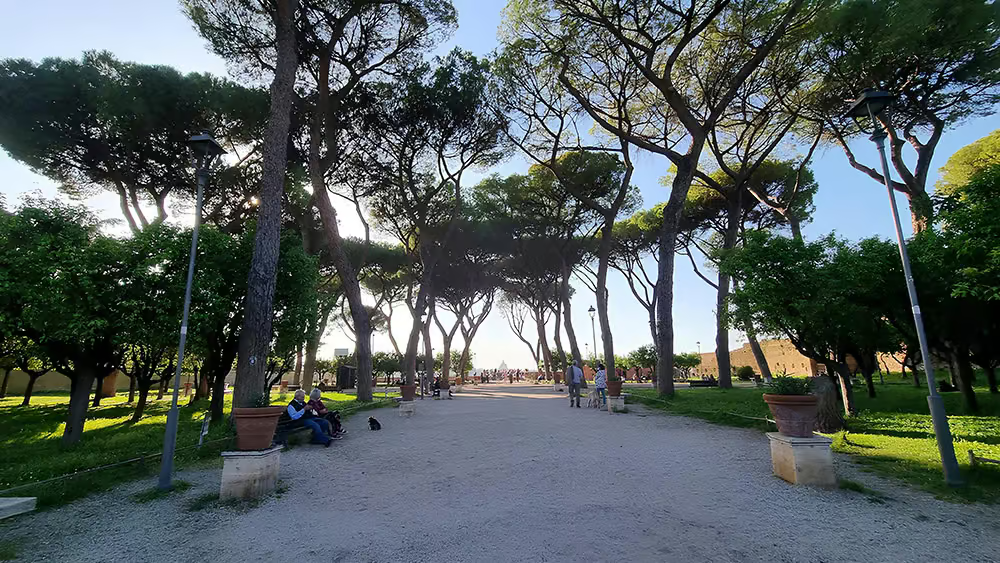
Immediately beside the piazza lies the Giardino degli Aranci, the Garden of Oranges, officially known as Parco Savello. This public park sits on the site of a medieval fortress built by the Savelli family between 1285 and 1287. Today it is a peaceful public garden filled with bitter orange trees, stone benches, and one of the finest open panoramic views in all of Rome.
The view from the garden’s terrace looks northwest over the rooftops of Trastevere and across the Tiber toward the dome of St Peter’s. At sunset, this is arguably the most beautiful free viewpoint in the city. Entry is free. The garden closes at dusk.
Santa Sabina and the Rose Garden
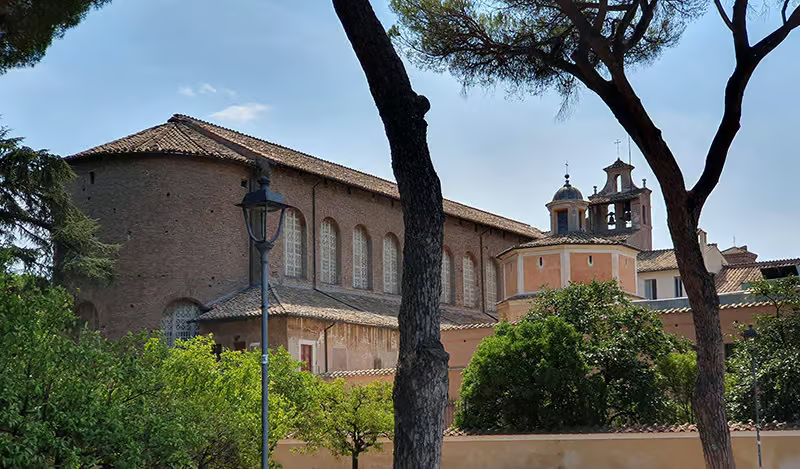
A short walk along the hilltop brings you to Santa Sabina, considered the best-preserved early Christian basilica in Rome. Built in the 5th century on the site of a Roman house, it retains its original nave columns, ancient wooden doors, and early mosaic inscription. Entry is free.
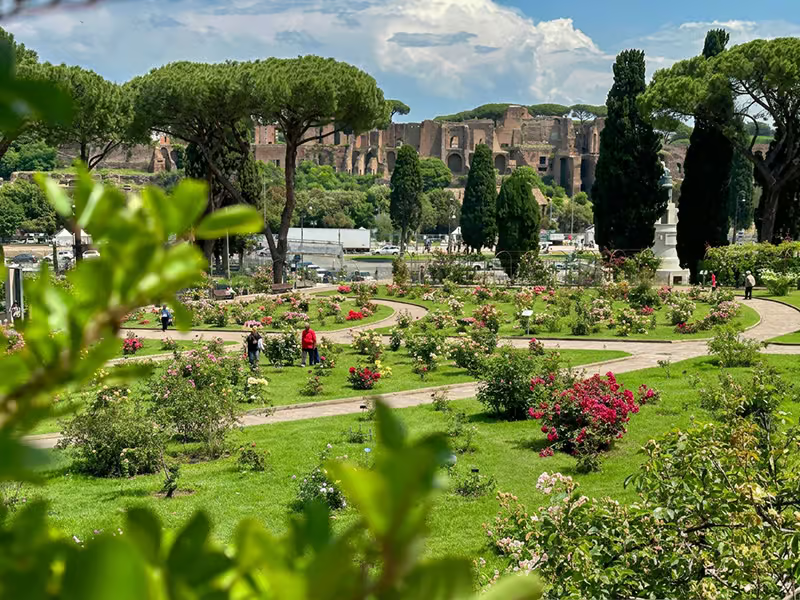
The Roseto Comunale, Rome’s municipal Rose Garden, sits just below the Aventine Hill on the southern slope facing the Circus Maximus. It opens in May and June during the rose flowering season and is free to enter. Outside the flowering season the garden is closed, so this addition depends on your travel dates.
Circus Maximus and Testaccio
From the Aventine hilltop, the Circus Maximus lies directly below at the foot of the hill, roughly 10 minutes downhill on foot. The ancient chariot racing track is the largest entertainment venue ever built in the Roman world, with a capacity once estimated at 250,000 spectators. The site itself is free to walk through.
From Circus Maximus, the Testaccio neighborhood extends a short walk westward. Testaccio is one of Rome’s most authentically local neighborhoods, built on the site of the ancient Roman slaughterhouse. The Testaccio Market is one of the best places in Rome to eat lunch at reasonable prices, with market stalls serving supplì, Roman pizza al taglio, and traditional dishes. It operates Tuesday through Saturday.
FAQ: Aventine Keyhole Rome
Yes. The keyhole is accessible 24 hours a day. At night, the dome of St Peter’s is illuminated by floodlights and appears against the dark sky through the hedge tunnel. The effect is atmospheric and the queue is nonexistent. However, the full detail and warmth of the view is best experienced in natural daylight, especially late afternoon.
No. The Aventine Keyhole is completely free at all times. No ticket, booking, or entry fee applies.
The door and the property behind it belong to the Sovereign Military Order of Malta, a lay religious Catholic institution with international legal status. The Order has held the Villa del Priorato di Malta since 1834. The keyhole itself is in a public-facing gate on a public street.
Yes, as it sits on a public street, Piazza dei Cavalieri di Malta, you can visit 24/7 for free, though daylight hours offer the best views.
The keyhole at Piazza dei Cavalieri di Malta 3 is universally considered the most famous keyhole in Rome and is frequently listed among Rome’s best hidden gems. It also appeared in Emily in Paris Season 5, which brought it to an even wider international audience.
Aventine Hill is one of Rome’s original seven hills. It is known for the Aventine Keyhole, the Garden of Oranges and its panoramic views, the early Christian basilica of Santa Sabina, the Rose Garden, and its quiet residential character that contrasts sharply with the busier areas of central Rome.
Early weekday mornings see little or no queue. Weekend afternoons during April to October are the busiest, with waits of up to 30 to 45 minutes reported. Arriving before 9:00 AM or after 5:00 PM on any day significantly reduces waiting time.