
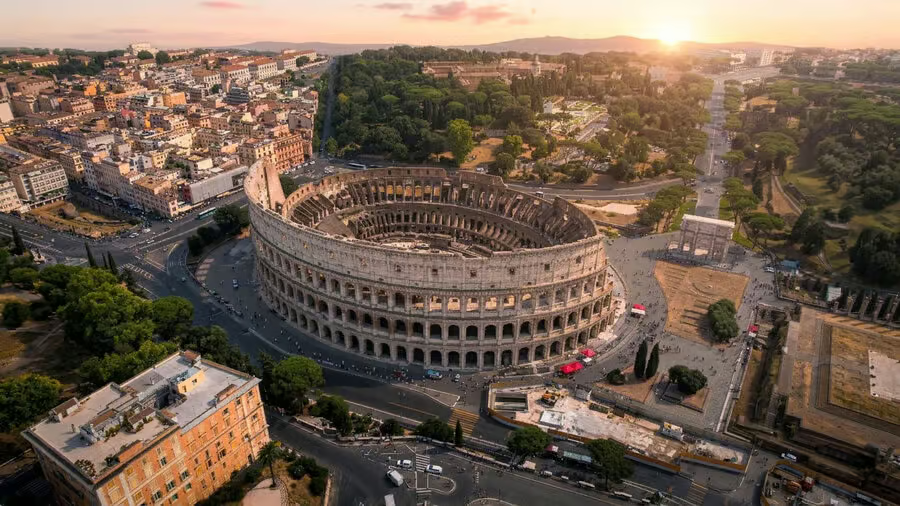
Why was the Colosseum built? It is one of the most fascinating questions in ancient history, and the answer goes far deeper than entertainment. This iconic structure was a bold political tool, a piece of imperial propaganda, and a symbol of raw power wrapped in stone and concrete. Whether you are planning to visit the Colosseum or simply want to understand what you are looking at, this guide covers everything you need to know.
Power, Politics, and Public Entertainment
The reason why the Colosseum was built in Rome comes down to three things: political legitimacy, public distraction, and imperial prestige. Emperor Vespasian, founder of the Flavian dynasty, needed to win the trust of a Roman population that had just survived years of civil war and the erratic rule of Nero. Building the largest ancient Roman amphitheater in history was his answer.
Romans had a phrase for it: panem et circenses, or “bread and circuses.” Keep the people fed and entertained, and they will stay loyal. The Colosseum was the “circuses” part of that equation on a breathtaking scale.
Who Built the Colosseum and Why?
Construction of the Flavian Amphitheatre began around 70-72 CE under Emperor Vespasian and was completed in 80 CE by his son, Emperor Titus. A third Flavian emperor, Domitian, then added the fourth story in 82 CE.
Vespasian came to power during one of Rome’s most turbulent periods. The year 69 CE had produced four different emperors in just twelve months. To establish his authority and rebuild public trust, Vespasian chose to give Rome something extraordinary: a permanent home for public spectacles on an unprecedented scale.
What Was the Colosseum Built For? The Political Strategy
The purpose of the Colosseum was not purely entertainment. It was a carefully calculated political move. Before the Colosseum existed, gladiatorial contests and public events took place in temporary wooden structures that were fire-prone and inadequate for a city of Rome’s size.
By commissioning a permanent stone arena, Vespasian sent a clear message: his reign would be stable, generous, and focused on the Roman people. In fact, inscriptions on his coins read Roma resurgens (“Rome rising again”), and the Colosseum was the centrepiece of that revival programme.
Replacing Nero’s Hated Palace
To fully understand why the Colosseum was built in ancient Rome, you need to know what stood on that spot before it. After the Great Fire of Rome in 64 CE, Emperor Nero seized a large area of public land and built himself a sprawling private palace known as the Domus Aurea (Golden House). This enormous complex included gardens, a private lake, and a colossal bronze statue of himself.
Romans deeply resented this act of greed. When Vespasian rose to power, he drained Nero’s private lake and built the Colosseum on that exact site. Where Nero had taken land from the people, Vespasian gave it back. The symbolism was deliberate and powerful.
How Was the Colosseum Funded?
The Colosseum was funded primarily through the spoils of the First Jewish-Roman War and the Siege of Jerusalem in 70 CE. Vespasian and his son Titus defeated Jewish forces, looted the Second Temple, and returned to Rome with enormous wealth. That treasure financed the construction of the arena.
The labour force was equally significant. Historians estimate that between 60,000 and 100,000 Jewish prisoners of war were brought to Rome and used as slaves to build the Colosseum, alongside professional Roman engineers and craftsmen.
What Is the Purpose of Building the Colosseum?
The purpose of building the Colosseum was threefold. First, it served a political function: it helped Vespasian and the Flavian dynasty consolidate power and present themselves as emperors of the people. Second, it served a social function: the free public spectacles held inside kept Roman citizens entertained and distracted from political unrest. Third, it served a symbolic function: the sheer scale of the ancient Roman amphitheater demonstrated Rome’s wealth, military power, and architectural ambition to the entire world.
What Happened Inside the Colosseum?
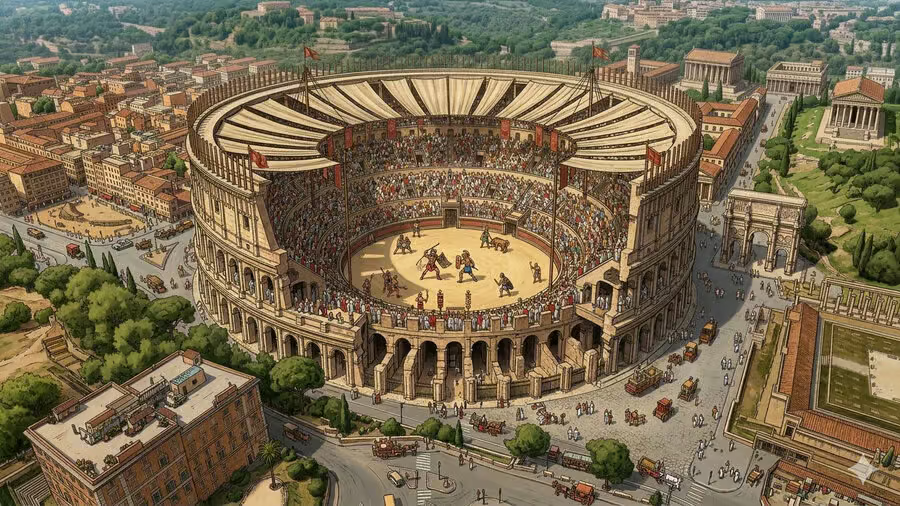
The Colosseum hosted several types of events, all designed as large-scale public spectacles:
- Gladiatorial contests (munera): Trained fighters, often slaves or prisoners of war, faced off in one-on-one combat or group battles. Gladiators trained in schools called ludi and were celebrated as heroes by Roman crowds.
- Animal hunts (venationes): Exotic animals from across the empire, including lions, bears, elephants, and ostriches, were brought to Rome and hunted in the arena.
- Public executions (noxii): Criminals and enemies of the state were executed in theatrical and highly public ways.
- Mock naval battles (naumachiae): In the early years, the arena floor could be flooded to re-enact famous sea battles.
Below the arena floor lay the hypogeum, a remarkable network of underground tunnels and chambers where gladiators, animals, and stage machinery were held before events. This subterranean system allowed for dramatic entrances and elaborate staging that thrilled the crowds above.
What Was the Reason for the Colosseum?
The reason for the Colosseum runs straight back to the concept of bread and circuses. Roman emperors understood that a restless population was a dangerous one. By providing free, spectacular entertainment to tens of thousands of citizens at a time, the Flavian dynasty built loyalty and kept political dissent quiet.
The gladiatorial games and animal hunts were not just amusement: they were a tool of social control. In that sense, why did Romans build the Colosseum is really a question about how an empire manages its citizens, not just how it entertains them.
The Opening: 100 Days of Games
When Emperor Titus inaugurated the Colosseum in 80 CE, he did not mark the occasion quietly. He launched 100 days of games to celebrate the opening, drawing massive crowds from across the Roman world.
These events included gladiator fights, animal hunts, and various public spectacles that announced the new era of Flavian rule to all of Rome. For citizens who attended, it was both a gift and a reminder of who held power.
How Many Gladiators Died in the Colosseum?
The exact number is unknown, but historians estimate that over 400,000 people died in the Colosseum across its centuries of use, including gladiators, prisoners, criminals, and animals.
Gladiators did not always fight to the death: the crowd and the presiding emperor or magistrate decided the fate of a fallen fighter. However, death was common, and the Colosseum operated as an entertainment venue for roughly 400 years. It is important to note that gladiators were also celebrated figures in Roman culture, worshipped as idols despite the violence of their profession.
What Is the Colosseum Used for Now?
Today, the Colosseum is one of the world’s most visited tourist attractions and a UNESCO World Heritage Site. It no longer hosts any form of violent entertainment: instead, it serves as a monument to ancient Roman history, architecture, and culture.
Modern visitors can explore the arena floor, the underground hypogeum, and the upper tiers, getting a vivid and sometimes haunting sense of what gladiatorial contests and public spectacles looked like. If you are planning to visit the Colosseum, you will definitely want to plan ahead.
How to Book Your Colosseum Tickets
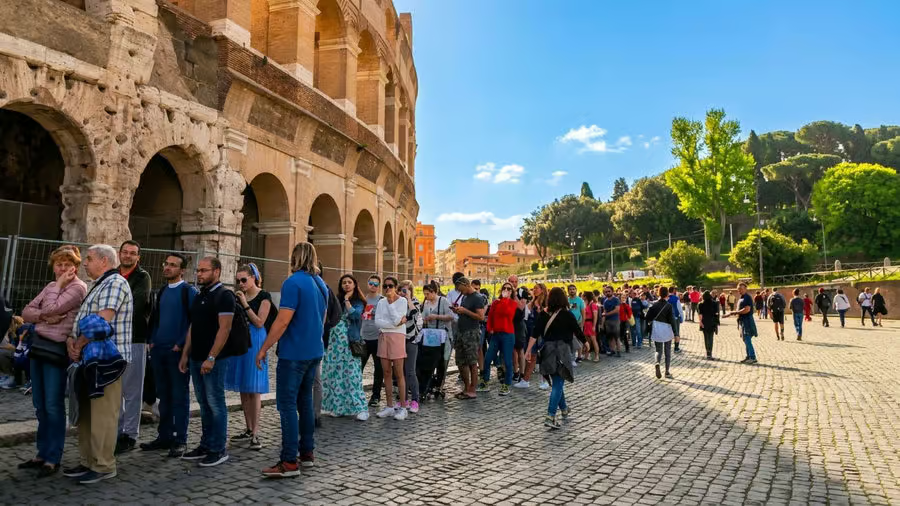
Getting into the Colosseum without a long wait requires advance planning. The site attracts millions of visitors every year, and same-day queues can stretch for hours, especially in peak season.
Your main ticket options include:
- Standard timed entry: Covers the access to Colossseum, the Roman Forum and Palatine Hill. Book online in advance to secure your preferred time slot.
- Arena Only: One admission to the Arena floor only at the booked time for a duration of 20 minutes and Roman Forum-Palatine.
- Guided tours: A guided tour is the best way to experience the Colosseum for most visitors, since expert guides bring the history to life inside the actual space. Look for tours that include the underground hypogeum for a truly memorable experience.
Only with guided tour you can visit the underground!
You can book your Colosseum skip-the-line tickets here to avoid the queues at the entrance. For access to the underground hypogeum and arena floor, reserve your guided Colosseum tour with hypogeum access here as those spots fill up fast and are not included in all standard tickets.
What are the trusted sources to book a ticket for colosseum? Check out the post Colosseum Roman Forum Palatine Hill Complete Guide
Tip: Always book directly through official or trusted resellers. Unofficial ticket sellers outside the Colosseum are a well-known scam in Rome.
Rome was the capital and the political heart of the empire, so building the Flavian Amphitheatre there made both practical and symbolic sense. Vespasian chose the site of Nero’s Domus Aurea to reclaim public land and firmly distance his reign from his predecessor’s excess.
The Colosseum was built in roughly 10 years, an extraordinary feat. Vespasian had access to enormous resources: the wealth looted from Jerusalem and tens of thousands of Jewish prisoners of war who provided the bulk of the unskilled labour.
Emperor Vespasian built the Colosseum to win the Roman people’s loyalty, erase Nero’s memory, and give citizens free entertainment. It was part politics, part propaganda, and part public service, all rolled into one massive structure.
Conclusion
Why was the Colosseum built? At its core, the answer is: to control, impress, and entertain. Vespasian and the Flavian dynasty used this extraordinary ancient Roman amphitheater as a political masterpiece, funding it with war spoils from the Siege of Jerusalem, building it with prisoners of war, and filling it with gladiatorial games, animal hunts, and spectacular public events. Two thousand years later, the strategy still echoes in every stone. Ready to see it for yourself? Book your Colosseum tickets in advance here and step inside one of history’s greatest monuments.